What happened
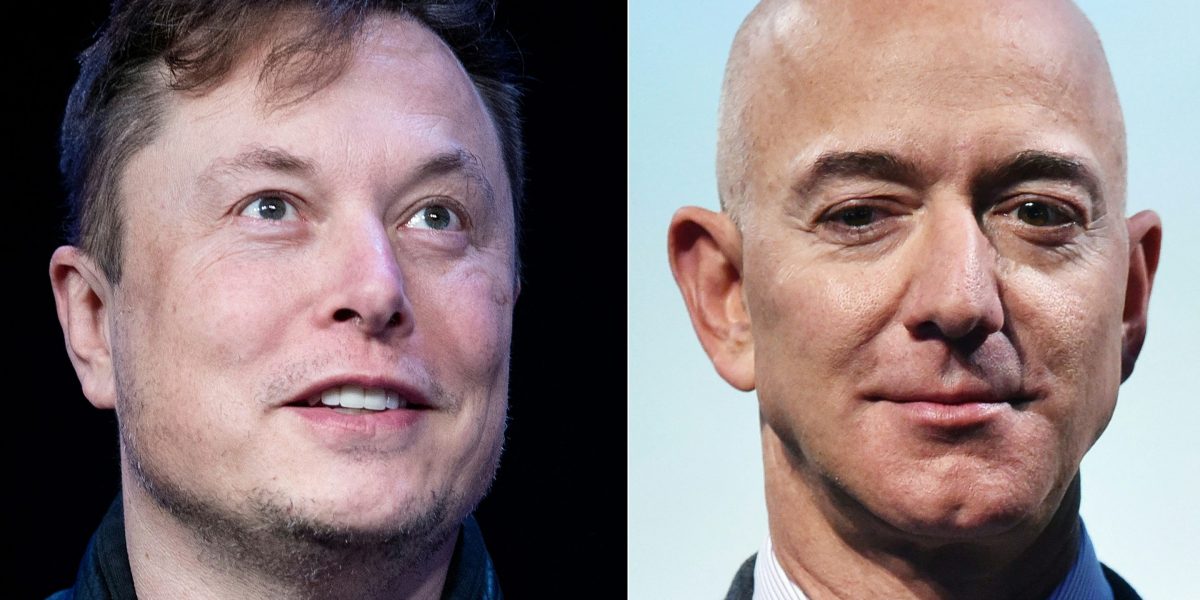
SpaceX went public in June 2026 at $135 per share with a valuation that rose to $2 trillion(約320兆円), while Amazon—valued at $2.6 trillion(約420兆円)—operates across retail, cloud, advertising, and satellites. The two now compete directly in satellites, cloud computing, AI infrastructure, chips, and advertising, despite SpaceX losing $4.9 billion(約7800億円) last year and Amazon posting $80 billion(約13兆円) in operating income.
Why it matters
SpaceX trades at roughly 97 times sales with a net loss, while Amazon trades at roughly 3.6 times sales—a stark valuation gap for a company with one-twentieth Amazon's revenue. Investors are betting heavily on SpaceX's future execution, particularly via Starlink (which generated $11.4 billion(約1.8兆円) in revenue and $4.4 billion(約7000億円) in operating income last year), but analysts note SpaceX will likely need to raise roughly $250 billion(約40兆円) in debt over the next four years to fund growth.
What to watch
Starlink is valued by investment bank Stifel at $1.25 trillion(約200兆円)—more than half of SpaceX's $2.45 trillion(約390兆円) enterprise value. Amazon's satellite division, Leo, has deployed about 330 satellites compared to Starlink's 9,600, but Amazon acquired Globalstar for $11.6 billion(約1.9兆円) in April to expand its network and recently unveiled enterprise-grade Leo Ultra satellite-internet antenna.
Summaries like this, in your inbox every morning.
SpaceX and Amazon present a striking contrast in financial maturity and valuation. Amazon, which went public in 1997 at an $438 million(約700億円) valuation, survived the dot-com crash and built a $2.6 trillion(約420兆円) conglomerate generating $716.9 billion(約110兆円) in revenue and $80 billion(約13兆円) in operating income across retail, cloud services, and advertising. SpaceX, founded by Elon Musk and public since June 2026, entered the market with a $2 trillion(約320兆円) valuation despite losing $4.9 billion(約7800億円) last year and generating only $18.7 billion(約3兆円) in revenue—a $2.6 billion(約4200億円) operating loss.
Both companies operate as sprawling conglomerates with overlapping businesses: satellite-beamed internet (Starlink vs. Amazon's Leo), cloud computing and AI infrastructure (SpaceX's data centers vs. AWS), chip manufacturing (SpaceX's Terafab initiative vs. Amazon's Trainium and Graviton processors), and advertising platforms (X/SpaceX's AI segment vs. Amazon's $68.6 billion(約11兆円) ad business in 2025). The key difference is execution and profitability. AWS alone generated $128.7 billion(約21兆円) in revenue in 2025 with a 35% operating margin, while SpaceX's AI segment posted $3.2 billion(約5100億円) in revenue against a $6.4 billion(約1兆円) operating loss. Starlink, however, stands as SpaceX's bright spot—valued at $1.25 trillion(約200兆円) by investment bank Stifel and growing 50% year over year with strong margins.
Investors are pricing SpaceX on founder conviction and future potential rather than current results. Elon Musk has projected $1 trillion(約160兆円) in revenue by 2030 while current estimates sit around $40 billion(約6.4兆円) for 2026, a gap that analysts attribute to a "Musk premium" and the market's appetite for moonshot innovation. Amazon's valuation, by contrast, rests on established businesses and a contracted backlog of $364 billion(約58兆円) for cloud services. As the two conglomerates increasingly compete across satellites, chips, and infrastructure, SpaceX faces pressure to deliver on its ambitious roadmap—particularly given analyst estimates that it will need to raise roughly $250 billion(約40兆円) in debt over the next four years to sustain growth.
Pick your industry and the AI tools you use, and get news related to your work every day.
Free · 30 seconds with Google · unsubscribe anytimeWhat is AIToday? →
Ask AI anything about this article. The AI reads this article, earlier AIToday articles, and Wikipedia, and cites its sources. Q&As are published on this page for other readers too.
Supermicro Computer appointed Mark Long as chief financial officer, bringing an experienced technology finance…
Holtek Semiconductor unveiled its 2026 product roadmap on October 15, focusing on four core areas: smart prote…
TSMC reported about NT$763.1b in Q3 net profit and confirmed that demand for advanced processors is running ah…
Nvidia-backed CoreWeave steadied Thursday after a sharp slump, as investors worried about the debt financing b…
TOPPAN Holdings and Keio University ran a quantum-computer and generative-AI proof-of-concept from February 1…
Weathernews said on October 15 it implemented its own AI weather-forecasting model, AI-Nowcast, in its Weather…