What happened
Scientists are adopting AI and robotics to replace human-led hypotheses in biological research with automated pattern recognition across massive datasets. New drugs are entering the market based not on elegant theories but on computational analysis of data at scale—a shift mirroring the "bitter lesson" that transformed AI research over the past decade.
Why it matters
The human body remains poorly understood in crucial ways; brute-force computational screening of biological data may unlock discoveries that traditional science cannot. Humanoid robots and cloud labs running experiments 24/7 will compress timelines and reduce costs for research that today takes too long and costs too much, potentially accelerating cures for serious disease.
What to watch
The arrival of fully automated labs where AI chatbots design studies and robotic systems execute and iterate experiments in closed loops, analyzing results and proposing new trials without human intervention. The practice will raise ethical questions, particularly around animal testing in this new era.
Summaries like this, in your inbox every morning.
The article frames a fundamental shift in how biological research operates, anchored in a principle computer scientist Richard Sutton articulated in 2019: that expert human knowledge often obstructs progress, and that raw computational power applied at scale outperforms theory-driven approaches. The author observes that this "bitter lesson"—learned painfully in AI research over the past decade—is now being absorbed by biologists. The human body, like the human mind, remains "tremendously, irredeemably complex"; direct understanding may be impossible, but pattern recognition across massive datasets may reveal solutions anyway.
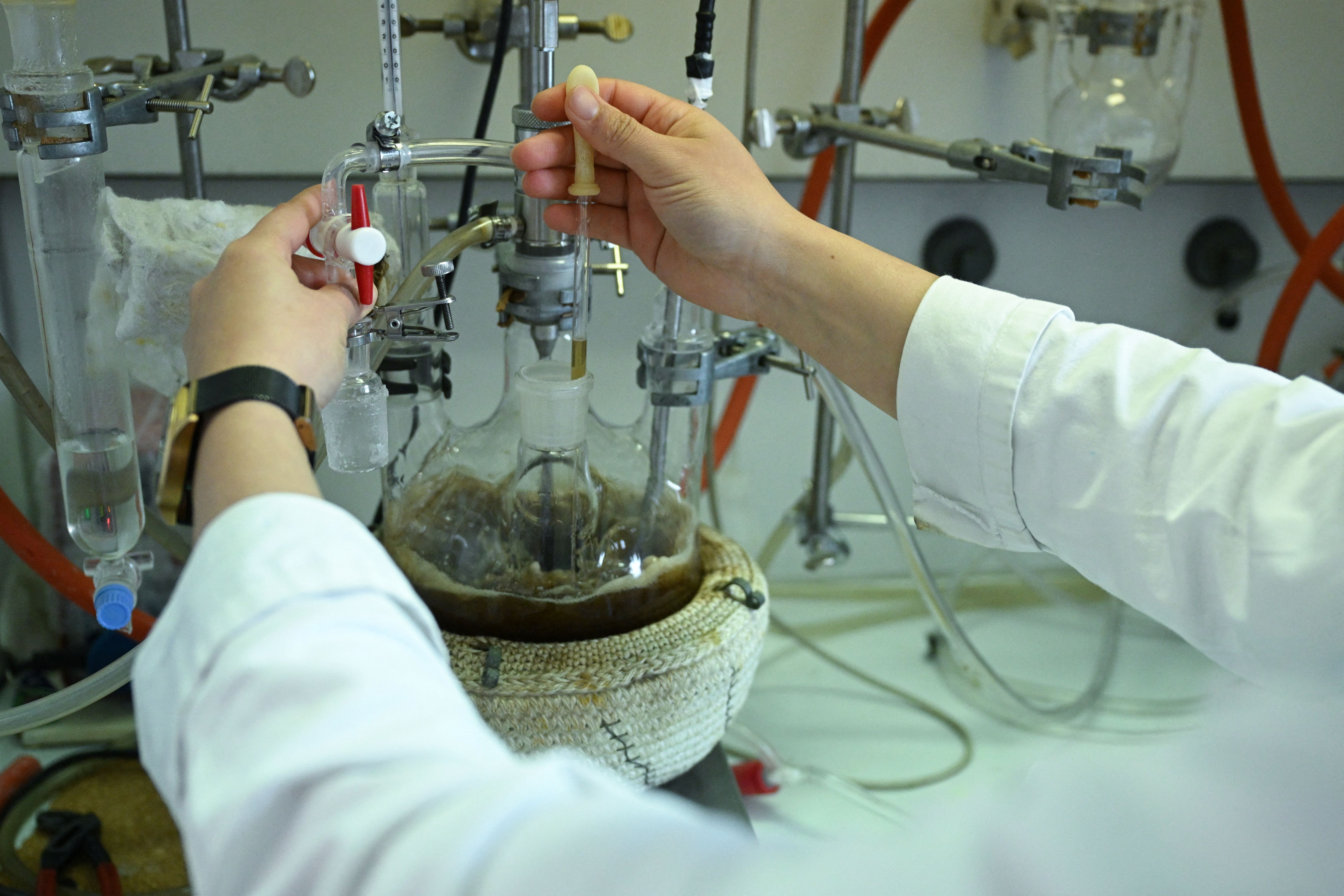
The mechanism enabling this shift is twofold. First, new scientific tools (nanotechnology and AI) now allow measurement of biological systems at unprecedented granularity—thousands of proteins in human blood, for instance. Second, better computational methods extract meaningful patterns from that data, making it valuable. The result is an industrialization of experimentation: instead of designing a hypothesis and running a few experiments, labs will run thousands or millions of trials automatically, 24/7, with robots handling physical tasks and AI systems deciding what to test next. This continuous iteration loop replaces the human bottleneck—the need for scientists to reason about results before the next step.
Pick your industry and the AI tools you use, and get news related to your work every day.
Free · 30 seconds with Google · unsubscribe anytimeWhat is AIToday? →
Ask AI anything about this article. The AI reads this article, earlier AIToday articles, and Wikipedia, and cites its sources. Q&As are published on this page for other readers too.
A Zenn contributor sorted AI use into three modes — AI as an assistant, AI running alongside people, and AI th…

A developer released agent-guardrails, a one-script Python standard-library plugin that guards Bash, Write, Ed…
A Qiita article compared automated red-teaming methods for LLM apps — GCG, PAIR, and TAP — using mock implemen…

In a webinar hosted by French Mathematical Society president Isabelle Gallagher, Fields Medal winner Hugo Dumi…
Anthropic said on October 15 it has started giving METR's six staff company devices, office space and access t…

NVIDIA published a blog post titled "AI Security Is an Engineering Problem - How to Solve It at Every Layer of…