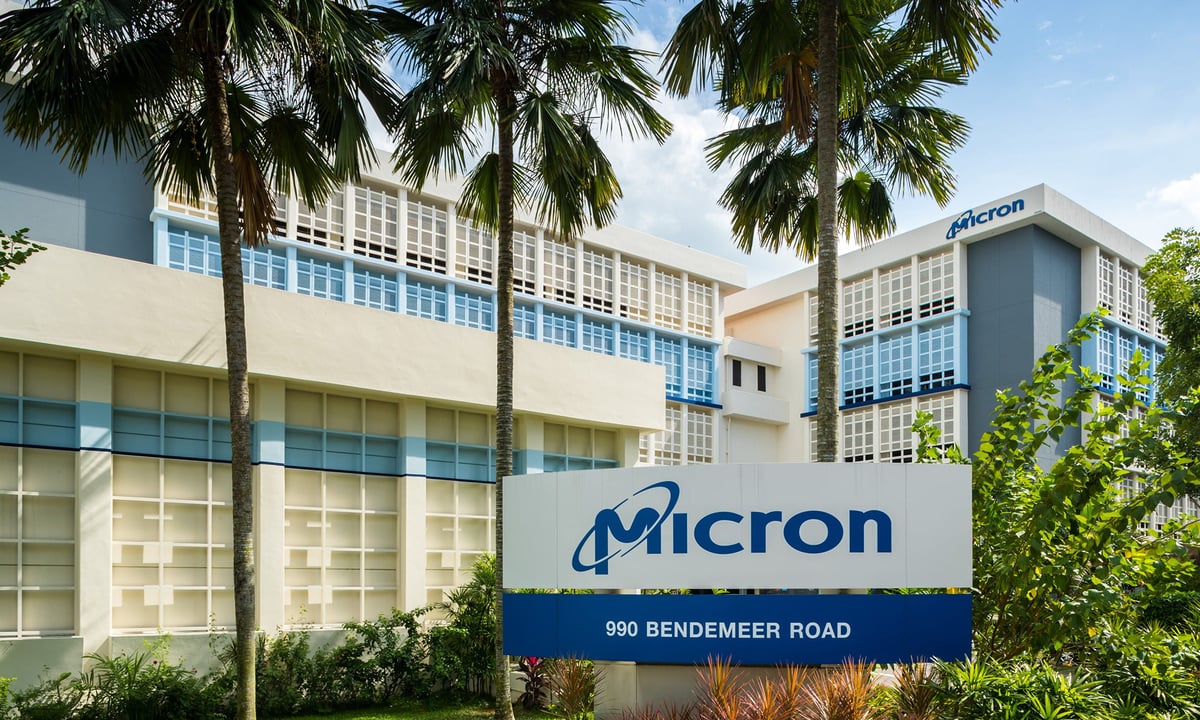
SK Hynix's Nasdaq listing intensifies competition in the AI memory market, where both it and Micron are capitalizing on surging demand from generative AI workloads. SK Hynix dominates HBM with 56.4% global share, while Micron has achieved triple-digit revenue growth in data center memory. Both are undertaking major capacity expansions—SK Hynix through its IPO proceeds and Micron through a $250 billion(約40兆円) U.S. manufacturing commitment—to meet what appears to be a multi-year secular supercycle rather than a temporary spike, driven by long-term supply agreements that lock in premium pricing.
Summaries like this, in your inbox every morning.
Sign up free →What happened
SK Hynix listed on Nasdaq (up 27.16%), bringing the world's leading HBM producer—which holds 56.4% global market share—directly into U.S. capital markets. Micron (up 5.07%) trails in HBM share but has grown data center revenue over 650% year over year, with gross margin in that segment more than doubling. Both companies are executing major capacity expansions: SK Hynix is using IPO proceeds for new plants in South Korea, while Micron is raising domestic investment to over $250 billion(約40兆円) through the middle of the next decade for sites in New York, Idaho, and Virginia.
Why it matters
AI workloads demand memory chips with higher bandwidth and capacity than traditional devices require. Long-term supply agreements between chipmakers and hyperscalers lock in premium pricing and reduce oversupply risk, pointing to a secular supercycle rather than a cyclical spike. Both companies have shown restraint from flooding the market, instead focusing on high-margin products—a structural shift from earlier cycles. For investors, this suggests sustained demand over several years as AI data center buildouts accelerate.
What to watch
As of July 13, Micron trades at a forward P/E of around 6, while SK Hynix is closer to 8—both meaningfully below the S&P 500 average of around 21 and the semiconductor sector's 26–30× range, implying neither stock has fully priced in premium valuation expansion despite 2026 gains.
SK Hynix's recent listing on Nasdaq represents a pivotal moment for the AI memory industry, bringing one of the world's leading producers of advanced DRAM and high-bandwidth memory directly into U.S. capital markets and intensifying its rivalry with Micron Technology. The move arrives at a moment when both companies are riding powerful tailwinds created by the explosive growth of generative AI and large-scale model training, which require memory chips delivering higher bandwidth and capacity than those used in traditional servers or consumer devices.
AI workloads grow in complexity with emerging agentic systems, and the amount of memory per server rises sharply as a result. The manufacturing of advanced memory demands specialized equipment such as extreme ultraviolet (EUV) lithography scanners, precise stacking processes, and significant cleanroom capacity that cannot be expanded overnight. Unlike earlier cycles in which producers built excess supply during periods of high demand, SK Hynix and Micron have shown more prudent restraint, focusing investments on high-margin products rather than flooding the market with capacity. Long-term supply agreements between chipmakers and hyperscalers lock in premium pricing and reduce the risk of sudden oversupply, pointing to a secular supercycle rather than a cyclical spike, with demand trends likely to persist over several years as AI data center buildouts accelerate.
SK Hynix has established itself as the global leader in HBM with a market share of 56.4%, and this dominance has driven outsized revenue growth supplemented by robust profit margin expansion. While Micron trails SK Hynix in overall market share, the company has gained meaningful ground through consistent execution and has seen profitability rise substantially on the back of stronger average selling prices and higher adoption rates. Over the last year, Micron's data center revenue grew by over 650% year over year, while gross margin in that segment more than doubled. To capture ongoing demand, both companies are executing ambitious capacity expansions. SK Hynix is using its IPO proceeds to fund new fabrication plants and advanced packaging facilities in South Korea. By contrast, Micron is dramatically scaling its commitment to U.S.-based manufacturing, raising its domestic investment to over $250 billion(約40兆円) through the middle of the next decade, with major new sites under construction in New York, Idaho, and Virginia.
Both SK Hynix and Micron have delivered exceptional gains throughout 2026—so much so that both companies are in or near the trillion-dollar club. As of July 13, Micron trades at a forward price-to-earnings ratio of around 6, while SK Hynix's forward P/E is closer to 8. The average forward P/E across the S&P 500 is around 21, while the broader semiconductor industry fluctuates around 26–30× forward earnings. Both Micron and SK Hynix are trading at meaningful discounts relative to the broader market and their own peers in the semiconductor sector, suggesting most investors have yet to fully price in a premium valuation to either stock despite the valuation expansion witnessed throughout the year.
The listing of SK Hynix on Nasdaq marks a structural shift in how advanced memory supply will serve the AI industry. Both SK Hynix and Micron are uniquely positioned to benefit from a secular demand surge driven by generative AI and increasingly complex agentic systems. Unlike past semiconductor cycles, which bred oversupply as manufacturers raced to add capacity, today's landscape is characterized by supply constraints that producers have deliberately maintained. Advanced memory manufacturing requires specialized equipment such as extreme ultraviolet (EUV) lithography scanners and precise stacking processes that cannot be expanded overnight—a natural moat that favors disciplined incumbents.
Long-term supply agreements between chipmakers and hyperscalers reduce price volatility and lock in premium margins, transforming what might otherwise be a cyclical spike into a multi-year secular supercycle. SK Hynix's dominance in HBM (56.4% share) and Micron's explosive acceleration in data center revenue (over 650% year over year) both reflect the intensity of current demand. The divergence in their expansion strategies—SK Hynix using IPO proceeds to build capacity in South Korea, Micron committing over $250 billion(約40兆円) to U.S.-based manufacturing—suggests both see durable, geographically distributed demand as essential to capturing long-term value.
No discussion yet for this article
Get curated AI news from 200+ sources delivered daily to your inbox. Free to use.
Get Started FreeFree · takes 30 seconds · unsubscribe anytime
1 minute a day. The AI essentials.
200+ sources · Email / LINE / Slack
