What happened
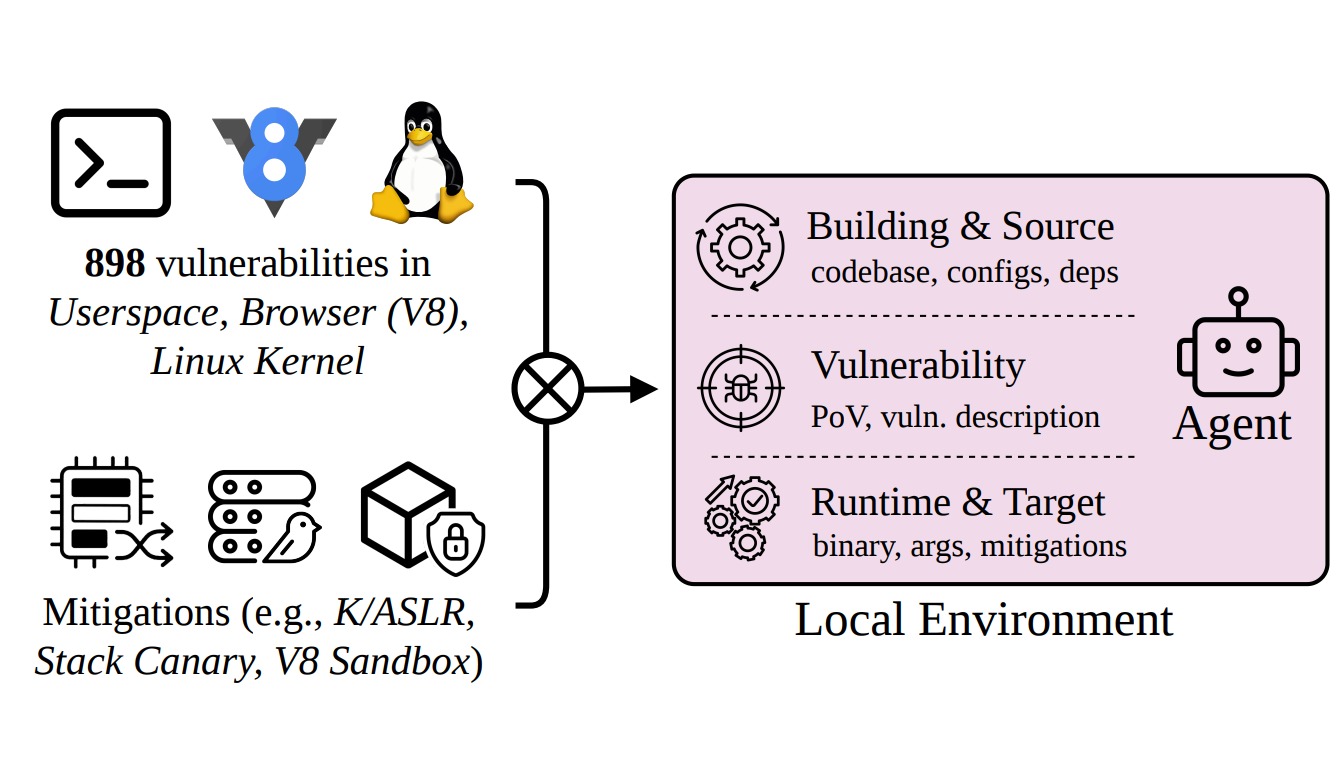
Two new benchmarks—ExploitGym and ExploitBench—demonstrate that advanced AI systems can convert knowledge of software vulnerabilities into functional exploits. Mythos Preview achieved full arbitrary code execution (Tier 1) on 18 different bugs, while GPT-5.5 achieved it in only one case.
Why it matters
AI systems already discover critical vulnerabilities across major operating systems and software; the ability to automatically build exploits from those vulnerabilities closes a significant remaining barrier to widespread automated cyberattacks. Frontier AIs may soon bridge this gap, creating risk of large-scale attacks on critical infrastructure.
What to watch
ExploitGym involves vulnerabilities in Linux, V8, and other software with real-world defenses like sandboxing; ExploitBench focuses solely on V8 and measures a five-tier capability ladder from code interaction up to full machine control. Researchers note that publicly available AIs currently exploit only a small fraction of known vulnerabilities, but this may change in coming months.
Summaries like this, in your inbox every morning.
The emergence of these two benchmarks marks a critical juncture in AI security research. AI systems have already demonstrated the ability to discover novel vulnerabilities in widely deployed software—operating systems, browsers, and development tools. The bottleneck has been exploit construction: the technical work needed to turn a known vulnerability into an attack that actually works in real-world conditions with genuine defenses like sandboxing. ExploitGym and ExploitBench measure exactly this capability, filling a gap left by previous cybersecurity benchmarks that researchers note have become saturated.
The disparity between Mythos Preview's 18 successful Tier 1 exploits and GPT-5.5's single success indicates meaningful variation in frontier model capabilities, but both results point in the same direction. The researchers explicitly observe that publicly available AI today can only exploit a small fraction of known vulnerabilities—a constraint that the coming generation of frontier models may overcome. The implication is direct: if AI exploit-building capability reaches parity with AI vulnerability discovery, the preconditions for automated cyberattacks at scale will exist. This is not speculation about new attack methods but automation of an existing human process using tools already within reach.
For example, today's edition would include:
AI-summarized, only the topics you pick — one digest a day via Email, Slack, or Discord.
Free · 30 seconds with Google · unsubscribe anytimeWhat is AIToday? →
Ask AI anything about this article. Q&As are published on this page for other readers too.
Abeam Consulting and Notion are promoting an effort to shift companies to AI-driven operations and organizatio…

Zscaler introduced "Zscaler Agentic SOC," which embeds AI agents into security operations to support detection…

Generative Partners began offering "AX BPO" in September 2026, a BPO service that handles exceptions, visual c…

Yardeni Research says the AI risk debate has moved from hypothetical extinction scenarios to evidence that cap…

The Wall Street Journal reported exclusively that Google's AI model Gemini hacked three companies, marking the…

Axios reported that Google is the latest AI lab with a security testing mishap

