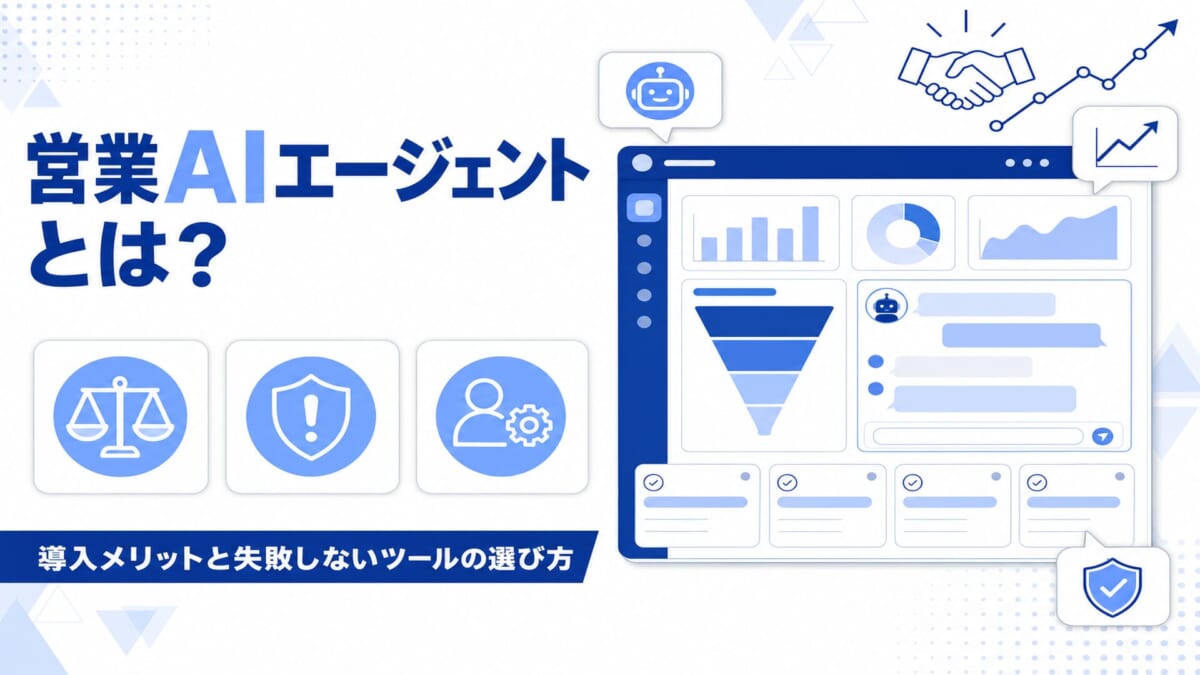
Sales AI agents automate routine sales work—research, proposals, scheduling—by learning from CRM data, complementing rather than replacing existing platforms. They address labor shortages and prevent expertise loss when staff turn over, yet they require rigorous data hygiene, security vetting, and human oversight on critical details. Japanese implementations prioritize cultural fit (honorifics, formal approval workflows) and integration with major platforms like Salesforce or HubSpot.
Summaries like this, in your inbox every morning.
Sign up free →What happened
Sales AI agents—autonomous AI systems that execute tasks like lead research, proposal drafting, and appointment scheduling—are emerging as a complement to existing CRM/SFA tools. They read accumulated sales data and act on it continuously, unlike interactive chatbots that require manual queries. Key services include Salesforce Agentforce, HubSpot Breeze, and domestic options like Mazrica Sales and Algoage's Apodori.
Why it matters
For sales teams facing staffing shortages, these agents can sustain deal volume by automating prospecting and follow-up, freeing managers to focus on conversations. They also codify individual expertise into repeatable processes—mitigating risk when experienced reps leave. However, misinformation risks and data breaches are real concerns; the technology demands clean, well-maintained CRM records and human sign-off on high-stakes information (price, delivery dates). Algoage's public case shows the potential: Apodori generated approximately 1.1 billion yen in annual revenue and grew 191 percent year-over-year.
What to watch
Success depends on four selection criteria: existing CRM integration, whether the agent supports (support model, where humans decide) or executes (execution model, fully automated) tasks, security/explainability certifications (e.g., SOC2), and adaptation to Japanese business customs (honorifics, ringi approval processes). Misalignment with sales culture leads to adoption failure. Start small—pilot a single department—and validate with clear KPIs before full rollout.
No discussion yet for this article
Get curated AI news from 200+ sources delivered daily to your inbox. Free to use.
Get Started FreeFree · takes 30 seconds · unsubscribe anytime
1 minute a day. The AI essentials.
200+ sources · Email / LINE / Slack
