Intuitive unveiled a five-layer AI framework designed to improve robotic surgical care by reducing variability, shortening learning curves, and expanding surgeon reach while maintaining patient safety and surgeon control. The framework is grounded in real-world data from over 20 million da Vinci procedures and advances beyond visual recognition to capture surgical reasoning and clinical decision-making. At its conference presentation, Intuitive also demonstrated live telesurgery connecting surgeons across two locations in real time, pointing toward future applications in expanding access to specialized care.
Summaries like this, in your inbox every morning.
Sign up free →What happened
Intuitive announced its structured approach to AI development at the Society of Robotic Surgery's annual conference, building AI capability across five layers — from data capture and insights through intraoperative guidance, augmented dexterity, and supervised autonomy. The company also demonstrated live telesurgery connecting its Sunnyvale, California headquarters and Atlanta, Georgia campus in real time, with two surgeons collaborating remotely on an advanced tissue model.
Why it matters
Intuitive's framework is grounded in data from more than 20 million da Vinci procedures performed globally. The company has developed surgical AI models that go beyond visual recognition to capture the reasoning behind clinical decisions — risk assessment and next-step planning — outperforming general-purpose AI systems on surgical understanding tasks. This approach aims to reduce surgical variability, improve outcomes, shorten learning curves, and expand access to specialized care while preserving surgeon control.
What to watch
The live telesurgery demonstration showed da Vinci 5's remote collaboration and shared-control capabilities, including Force Feedback that lets both surgeons feel tissue forces and share control of instruments regardless of distance. However, the telesurgery software used in the demonstration is still in development; the technology is not currently for sale and cannot be made available in the U.S. or any other geographies at this time.
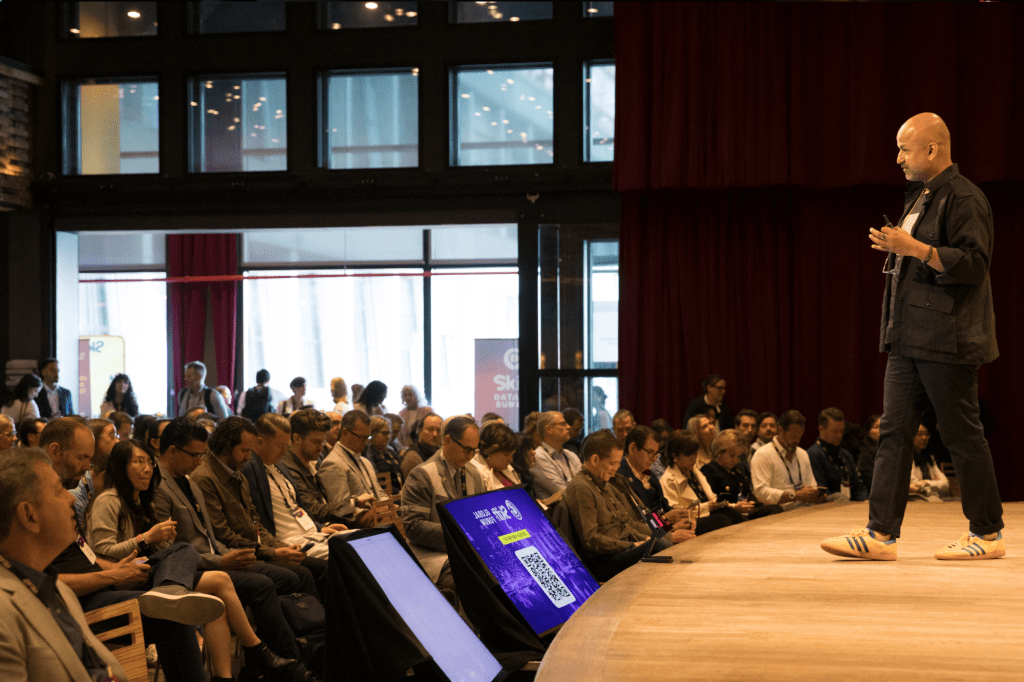
On July 23, 2026, Intuitive (NASDAQ: ISRG) outlined its vision for AI-enabled surgical care at the Society of Robotic Surgery's annual conference in Hollywood, Florida. The company presented a five-layer AI framework designed to improve surgical outcomes while preserving surgeon control and accountability.
Intuitive's CEO Dave Rosa emphasized that healthcare systems worldwide face three shared challenges: delivering better patient outcomes, lowering the total cost of care, and expanding access. The company believes AI can address these challenges by helping care teams learn, collaborate, and deliver care more consistently and efficiently. The framework progresses through five layers: good data (capturing rich, standardized surgical information at scale), meaningful insights (translating data into actionable intelligence), intraoperative guidance (real-time support during procedures), augmented dexterity (AI-assisted precision and control), and supervised autonomy (AI that extends surgeon capability while preserving surgeon accountability and control). Iman Jeddi, Senior Vice President and General Manager of da Vinci Platforms, explained that each layer builds on the foundation below it, creating a pathway from data and insights to increasingly advanced forms of assistance. "Our longer-term vision of supervised autonomy is not about removing the surgeon," Jeddi said. "It's about responsibly extending surgeon capability through technology that is grounded in data, rigorously validated, and designed to preserve surgeon control and accountability."
Intuitive's approach draws from more than 20 million da Vinci procedures performed globally. The company has developed a novel surgical AI framework that moves beyond visual recognition to capture how surgeons think and make decisions. Researchers built a dataset from surgical videos that records not just what happens in the operating field, but the reasoning behind clinical choices, including risk assessment and next-step planning. Using this dataset, the team developed advanced vision-language and reasoning models capable of answering complex, context-rich questions about surgery. In early testing, these models significantly outperformed general-purpose AI systems on surgical understanding tasks. The research is currently available as a pre-print under peer review on arXiv.
At the conference, Intuitive facilitated a live telesurgery demonstration connecting two facilities in real time: Dr. Doug Stoddard at the remote da Vinci 5 surgeon console in Sunnyvale, California, and Dr. Andy L. Hawthorne with the da Vinci 5 system in Atlanta, Georgia. The procedure was live streamed to the SRS audience, demonstrating da Vinci 5's remote collaboration and shared-control capabilities on an advanced tissue model designed to replicate live tissue behavior. Both surgeons could feel the forces exerted on the tissue model by the instruments through Force Feedback, and they shared control of advanced instrumentation including stapling, regardless of distance. Dr. Stoddard noted that "this demonstration will be a powerful indication of telesurgery's potential to address real health equity challenges globally — helping health systems extend specialized surgical experience across broad geographies and expand patient access to consistently high-quality care closer to home." However, Intuitive emphasized that the telesurgery software demonstrated is for demonstration purposes only, the safety and effectiveness have not been established, and the technology is not currently for sale and cannot be made available or put into service in the U.S. or any other geographies at this time.
Intuitive's announcement reflects the company's strategy to position robotic surgery as a platform for AI-assisted care delivery. The five-layer framework is designed to be progressive—each layer builds on the foundation below, creating a pathway from raw surgical data to increasingly autonomous forms of assistance. This structured approach acknowledges that AI adoption in medicine must be gradual, validated, and grounded in surgeon control and accountability, not replacement. The company's emphasis on data from over 20 million procedures is significant because it establishes a rare, proprietary foundation for surgical AI—one that captures not just visual information but the clinical reasoning behind surgical decisions. This contrasts with general-purpose AI systems, which the company's own early testing showed perform worse on surgical understanding tasks.
The live telesurgery demonstration, while still in development, signals Intuitive's longer-term vision of addressing healthcare access challenges. By enabling remote collaboration with shared control and force feedback, telesurgery could help extend specialized surgical expertise across geographies, particularly in regions with limited access to certain specialists. However, the disclaimer that the technology is not currently for sale underscores the regulatory and safety validation work still required before deployment—a realistic constraint for medical devices.
AI-summarized, only the topics you pick — one digest a day via Email, Slack, or Discord.
Free · takes 30 seconds · unsubscribe anytime
No comments yet. Be the first to share your thoughts!
Log in to join the discussion
Get curated AI news from 200+ sources delivered daily to your inbox. Free to use.
Get Started FreeFree · takes 30 seconds · unsubscribe anytime
1 minute a day. The AI essentials.
200+ sources · Email / LINE / Slack
