Summaries like this, in your inbox every morning.
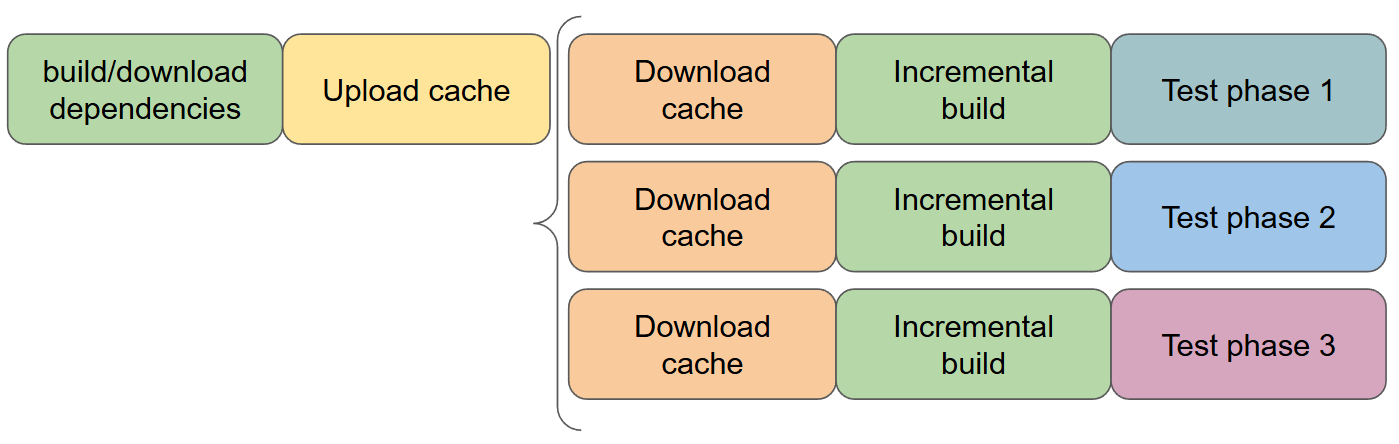
Sign up free →A technical post on Hacker News provides a mathematical framework for deciding whether to split CI/CD pipelines (the automated testing and build steps developers run before deploying code) into parallel tasks. The analysis derives an inequality: parallelization only helps when overhead costs (caching, syncing results) stay smaller than the total time saved by running tests simultaneously.
The key insight: parallel pipelines aren't automatically faster. The math shows that if your incremental build time, cache write time, and cache read time combined exceed the time you'd save by running tests in parallel, you're better off keeping a simpler sequential pipeline. This means every team's answer depends on their specific numbers—not a one-size-fits-all recommendation.
For engineering teams deciding whether to invest in pipeline parallelization (a common but costly refactor), this gives a concrete way to calculate ROI before spending weeks on infrastructure work. Teams can now measure their own bottlenecks and know upfront whether the effort will actually cut deployment times or just add complexity.
No discussion yet for this article
Get curated AI news from 200+ sources delivered daily to your inbox. Free to use.
Get Started FreeFree · takes 30 seconds · unsubscribe anytime
1 minute a day. The AI essentials.
200+ sources · Email / LINE / Slack
