Fujitsu has released a business and society vision called Fujitsu Technology and Service Vision 2026, proposing a framework called Dynamic transformation for enterprises to continuously adapt in unpredictable times. The framework emphasizes that competitive advantage comes from the organization's ability to hypothesize, test, and learn quickly, powered by AI and advanced technologies working together. A Fujitsu survey of executives found that leading companies share common traits: placing AI at the core of management strategy, developing talent to maximize AI's potential, building a technology foundation, and strengthening security.
Summaries like this, in your inbox every morning.
Sign up free →What happened
富士通は、ビジネスと社会の未来ビジョンである「Fujitsu Technology and Service Vision 2026」を6月18日に発行した。この指針では、予測困難な時代に企業が継続的な変革を実現するための方針を示している。
Why it matters
企業の競争力を左右するのは、仮説を立て検証し結果から学ぶ組織能力であり、この実験と学習のサイクルを高速に回し続けることが重要だと指摘している。AIを中心に複数の進化するテクノロジーを組み合わせることで、変化に適応し続ける企業への進化が可能になるとしている。
What to watch
富士通が2月に実施したCxO調査では、成果を上げるリーダー企業に共通する特徴として、AIを経営の中核に据える戦略、AIの力を最大化する人材、テクノロジー基盤、そしてセキュリティが挙げられている。
Fujitsu's release of Fujitsu Technology and Service Vision 2026 reflects a strategic response to business environments where unpredictability has become the norm. Rather than proposing static strategies, the framework centers on Dynamic transformation—a continuous cycle of hypothesis, validation, and learning that allows organizations to update their strategies, business models, and processes in real time. This approach recognizes that in rapidly changing markets, the ability to experiment and adapt quickly is more valuable than having a fixed long-term plan.
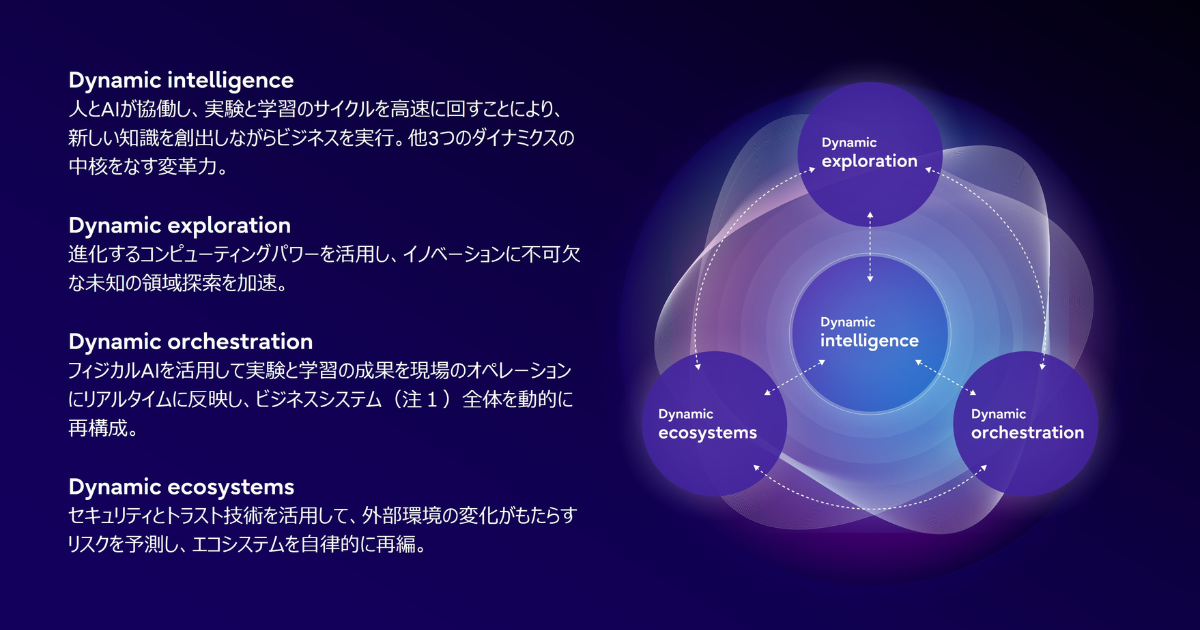
The vision identifies four interconnected technological dynamics—intelligence, exploration, orchestration, and ecosystems—that work together to enable this transformation. Importantly, AI is positioned as the central driver, but not in isolation; the framework emphasizes that evolving technologies must function together as an integrated system. Fujitsu's February survey of executives provides empirical grounding for these claims, revealing that leading companies systematically align four elements: placing AI at the core of strategy, building human talent to leverage AI effectively, establishing technology infrastructure, and strengthening security. This alignment suggests that executives themselves recognize that technology adoption alone is insufficient without corresponding changes to strategy, people, and risk management.
No comments yet. Be the first to share your thoughts!
Log in to join the discussion





Get curated AI news from 200+ sources delivered daily to your inbox. Free to use.
Get Started FreeFree · takes 30 seconds · unsubscribe anytime
1 minute a day. The AI essentials.
200+ sources · Email / LINE / Slack
