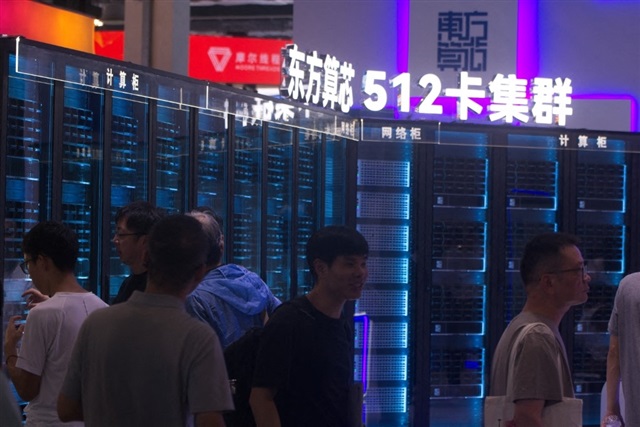
China is shifting its AI hardware strategy away from individual accelerator chips toward supernodes—large integrated systems that combine optical interconnects, advanced packaging, and cloud-scale design. This systems-level approach reflects a recognition that competing on single-chip performance alone is insufficient; instead, the emphasis is on achieving speed and efficiency gains through tight integration and interconnect technology.
Summaries like this, in your inbox every morning.
Sign up free →What happened
China is moving beyond individual AI accelerators (chips) to focus on supernodes—large-scale integrated systems using optical interconnects, advanced packaging, and cloud-scale infrastructure.
Why it matters
Supernodes represent a strategic shift in how China builds AI capability. Rather than competing on individual chip performance, the country is betting that systems-level integration and interconnect speed can provide a competitive edge in training and running large AI models.
What to watch
The optical interconnects and advanced packaging technologies China is deploying in these supernodes will determine whether the country can match or exceed the performance of Western AI infrastructure, which currently relies on comparable systems-scale integration.
China's AI hardware development is transitioning from a focus on individual accelerators to an emphasis on integrated supernodes that combine optical interconnects, advanced packaging, and cloud-scale design. Supernodes represent a systems-level approach to AI infrastructure, moving beyond standalone chips toward tightly coupled, large-scale systems. Optical interconnects—technology that uses light for data transmission—are being deployed within these supernodes to achieve high-speed communication between components. Advanced packaging techniques enable closer physical integration of multiple functional elements, reducing signal travel distance and latency. The cloud-scale dimension means these supernodes are engineered to operate as part of large distributed data-center environments, allowing coordinated training and inference workloads at scale. This pivot reflects a strategic recognition that individual chip performance, while important, is insufficient to compete in AI. Instead, the speed and efficiency of the entire system—determined by how quickly data moves between components, how tightly they are integrated, and how well they scale—determines real-world AI capability. By pursuing this systems-integration path, China aims to reduce its dependence on winning individual technology races (where Western suppliers often lead) and instead compete on the basis of integrated infrastructure design and scale.
China's AI strategy is undergoing a significant reorientation. For years, the focus was on developing competitive individual accelerators to match Western chips. The shift to supernodes signals that China recognizes systems integration as the true bottleneck in AI infrastructure. Optical interconnects—which transmit data via light rather than traditional electrical paths—can reduce latency and increase bandwidth between components, both critical for training large language models. Advanced packaging allows more components to work together more tightly, reducing distance and therefore latency further. By scaling these integrated systems to the cloud scale (meaning they span multiple racks or even data centers), China aims to create AI training and inference capacity that is not merely a collection of fast chips but a tightly coordinated whole. This approach mirrors the strategy employed by leading Western AI cloud providers, which have long recognized that systems architecture, not chip alone, determines real-world AI capability.
AI-summarized, only the topics you pick — one digest a day via Email, Slack, or Discord.
Free · takes 30 seconds · unsubscribe anytime
No discussion yet for this article
Get curated AI news from 200+ sources delivered daily to your inbox. Free to use.
Get Started FreeFree · takes 30 seconds · unsubscribe anytime
1 minute a day. The AI essentials.
200+ sources · Email / LINE / Slack
