
Anthropic would need $1.2 trillion in annual revenue within a decade to justify a $2 trillion potential valuation.
That is 18 times its current run rate and 1.7 times Amazon's annual sales.
The company would need to grow 25% yearly after 2028 to reach that target.
What happened
NYU finance professor Aswath Damodaran calculated that Anthropic would need to generate roughly $1.2 trillion in annual revenue within a decade to justify a potential $2 trillion valuation. That target is roughly 18 times Anthropic's July revenue run rate of more than $65 billion and 1.7 times Amazon.com Inc.'s $716.9 billion in sales last year.
Why it matters
Anthropic's annualized revenue run rate has climbed from about $9 billion at the end of 2025 to more than $65 billion by July, and the company projects $190 billion to $200 billion in 2028 revenue. However, even after hitting its 2028 target, Anthropic would need to grow around 25% a year for another eight years to reach the $1.2 trillion figure—a pace that assumes AI replaces expensive workers across industries, a shift that could face regulatory and political resistance.
What to watch
Damodaran pegs the entire current market for AI products and services at roughly $250 billion. The $2 trillion valuation depends on whether AI moves beyond a productivity tool to actually replace workers—a transition that could bring job losses and regulation that would slow the growth the valuation requires.
Ask the AI about this article →
Damodaran's analysis reveals the extraordinary scale of growth required to justify Anthropic's potential $2 trillion valuation. A May funding round valued the company at $965 billion, and existing investors reportedly believe it could command $2 trillion or more in an initial public offering. The company's revenue climb—from $9 billion at the end of 2025 to more than $65 billion by July—is steep, yet Damodaran's math shows it is only the beginning of what a $2 trillion price tag would demand.
The core tension in the valuation rests on AI's economic role. Damodaran pegs the entire current market for AI products and services at roughly $250 billion. If AI remains mainly a productivity tool that companies pay for on top of wages, that market stays capped. The multitrillion-dollar opportunity appears only if AI replaces expensive workers across industries and countries. However, that transition would likely bring job losses, political resistance, and regulation—forces that could slow the very growth the $2 trillion valuation requires. In other words, the scenario that justifies the price tag may also create the conditions that prevent Anthropic from reaching it.
For example, today's edition would include:
AI-summarized, only the topics you pick — one digest a day via Email, Slack, or Discord.
Free · takes 30 seconds · unsubscribe anytimeWhat is AIToday? →
Ask AI anything about this article. Q&As are published on this page for other readers too.
Israeli startup DataAgent Ltd

Taoyuan is positioning itself as a northern hub for AI data centers (AIDC), citing the Tatan area and an LNG c…
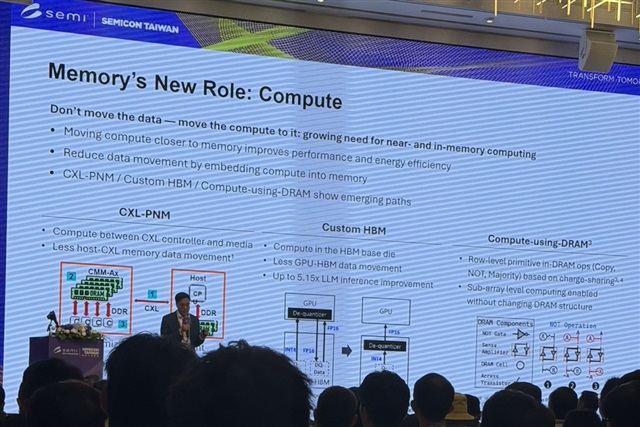
SK Hynix presented a custom HBM concept at SEMICON Taiwan 2026, where compute functions are placed in the base…
The U.S. Department of Defense announced on August 31 that it has deployed ChatGPT Mil, a customized version o…

Nvidia reported earnings that were both remarkable and boring, reflecting its focus on avoiding a consolidated…

Anthropic has agreed to a $35bn cloud-computing contract with Lambda, a Nvidia-backed cloud provider