What happened
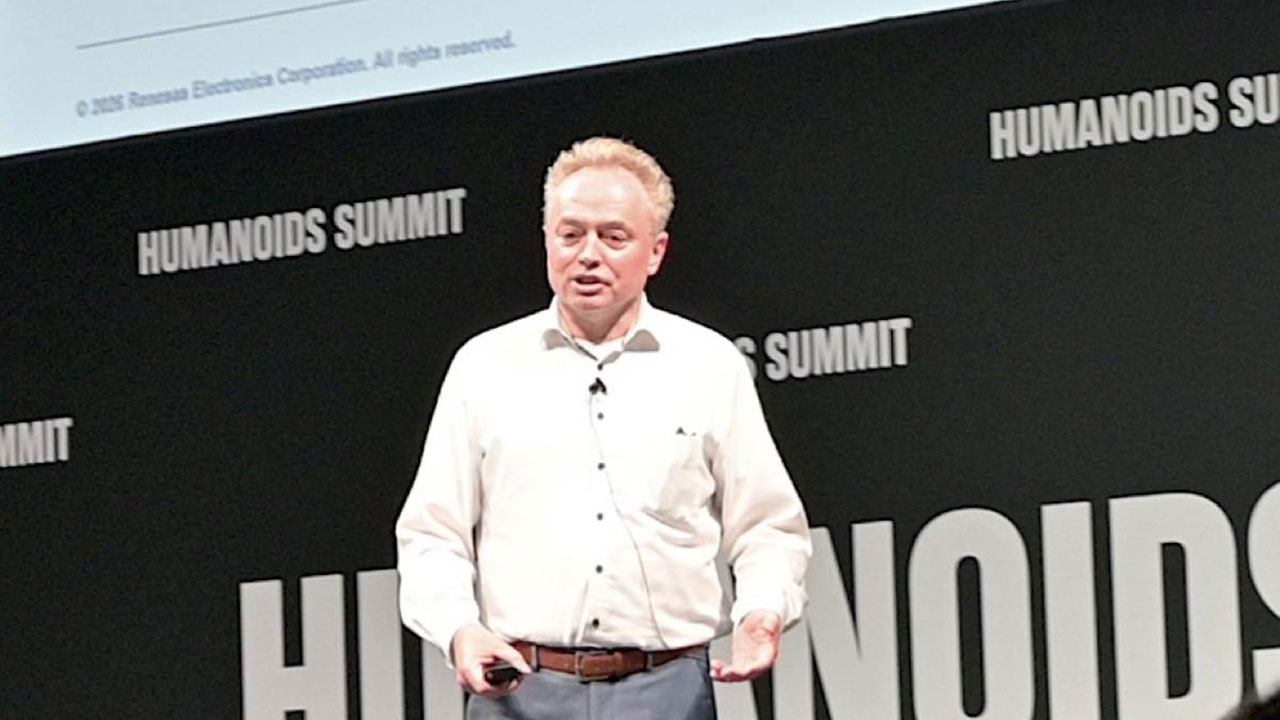
Renesas Electronics' sensor division vice president Leopold Beer stated that the real constraint on practical humanoid robots is not artificial intelligence but sensor technology. He highlighted the need for proprietary sensation (so robots can sense their own body position), environmental awareness, and specific sensor solutions including joint sensors, robotic hands with touch and force feedback, and combined LiDAR and camera systems.
Why it matters
Large language models (AI that understands and generates text) have made humanoid robots capable of sophisticated decision-making, but current robots struggle with the physical awareness required to operate safely and reliably in the real world. Without better sensors, robots cannot detect unexpected contact, correct arm position errors, or understand their surroundings well enough to be trustworthy in practical use.
What to watch
Beer is speaking at the Humanoids Summit Tokyo 2026 (May 28–29, 2026) where he will detail encoder-integrated motor solutions for making smaller, lower-cost humanoids—signaling that the industry's focus is shifting from AI capabilities toward the hardware infrastructure that actually lets robots move and sense.
Summaries like this, in your inbox every morning.
Pick your industry and the AI tools you use, and get news related to your work every day.
Free · 30 seconds with Google · unsubscribe anytimeWhat is AIToday? →
Ask AI anything about this article. The AI reads this article, earlier AIToday articles, and Wikipedia, and cites its sources. Q&As are published on this page for other readers too.
On October 12, CNBC's Jim Cramer said combining CrowdStrike, Palo Alto Networks and Okta makes an AI "kill swi…

Sam Jenkins of Punchcard Systems cites a 2025 Microsoft survey of 1,725 data security leaders finding nearly t…
American Express launched its Intent Intelligence framework, which captures and authenticates purchase instruc…

Forrester argues that MuleSoft's Agent Fabric, an agentic AI control plane for governing AI agents, is Salesfo…

Vertiv Holdings Co and the Deloitte Center for Integrated Research released an AI infrastructure deployment gu…
Arista's August 4 results showed second-quarter revenue of $3.036 billion, up 37.7%, and a 45.4% GAAP operatin…