What happened
Industry analysts including Gartner and Forrester are naming a new operational layer called an AI Agent Management Platform (AMP) or 'agent control plane.' An AMP combines runtime enforcement (blocking disallowed agent actions before they execute) with fleet management (tracking which agents exist, what version each runs, what permissions they hold, and what data they access) — functions that previously lived in separate tools.
Why it matters
As companies move from single agents to multiple agents in production, four problems emerge at once: teams deploy unregistered 'shadow agents' that nobody tracks; agent permissions accumulate without oversight; autonomous agents can burn through entire budgets in hours without real-time cost caps; and when regulators or incident reviews ask what an agent did and what data it touched, there is no auditable record. An AMP solves these by making enforcement decisions synchronously in the request path and maintaining a tamper-evident audit trail.
What to watch
An AMP differs from prompt-security tools (which inspect text going into and out of the model) and AI governance-program platforms (which document and audit what agents do after the fact). A complete AMP provides six control categories: tiered autonomy governance, a central agent registry with lifecycle and versioning, sub-20ms runtime policy enforcement, real-time spend caps, permission-drift detection against a baseline, and data-access lineage with classification of what data types (PII, PHI, PCI, confidential, etc.) each agent touched. A free tier is available to get started.
Summaries like this, in your inbox every morning.
Pick your industry and the AI tools you use, and get news related to your work every day.
Free · 30 seconds with Google · unsubscribe anytimeWhat is AIToday? →
Ask AI anything about this article. The AI reads this article, earlier AIToday articles, and Wikipedia, and cites its sources. Q&As are published on this page for other readers too.
Researchers gave models 1,600 synthetic work logs, each with a hidden flaw
OpenAI presented a 166-page potential Navier-Stokes proof in early September, saying it followed the approach…

A simulation of Crescendo, the multi-turn jailbreak by Russinovich, Salem and Eldan published at USENIX Securi…

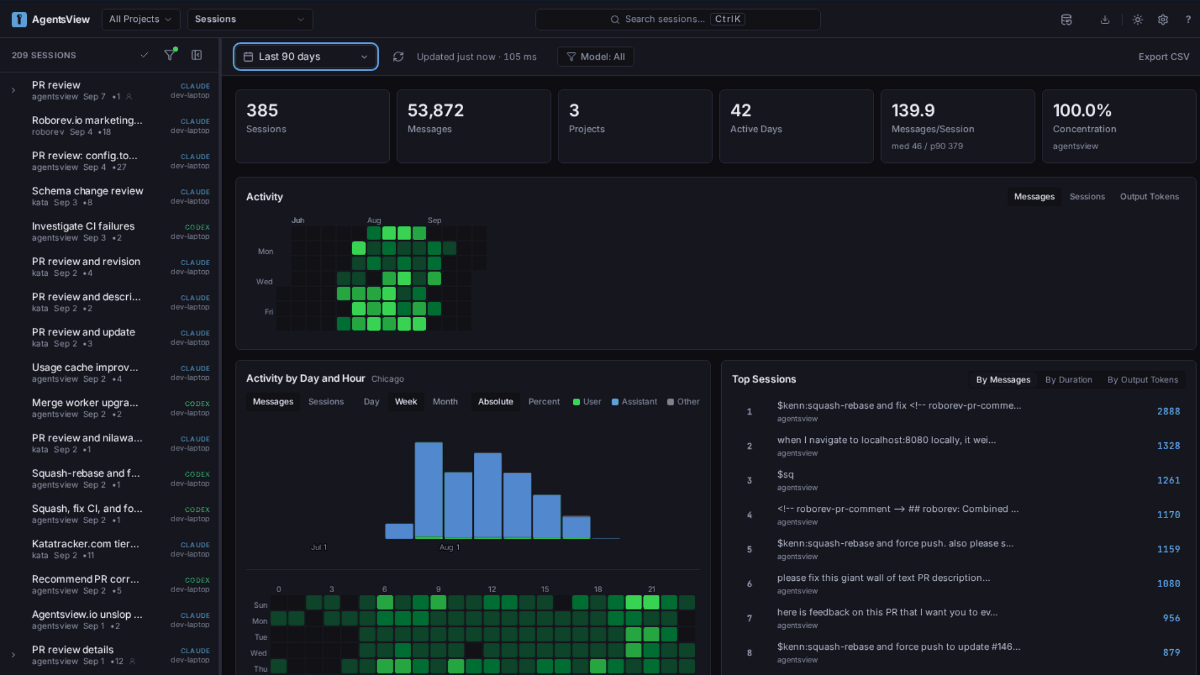
AgentsView automatically detects the local logs of Claude Code, Codex, Cursor, Copilot, Gemini and 60-plus oth…
Genomic foundation models like Evo 2, Genos and Google DeepMind's AlphaGenome learn correlations from DNA sequ…

Deutsche Bank Research predicts superintelligent AI could outperform human experts across virtually every cogn…