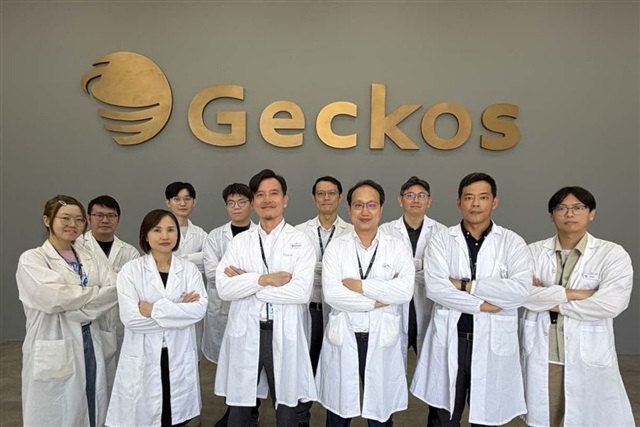
As generative AI accelerates demand for high-performance computing chips, the semiconductor industry is shifting focus from competing on manufacturing process nodes (like 2nm) to competing on materials science, according to Geckos chairman Shen Tsung-huan. This pivot matters because materials innovations will become the primary lever for performance gains as conventional process scaling approaches physical limits.
Summaries like this, in your inbox every morning.
Sign up free →What happened
Geckos chairman Shen Tsung-huan argues that as chip manufacturing advances toward 2nm nodes and beyond, the semiconductor industry is shifting from competing on manufacturing process alone to competing on materials science.
Why it matters
Generative AI is driving rapid growth in demand for high-performance computing, making material innovations critical to sustaining performance gains as traditional process scaling hits physical limits. For chipmakers and their suppliers, this signals where competitive advantage will lie in the next phase of AI hardware development.
What to watch
The article is an interview format presenting one executive's perspective on the strategic pivot toward materials-driven competition in semiconductors.
The article presents an interview-based perspective on a strategic inflection point in semiconductor competition. For decades, the industry focused on Moore's Law—the race to smaller process nodes—as the primary driver of chip performance. However, as generative AI workloads push demand for computing power and process nodes approach physical and economic limits (2nm and below), materials science is emerging as the next performance frontier. Geckos chairman Shen Tsung-huan positions materials innovation as the decisive factor for the next generation of AI chips. This view reflects a broader industry recognition that incremental process improvements yield diminishing returns, while breakthrough materials—whether in interconnects, dielectrics, or other components—could unlock substantial performance and efficiency gains. For chipmakers, chip designers, and materials suppliers, this signals where research investment and competitive differentiation will concentrate in the coming years.
No discussion yet for this article
Get curated AI news from 200+ sources delivered daily to your inbox. Free to use.
Get Started FreeFree · takes 30 seconds · unsubscribe anytime
1 minute a day. The AI essentials.
200+ sources · Email / LINE / Slack

