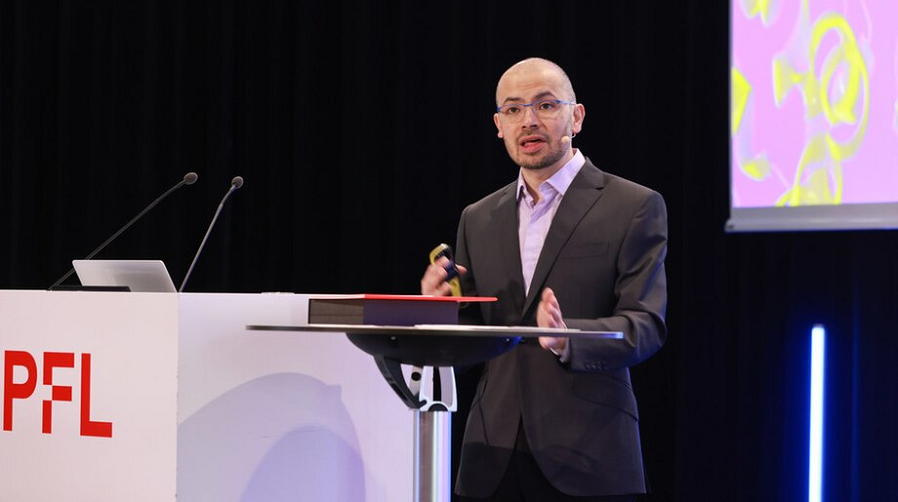
Google DeepMind CEO Demis Hassabis is calling for creation of a new standards body to regulate frontier AI models, with hopes to launch it by year's end. The organization would benchmark AI risks in areas like cybersecurity and biology, detect deceptive models, and be modeled after financial regulators like FINRA. Hassabis has already held talks with the White House and European officials about the proposal, and suggests starting with a voluntary review program before making formal assessments mandatory.
Summaries like this, in your inbox every morning.
Sign up free →What happened
Demis Hassabis, CEO of Google DeepMind, proposed in a Substack essay that the U.S. should lead creation of a standards body to regulate frontier AI models. Axios reported that Hassabis has held talks about the initiative with the White House, European officials, and competing AI labs, and he hopes to launch the body by year's end.
Why it matters
The proposed watchdog would create benchmarks to measure AI risks in sensitive areas like cybersecurity and biology research, and detect deceptive AI models. Hassabis modeled the concept after FINRA (Financial Industry Regulatory Authority), a nonprofit that regulates brokers under SEC supervision—suggesting a structure where the private sector funds and provides technical resources while independent experts lead the board.
What to watch
The plan calls for a voluntary risk evaluation program where AI labs could submit models for review 30 days before broad release, with the goal of developing a formal mandatory assessment protocol. Benchmarks would be refreshed quarterly, with the cadence potentially accelerated over time. This proposal follows a similar framework suggested by Anthropic CEO Dario Amodei about a month earlier.
In a Substack essay, Demis Hassabis, CEO of Google DeepMind, proposed the creation of a new standards body focused on regulating frontier AI models, with the U.S. leading the effort. Axios reported that Hassabis has already held talks about the initiative with the White House, European officials, and competing AI labs, and he told the publication he hopes to launch the body by year's end.
The organization would establish benchmarks for measuring AI risks, with a focus on evaluating frontier models' capabilities in sensitive areas such as cybersecurity and biology research. Hassabis wrote that the evaluations should also detect deceptive AI models. In his essay, he outlined specific tests: "Specific agentic AI tests could look for attempts to bypass safety guardrails or signs of deception, and ensure best practices, such as digitally watermarking AI-generated images and generating human-readable output tokens to understand model reasoning." To address the challenge of benchmarks becoming outdated, Hassabis proposed that the watchdog refresh its tests on a quarterly basis, with the potential to accelerate that update cadence over time.
Hassabis argued that the proposed organization should be modeled after the Financial Industry Regulatory Authority (FINRA), which regulates brokers and other financial sector players in the U.S. FINRA is a nonprofit funded by the companies it regulates but operates under the supervision of the U.S. Securities and Exchange Commission. Under Hassabis's plan, the private sector would provide the bulk of the necessary infrastructure and technical talent, while the watchdog's work would be led by a board comprised of "independent leading technical experts and open-source representatives."
The proposal includes a phased approach. The standards body could initially launch a voluntary risk evaluation program where AI labs submit their models for review 30 days before making them broadly available. The goal of this program, Hassabis wrote, would be to inform the development of a formal AI risk assessment protocol that could later become mandatory. He stated: "Once the assessment protocol is shown to be effective and robust, formalisation could quickly follow, meaning that Frontier Models would be required to pass it to be deployed in the US market. Labs would also work with the Standards Body to address any critical post-release vulnerabilities." This proposal comes roughly a month after Anthropic CEO Dario Amodei suggested a similar framework, one modeled on how the Federal Aviation Administration supervises the aviation sector.
Hassabis's proposal reflects a growing consensus among AI leaders that frontier models require structured oversight. The initiative draws directly from FINRA's regulatory model—a nonprofit funded by the regulated industry but operating under government supervision—suggesting a middle path between pure industry self-regulation and heavy-handed government mandates. The structure delegates technical work to the private sector while placing governance in the hands of independent experts and open-source representatives, a design intended to balance technical expertise with accountability.
This proposal arrives in the context of similar thinking from competitors. Anthropic CEO Dario Amodei proposed a comparable framework about a month earlier, modeled instead on the Federal Aviation Administration's supervision of aviation. The convergence of proposals from major AI labs suggests the industry may be moving toward accepting some form of standardized risk evaluation, even if the precise structure remains under discussion. Hassabis's emphasis on quarterly benchmark refreshes and the possibility of accelerated updates acknowledges a key challenge: the rapid evolution of frontier models could quickly outpace static evaluation criteria.
AI-summarized, only the topics you pick — one digest a day via Email, Slack, or Discord.
Free · takes 30 seconds · unsubscribe anytime
No discussion yet for this article
Get curated AI news from 200+ sources delivered daily to your inbox. Free to use.
Get Started FreeFree · takes 30 seconds · unsubscribe anytime
1 minute a day. The AI essentials.
200+ sources · Email / LINE / Slack
