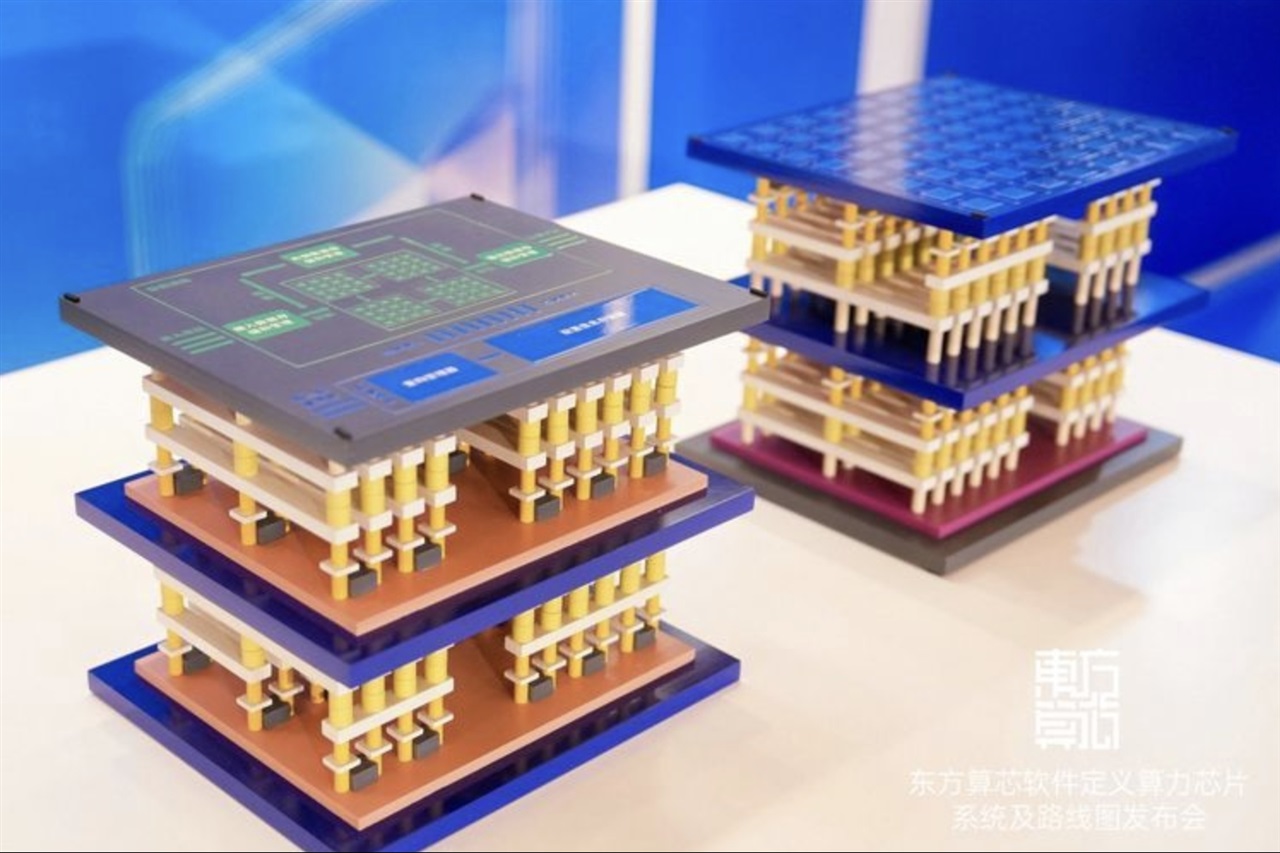
China's AI chip industry is shifting its competitive strategy from focusing solely on transistor size (process nodes) to a broader competition spanning memory, packaging, interconnects, and chip architecture.
This strategic pivot indicates that process node advancement alone cannot close the performance gap with global leaders, requiring Chinese manufacturers to innovate across multiple hardware dimensions.
What happened
China's AI chip industry is shifting focus from competing on process nodes (the size of transistors) to a wider competition involving memory technology, advanced packaging, chip interconnects, and system architecture.
Why it matters
The shift signals that process node competition alone is no longer sufficient to close the performance gap with leading global chip makers. Chinese manufacturers recognize they must innovate across multiple dimensions—memory capacity and speed, how chips are stacked and connected, and overall system design—to build competitive AI processors.
What to watch
The article specifically flags 3D memory as a key technology China is betting on to overcome current limitations, suggesting this may be where significant R&D and product announcements emerge from Chinese chipmakers in coming months.
Ask the AI about this article →
China's AI chip sector faces a strategic inflection point. The article indicates that relying on process node competition—the traditional metric of chip advancement—has proven insufficient to compete globally. This reflects a broader industry reality: as leading-edge transistor nodes become increasingly difficult and expensive to manufacture (a challenge compounded by export restrictions on advanced chipmaking equipment), competitive advantage increasingly depends on how chips are integrated into systems. Memory bandwidth, packaging density (how tightly chips can be stacked), and interconnect speed all critically determine an AI processor's real-world performance and energy efficiency. By broadening its focus to these areas, China's chip industry is acknowledging both the limits of pursuing cutting-edge process nodes and the multiple pathways to building effective AI hardware. The emphasis on 3D memory—a technology that stacks memory vertically to increase capacity and reduce latency—suggests Chinese makers see this as a critical area where they can differentiate and potentially overcome current constraints.
For example, today's edition would include:
AI-summarized, only the topics you pick — one digest a day via Email, Slack, or Discord.
Free · takes 30 seconds · unsubscribe anytimeWhat is AIToday? →
Ask AI anything about this article. Q&As are published on this page for other readers too.
Visko raised $10 million in pre-seed funding from Llama Ventures and opened public access to its first foundat…

U.S. markets ended August higher, with the S&P 500 up 2.6% and the Nasdaq up 3.9%

Neurovia AI, an Abu Dhabi-based company, is pitching Saudi security agencies software that it says can compres…

AI company Runway has unveiled Solaris, the first model in a new category it calls "Interface World Models." I…

John Deere introduced JD, a conversational AI tool that lets farmers ask open-ended questions about their hist…

Nvidia CEO Jensen Huang said on Fox Business that AI is creating 'hundreds of thousands' of jobs, including in…