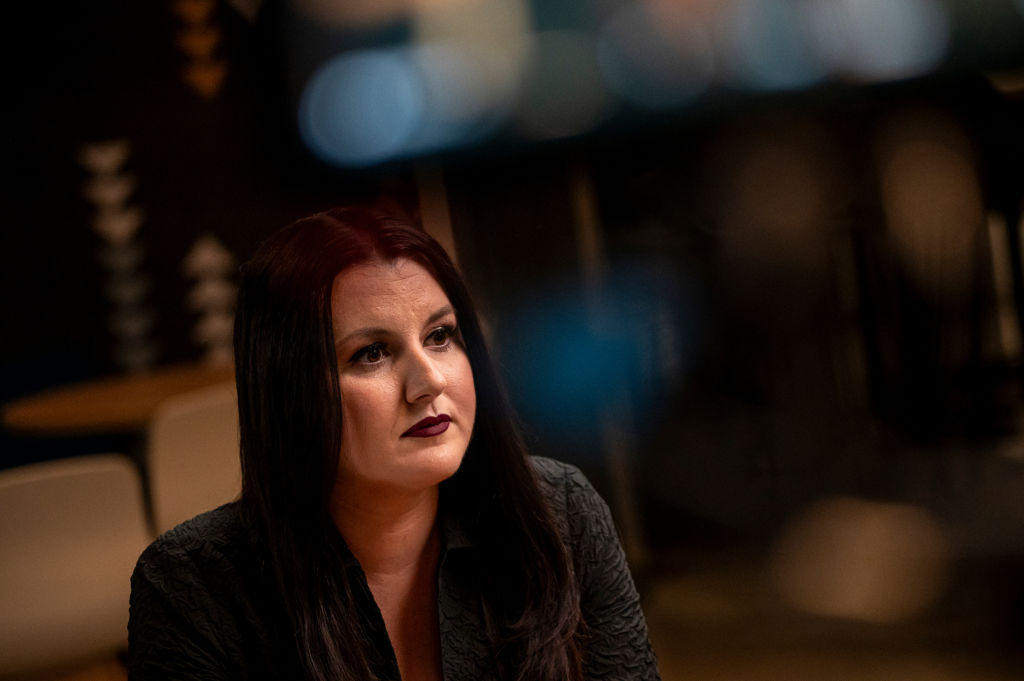
OpenAI's second-in-command, Fidji Simo, is stepping down from her full-time role to a part-time advisory position due to a relapse of a neuroimmune condition. Her departure creates a leadership vacuum at a critical juncture—the company is pursuing a potential IPO and Simo had been viewed as a candidate for expanded responsibility. OpenAI's executive ranks appear lean for a company valued at $852 billion(約140兆円), and the move comes amid a broader pattern of recent executive departures.
Summaries like this, in your inbox every morning.
Sign up free →What happened
Fidji Simo, who joined OpenAI in May 2025 as CEO of Applications and became the company's No. 2 executive, is stepping down from her full-time role and transitioning to a part-time advisory position. She cited ongoing medical leave for a relapse of a neuroimmune condition that has proven longer and harder than expected.
Why it matters
Simo was widely seen as a likely candidate for greater responsibility once OpenAI pursued a possible IPO, and her departure leaves CEO Sam Altman searching for a successor at a critical moment. The company has also seen other senior departures in recent months—CPO Kevin Weil has left, and CMO Kate Rouch departed to focus on cancer recovery.
What to watch
OpenAI's executive bench appears thin for a company valued at $852 billion(約140兆円); Denise Dresser, who joined as chief revenue officer in December and previously served as CEO of Slack, may be positioned to take on a more expansive role. The company launches its new GPT-5.6 family of models and ChatGPT Work agent on the same day as Simo's announcement.
Simo's departure marks a significant personnel shock for OpenAI as it navigates a critical growth and capitalization phase. She had consolidated business and product operations under her leadership, with COO Brad Lightcap, CFO Sarah Friar, and CPO Kevin Weil all reporting to her—a consolidation that reflected Altman's stated shift to focus on research, compute, and safety. Her exit, driven by a medical condition disclosed in April, leaves that operational structure without its leader at a time when Altman is searching for a successor and the company eyes a potential public offering.
The departures extend beyond Simo. In the same April announcement, CMO Kate Rouch left to focus on cancer recovery, and CPO Kevin Weil has since left the company as well. These exits suggest OpenAI's senior ranks face genuine pressure—whether from extended medical circumstances, the pace of the business, or the uncertainty of equity transitions. The company's April move to shorten the vesting cliff from 12 months to 6 months, and its December elimination of the cliff altogether for new hires, was framed internally by Simo as a way to let employees take risks without fear of losing equity if let go early. The company is projected to spend $6 billion(約9600億円) on stock-based compensation in 2025 alone.
Looking ahead, OpenAI's bench of remaining senior leaders—Altman, Lightcap, CFO Sarah Friar, co-founder Greg Brockman (president), and newly appointed Chief Revenue Officer Denise Dresser—suggests the organization may rely on Dresser, whose two years as CEO of Slack and 14 years at Salesforce provide enterprise and revenue scaling experience. Dresser's profile indicates she could expand into operational or strategic responsibilities as the company prepares for potential public markets.
No discussion yet for this article
Get curated AI news from 200+ sources delivered daily to your inbox. Free to use.
Get Started FreeFree · takes 30 seconds · unsubscribe anytime
1 minute a day. The AI essentials.
200+ sources · Email / LINE / Slack
