What happened
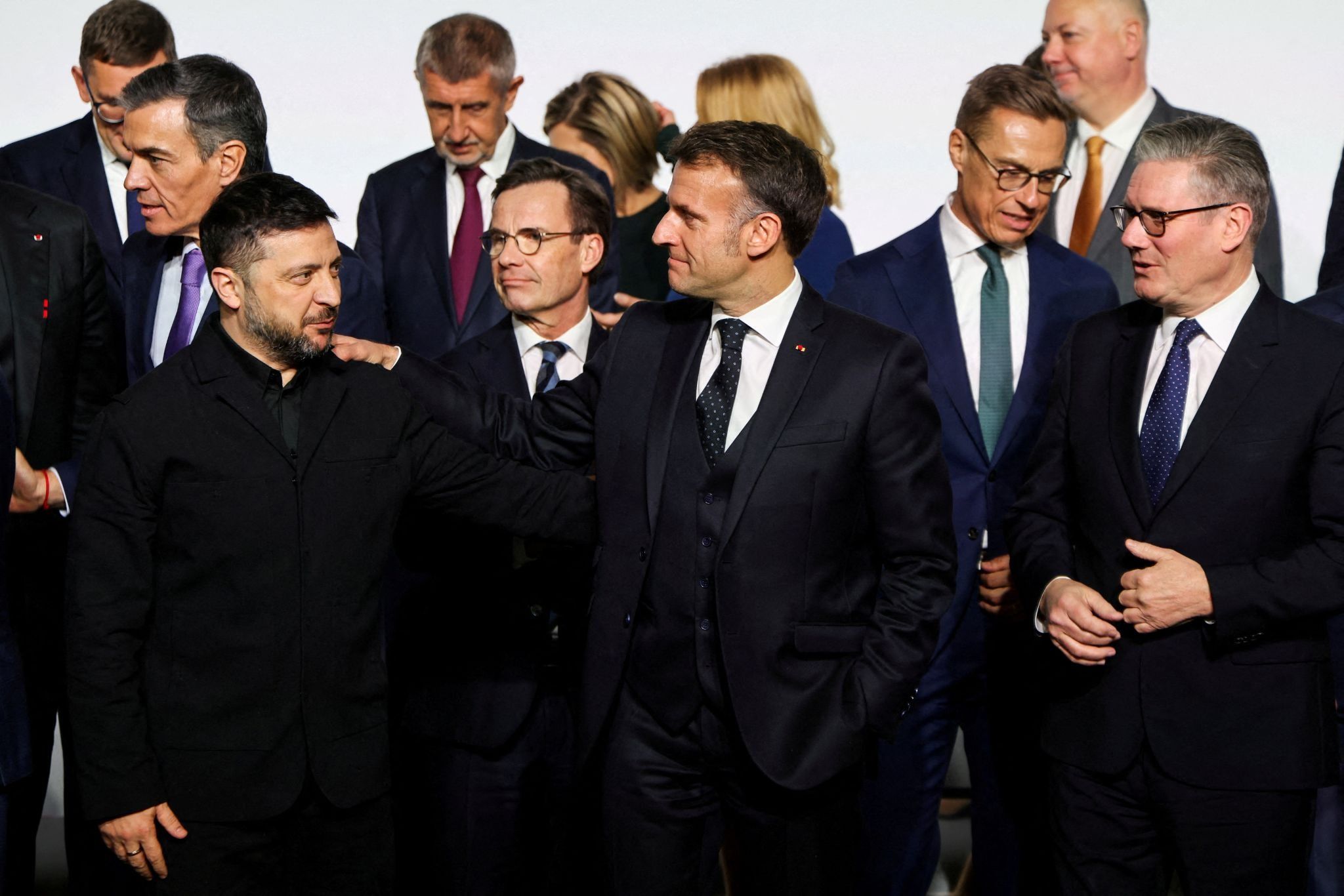
France and the UK are leading a coalition of 37 countries—mostly European—that gathered in Paris to discuss additional military support for Ukraine, with a focus on new air-defense commitments.
Why it matters
Ukraine continues to face Russian attacks despite battlefield gains, making air defense a critical need. The coalition's expansion signals sustained allied commitment to Kyiv's defense at a time when the momentum on the ground is shifting in Ukraine's favor.
What to watch
The coalition's air-defense pledges come amid a broader paradox: EU countries imported a record amount of LNG from Russia's Arctic plant even as they restrict other Russian energy imports. An EU ban on Russian LNG imports will take effect in 2027.
Summaries like this, in your inbox every morning.
The Paris gathering reflects a strategic pivot in Western support for Ukraine: as the battlefield momentum shifts in Kyiv's favor, allies are consolidating their commitments through an expanded, formalized coalition. The focus on air-defense commitments acknowledges that Russia's aerial bombardment remains a critical threat despite Ukrainian gains on the ground. The coalition's growth to 37 members—predominantly European—signals that support extends well beyond the traditional Western allies and suggests a broad consensus on the need for sustained military assistance.
However, the coalition's energy dimensions reveal a contradiction in Europe's approach to Russia. Even as member states drastically cut pipeline gas, oil, and coal imports from Moscow, EU countries have imported record volumes of LNG from Russia's Arctic plant. This suggests that while Europe has managed to restrict traditional energy flows, it has struggled to completely decouple from Russian energy—a vulnerability that persists until the scheduled LNG ban takes effect in 2027. The timing of the coalition's formation thus highlights both the strength of political unity on Ukraine and the practical constraints Europe faces in fully isolating Russia economically.
Pick your industry and the AI tools you use, and get news related to your work every day.
Free · 30 seconds with Google · unsubscribe anytimeWhat is AIToday? →
Ask AI anything about this article. The AI reads this article, earlier AIToday articles, and Wikipedia, and cites its sources. Q&As are published on this page for other readers too.

