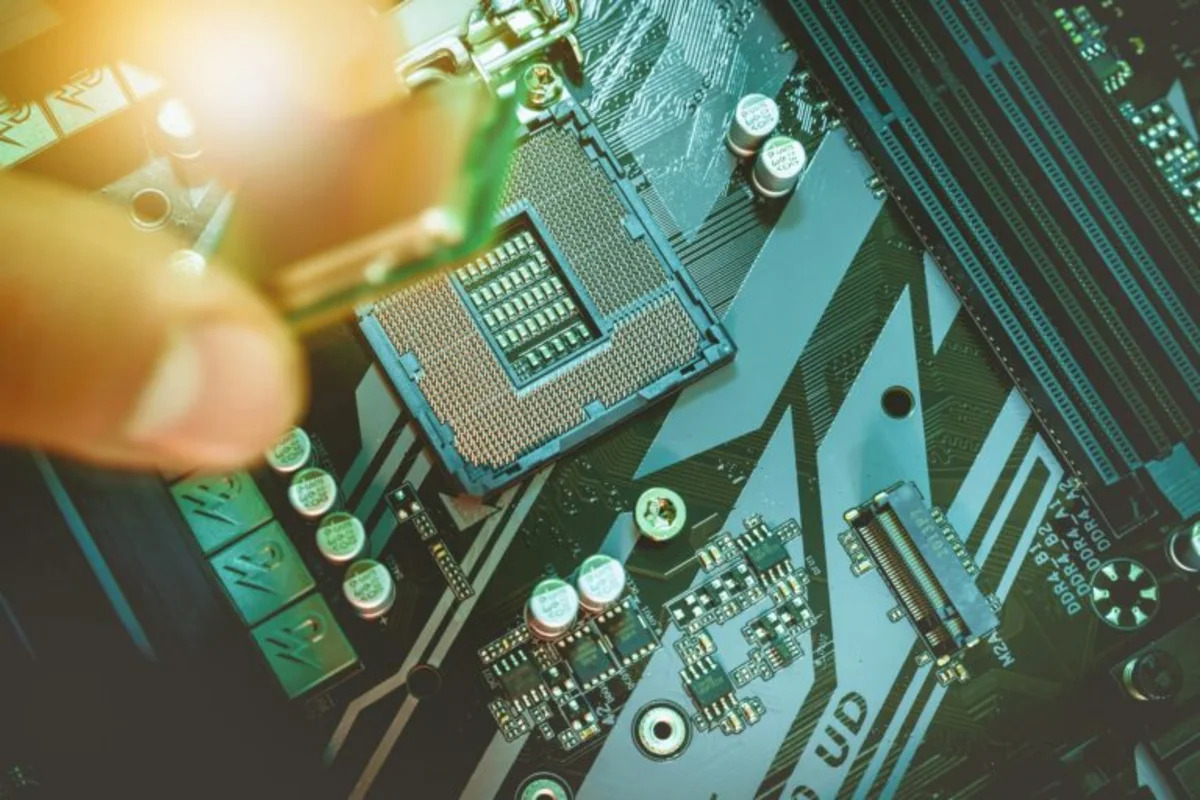
Arm Holdings CEO Rene Haas stated on June 2 that the US would have difficulty banning AI-capable CPU exports to China, arguing that such chips lack the clear regulatory thresholds applied to AI GPUs and serve too broad a range of computing tasks. Demand for Arm's AGI CPU has strengthened over the past two months as AI inference accelerates, with ByteDance and Oracle already using the chip, and Arm has doubled its revenue outlook to $2 billion(約3200億円) across fiscal 2027 and 2028, expecting the product to generate $15 billion(約2.4兆円) in annual revenue within five years.
Summaries like this, in your inbox every morning.
Sign up free →What happened
On June 2, Arm Holdings CEO Rene Haas told Reuters that the US would struggle to ban exports of AI-capable CPUs to China because the chips serve a broad range of computing workloads and lack the clear performance thresholds used to regulate AI GPUs. Haas stated that CPUs are harder to restrict than artificial intelligence accelerators.
Why it matters
Arm has doubled its demand outlook to $2 billion(約3200億円) across fiscal 2027 and 2028, with the company expecting its AGI CPU to produce $15 billion(約2.4兆円) in annual revenue in about five years. Demand for the AGI CPU has strengthened over the past two months as AI inference workloads gain momentum, with ByteDance and Oracle already adopting the chip—signaling strong commercial traction for Arm's AI strategy.
What to watch
Arm is working with TSMC, Socionext, and customers including Oracle and Microsoft to secure wafer, packaging, and memory supplies for the AGI CPU. The company's ability to scale production and maintain supply chain partnerships will be critical to meeting the $15 billion(約2.4兆円) revenue target within five years.
On June 2, Arm Holdings CEO Rene Haas spoke to Reuters about the practical barriers to US export restrictions on AI-capable CPUs bound for China. Haas argued that CPUs present a fundamentally different regulatory challenge than GPU accelerators because they serve a broad spectrum of computing tasks rather than being purpose-built for AI. "They would have to limit everything," Haas said, underscoring that the lack of clear performance thresholds that distinguish AI-capable CPUs from general-purpose chips makes targeted restriction impractical. CPUs, he noted, are simply harder to control than AI accelerators, which can be more precisely defined by their specialized architecture and computational power.
Simultaneously, Arm disclosed strengthening demand for its AGI CPU over the past two months as AI inference workloads accelerated. ByteDance and Oracle have already begun deploying the chip, validating market appetite. Reflecting this momentum, Arm Holdings doubled its demand outlook to $2 billion(約3200億円) across fiscal 2027 and 2028. The company projects even more substantial growth ahead, expecting the AGI CPU to generate $15 billion(約2.4兆円) in annual revenue within approximately five years—a trajectory that would position the product as a major revenue contributor. To realize this vision, Arm is collaborating with TSMC, Socionext, and existing customers including Oracle and Microsoft to secure the wafer capacity, packaging services, and memory supplies necessary to scale production. This supply chain coordination signals that Arm believes the demand signal is durable and that securing reliable manufacturing partnerships is essential to meeting its ambitious revenue targets.
Arm's CEO framed the regulatory landscape around AI chip exports in practical terms that underscore a key tension in US export control policy. While the US has successfully implemented performance-based restrictions on advanced AI accelerators like GPUs—which are purpose-built for AI training and inference—CPUs occupy a different regulatory space because they address general-purpose computing across data centers, edge devices, and enterprise workloads. Haas's argument suggests that any blanket export ban on AI-capable CPUs would effectively block a broad swath of legitimate computing infrastructure, making the policy economically and diplomatically costly. This statement arrives as Arm itself is experiencing accelerating demand: demand for the AGI CPU strengthened over the past two months as AI inference workloads gained traction, and the company has already secured adoption from major cloud and software companies (ByteDance and Oracle). The doubling of Arm's demand outlook to $2 billion(約3200億円) across fiscal 2027 and 2028—coupled with a five-year target of $15 billion(約2.4兆円) in annual revenue—reflects confidence that the AGI CPU will become a material revenue driver, even amid potential export uncertainty.
No comments yet. Be the first to share your thoughts!
Log in to join the discussion



Get curated AI news from 200+ sources delivered daily to your inbox. Free to use.
Get Started FreeFree · takes 30 seconds · unsubscribe anytime
1 minute a day. The AI essentials.
200+ sources · Email / LINE / Slack
