What happened
An op-ed argues against potential U.S. government actions—including a recent executive order to review AI models, congressional proposals to legislate AI further, and a prohibition on foreign nationals accessing Anthropic's most advanced models—that the authors fear could regulate or ban open-source AI. Open source, they contend, has been the only counterweight to the duopoly of Anthropic and OpenAI, whose closed proprietary models are concentrating power.
Why it matters
Open source has powered more than 90% of the world's software and produced more than 8 trillion dollars worth of economic benefits. The authors argue it is essential for education (enabling students to learn to program without cost), competition (allowing startups and underdogs to challenge incumbents like Linux did against Windows monopoly, and Android against Apple), and innovation (letting engineers build from idea to reality without fear of lawsuits or expensive bills). Regulating it would risk ceding ground to competitors like China, where open-source models are already improving American startups that cannot afford Anthropic and OpenAI's premium pricing.
What to watch
The authors acknowledge that security implications of open-source models reaching frontier capabilities merit monitoring, but argue that open source is actually safer because transparency allows more engineers to fix bugs and tune out unwanted behaviors. They warn that using China as a pretext to regulate open source would backfire, putting a chilling effect on American education, innovation, and competition while pushing the rest of the world to adopt China's approach instead.
Summaries like this, in your inbox every morning.
Pick your industry and the AI tools you use, and get news related to your work every day.
Free · 30 seconds with Google · unsubscribe anytimeWhat is AIToday? →
Ask AI anything about this article. The AI reads this article, earlier AIToday articles, and Wikipedia, and cites its sources. Q&As are published on this page for other readers too.
NVIDIA released Nemotron 3.5 Super VL, an open-weight model with 120 billion parameters that handles text, ima…

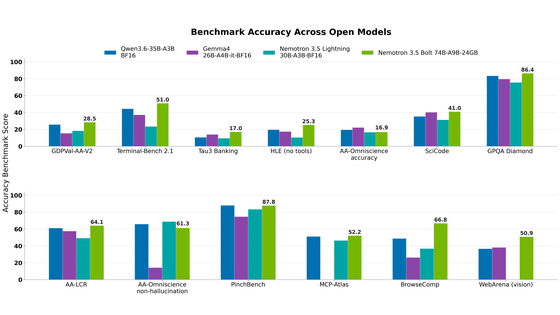
NVIDIA released Nemotron 3.5 Bolt 74B-A9B 24GB, an AI model for local agents that hits over 80 tokens per seco…
Black Forest Labs released FLUX 3 Image Klein as open weights on October 15, 2026 — a 5.6B-parameter model for…

PrismML released Ternary Bonsai 2 2B, 4B and 9B on October 15, 2026, remade from Qwen3.5 to process in three v…

Apple released MLX today, which runs the 816B-parameter Muse Spark Open on four Mac Studios at over 36 tokens…

Meta launched Muse Spark Open, an open-weight model with 816 billion parameters and a 1 million token context…