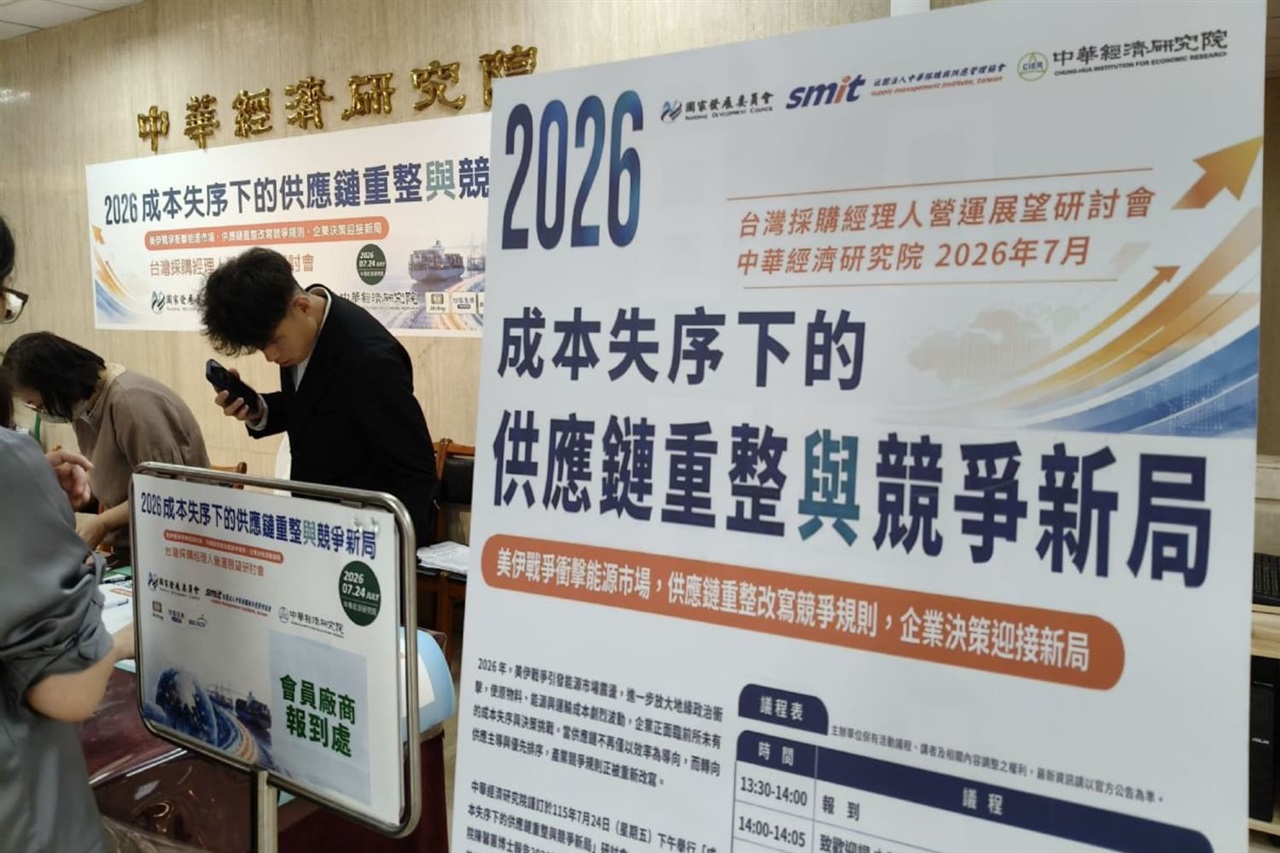
Taiwan manufacturers are grappling with sharply higher procurement costs, and a survey from July 24 found that over half have already raised prices to pass those increases to customers. The finding suggests broader cost pressures may ripple through global supply chains dependent on Taiwan-made components and goods.
Summaries like this, in your inbox every morning.
Sign up free →What happened
A survey presented at a Chung-Hua Institution for Economic Research seminar on July 24 found that Taiwan manufacturers are facing sharply higher procurement costs, and more than half have already passed those increases to customers.
Why it matters
Rising procurement costs are forcing manufacturers to choose between absorbing losses or shifting the burden downstream. When more than half of Taiwan's manufacturers raise prices, it signals potential upward pressure on consumer goods and electronics pricing across global supply chains.
What to watch
The survey details which sectors are most affected and how much further price increases may extend through the supply chain, particularly for electronics and component-dependent industries.
Manufacturers in Taiwan are confronting a sharp rise in procurement costs, according to research presented at a Chung-Hua Institution for Economic Research seminar held on July 24. The survey revealed that more than half of Taiwan's manufacturers have already responded by raising prices on their products, passing the increased input costs to their customers. This widespread price adjustment reflects the difficult position manufacturers face: they cannot sustain operations if procurement costs rise without adjustment to their own selling prices. The finding underscores how cost pressures can propagate through supply chains, particularly affecting Taiwan-dependent sectors globally.
Taiwan's manufacturing sector is under cost pressure from procurement, with the majority of firms choosing to protect margins by raising prices rather than absorbing the increases themselves. This response is significant for global supply chains because Taiwan is a major hub for electronics, semiconductors, and components that feed into downstream industries worldwide. When manufacturers across an entire economy shift costs forward, it typically signals the beginning of a pricing cycle that may eventually reach end consumers and create inflationary pressure in sectors dependent on Taiwan-sourced inputs.
AI-summarized, only the topics you pick — one digest a day via Email, Slack, or Discord.
Free · takes 30 seconds · unsubscribe anytime
No discussion yet for this article
Get curated AI news from 200+ sources delivered daily to your inbox. Free to use.
Get Started FreeFree · takes 30 seconds · unsubscribe anytime
