
AI leaders Dario Amodei and David Sacks clashed over whether AI needs regulation like the DMV model for cars. Amodei argued that safety rules can coexist with competition and that Anthropic designs its proposals to help smaller rivals, not entrench monopoly.
Sacks countered that such regulation would handicap the U.S. against China and slow innovation.
The debate matters because Anthropic, now valued at $965 billion with a $65 billion annual revenue run rate, is preparing for an IPO this fall and will face investor and regulatory scrutiny on this exact point.
What happened
David Sacks, cohost of the "All In" podcast and former Trump AI advisor, criticized Anthropic CEO Dario Amodei's support for AI regulation, calling it a "DMV for AI" that would "create long queues" and handicap the U.S. relative to China. Amodei responded on X, arguing that regulation can constrain corporate power and that Anthropic designs proposals to disadvantage frontier AI companies while advantaging smaller competitors.
Why it matters
The exchange reflects a fundamental disagreement over whether AI safety rules help or harm competition. Sacks frames regulation as regulatory capture—where established players use rules to eliminate rivals—while Amodei contends that many industries (restaurants, automobiles) thrive with safety regulation without collapsing into monopoly. The outcome shapes whether the U.S. adopts formal AI oversight before rivals act.
What to watch
Anthropic is preparing for a potential IPO as soon as this fall, valued at $965 billion in May. Its revenue run rate has surged to $65 billion annually, more than seven times its pace at the end of 2025, driven by strong demand for its AI coding tools. The regulatory stance Amodei defends will likely come under scrutiny if the company goes public.
Ask the AI about this article →
The regulatory debate between Sacks and Amodei hinges on a core disagreement about whether safety rules inevitably concentrate market power or whether they can coexist with vigorous competition. Sacks frames regulation—specifically a licensing or approval agency for AI models—as a mechanism that entrenches dominant players by imposing compliance costs smaller startups cannot bear. Amodei's response draws an analogy to established industries: San Francisco has more than 3,000 restaurants despite food safety, labor, and product liability regulation, and the auto industry remains competitive despite vehicle licensing and inspection requirements. The article's author supports Amodei's framing, noting that large restaurant chains do have compliance advantages but that regulation serves the public interest. The debate also touches on national security and geopolitical competition. Sacks worries that a regulatory agency would handicap the U.S. relative to China, but the article notes that China already enforces stricter AI laws around data labeling and AI-generated content identification than the U.S. federal level. Amodei himself acknowledges that AI compute concentration is real—large models require vast resources—but argues this is a separate problem from regulation and that open-source models partially but incompletely address it. The timing is significant: Anthropic is preparing for a potential IPO as soon as this fall, valued at $965 billion in May, with revenue accelerating to a $65 billion annual run rate. The regulatory stance Amodei articulates will face investor, legal, and governmental scrutiny in a public company context.
For example, today's edition would include:
AI-summarized, only the topics you pick — one digest a day via Email, Slack, or Discord.
Free · takes 30 seconds · unsubscribe anytimeWhat is AIToday? →
Ask AI anything about this article. Q&As are published on this page for other readers too.
Israeli startup DataAgent Ltd
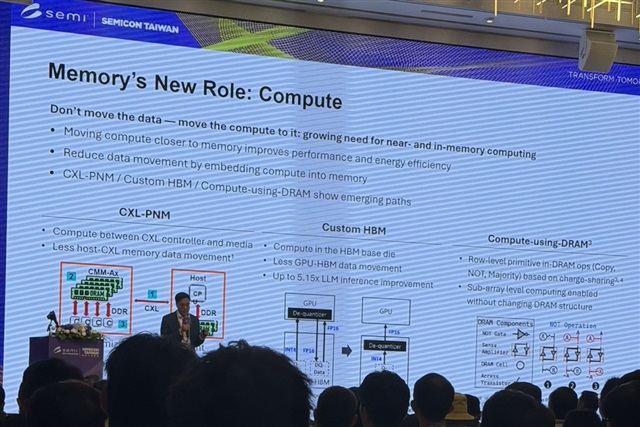
SK Hynix presented a custom HBM concept at SEMICON Taiwan 2026, where compute functions are placed in the base…
Taoyuan is positioning itself as a northern hub for AI data centers (AIDC), citing the Tatan area and an LNG c…
The U.S. Department of Defense announced on August 31 that it has deployed ChatGPT Mil, a customized version o…

Nvidia reported earnings that were both remarkable and boring, reflecting its focus on avoiding a consolidated…

Anthropic has agreed to a $35bn cloud-computing contract with Lambda, a Nvidia-backed cloud provider