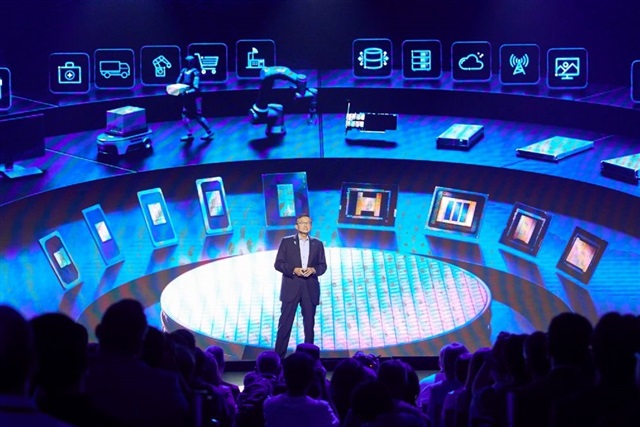
Intel has reorganized its global manufacturing operations following fresh investments from the US government, SoftBank, and Nvidia, with a goal of ramping up production of advanced chips and AI products by 2026. The move represents a major reset of Intel's worldwide factory footprint, with the company prioritizing Intel 18A mass production while pursuing early opportunities in 14A chip nodes and EMIB-T AI modules.
Summaries like this, in your inbox every morning.
Sign up free →What happened
Intel has reorganized its worldwide manufacturing sites after receiving investments from the US government, SoftBank, and Nvidia, accelerating a global footprint reset for 2026. The company is pushing ahead with Intel 18A mass production and pursuing early wins in 14A chip production and EMIB-T (embedded AI modules), according to supply-chain sources.
Why it matters
The restructuring reflects Intel's strategy to strengthen its manufacturing foothold at a time when the company is backed by major investors and government support. Success with advanced process nodes like 14A and AI-focused products could help Intel compete more effectively in the AI chip market and reclaim ground against rivals.
What to watch
The execution of Intel 18A mass production and whether the company achieves its targets for 14A and EMIB-T AI products in 2026 will signal whether the manufacturing reorganization is delivering the intended competitive gains.
Intel has announced a major reorganization of its worldwide manufacturing operations in response to significant new investments from the US government, SoftBank, and Nvidia. According to supply-chain sources, the company has relaunched its global manufacturing sites and is accelerating a reset of its manufacturing footprint targeting completion by 2026. The restructuring is focused on two primary manufacturing goals: mass production of Intel 18A, the company's advanced process node, and early production wins in Intel 14A chips as well as EMIB-T (embedded AI modules tailored for AI applications). The convergence of government support, major venture capital backing from SoftBank, and strategic investment from Nvidia underscores the importance Intel places on its manufacturing modernization and suggests strong confidence from key industry partners in the company's ability to execute its manufacturing roadmap.
Intel's decision to reorganize its global manufacturing sites reflects the company's effort to modernize its production footprint in an increasingly competitive semiconductor market. The timing of the announcement—following substantial investments from the US government, SoftBank, and Nvidia—suggests that Intel has secured the financial and strategic backing needed to execute a large-scale restructuring. By focusing on both Intel 18A mass production and earlier entries into 14A and AI-focused EMIB-T products, Intel appears to be balancing near-term production goals with longer-term technological advancement. The involvement of SoftBank and Nvidia as investors is notable, as it signals confidence from major technology players in Intel's direction and may create opportunities for closer partnerships in the AI chip space.
AI-summarized, only the topics you pick — one digest a day via Email, Slack, or Discord.
Free · takes 30 seconds · unsubscribe anytime
No discussion yet for this article
Get curated AI news from 200+ sources delivered daily to your inbox. Free to use.
Get Started FreeFree · takes 30 seconds · unsubscribe anytime
1 minute a day. The AI essentials.
200+ sources · Email / LINE / Slack
