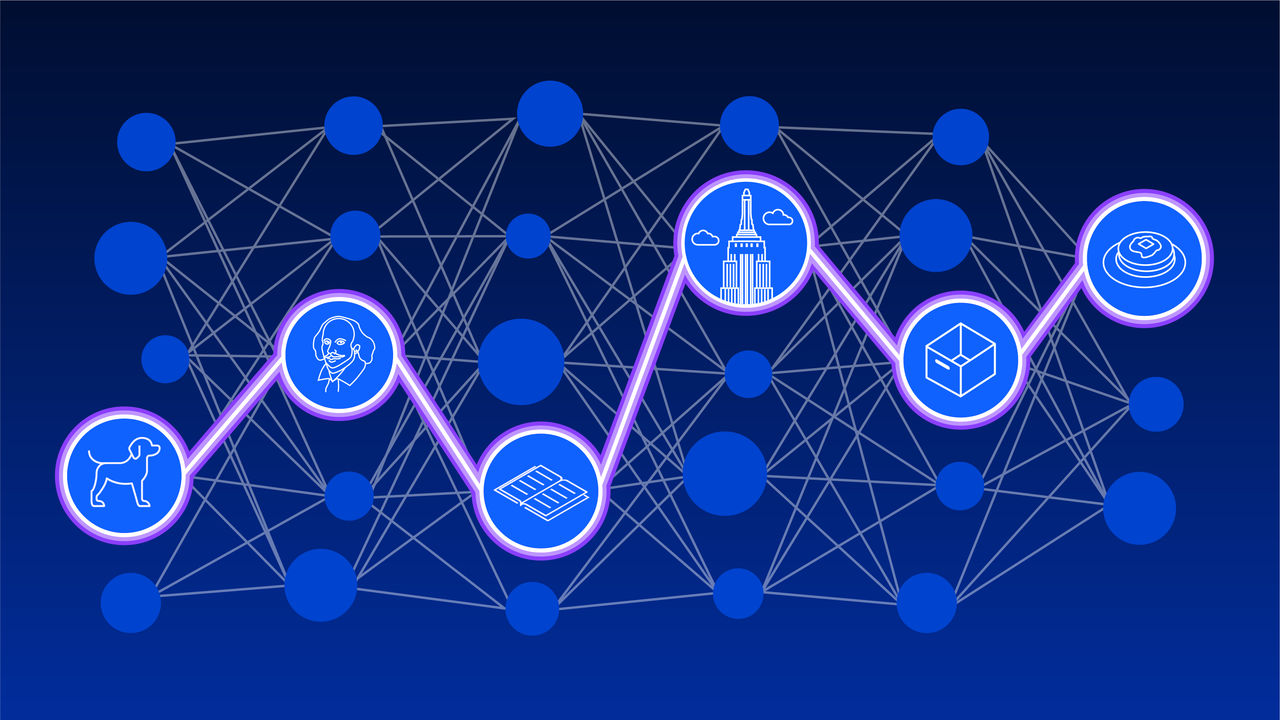
What happened
A writer with no coding background set out to understand how large language models (LLMs) like ChatGPT actually work under the hood. After weeks of research, he concluded that AI systems are fundamentally built from massive grids of numbers arranged like spreadsheets—GPT-3, for example, contains 577 such "spreadsheets" (called "tensors" in technical terms) holding 175 billion numbers total.
Why it matters
The writer challenges the common assumption that AI is an impenetrable "black box." He argues that despite their complexity, we can actually see inside LLMs and understand how they function. This understanding matters because he believes the effort to demystify AI—by both experts and laypeople—is essential to keeping it safe. The realization that AI "looks like spreadsheets" makes a previously abstract technology concrete and potentially graspable for non-technical audiences.
What to watch
The writer's analogy breaks down quickly: while GPT-3's first spreadsheet is essentially a dictionary mapping words to vectors of numbers (50,257 words, each assigned 12,288 numbers), the remaining 576 spreadsheets perform more complex mathematical operations whose purpose requires deeper explanation. The author frames this as the beginning of a journey to explain how those numbers actually produce intelligent output.
Summaries like this, in your inbox every morning.
The writer's journey reflects a broader gap between how AI systems are publicly described and how they actually function. The phrase "black box" has become a convenient shorthand suggesting that AI's inner workings are unknowable, but the writer demonstrates this is partly a myth—or at least an oversimplification. GPT-3's architecture is well-documented: it is fundamentally a mathematical structure, not magic. The 577 spreadsheets, or tensors, are not randomly assembled; they are the product of a process called "training," after which the numbers are locked in place until the next model is released and trained anew. What makes this explanation valuable is that it shifts the conversation away from jargon ("self-attention," "neural networks") toward a more intuitive framing: numbers in grids. The writer notes that larger models like GPT-4 (rumored to contain two trillion numbers) and GPT-5 are built on the same basic architecture, just vastly scaled up. This insight suggests that understanding AI does not require a PhD—it requires patience, curiosity, and a willingness to ask simple questions that technical professionals might dismiss. The author's observation that we "must" understand AI in order to keep it safe points to a broader argument: demystification is itself a form of accountability.
Pick your industry and the AI tools you use, and get news related to your work every day.
Free · 30 seconds with Google · unsubscribe anytimeWhat is AIToday? →
Ask AI anything about this article. The AI reads this article, earlier AIToday articles, and Wikipedia, and cites its sources. Q&As are published on this page for other readers too.
Cammarata reinterprets InceptionV1's cat-car neuron as a V-shape detector, not two unrelated concepts
Google Deepmind's Gemini 4 Argon scored 97.5 percent on ARC-AGI-3 at a cost of $4,800, second only to GPT-6 As…

Microsoft's Surface Laptop Ultra, using Nvidia's RTX Spark platform, starts at $2,599 (up to $5,899)

Meta's new commercial terms, effective October 30th, appear to let it crawl and train AI on content from websi…

Vercel data published Thursday shows TypeSafe AI's Jev, a lightweight decision model for choosing among predet…

Reflection AI introduced Beam, an open-weight model for agentic coding and long-horizon tasks, with 501 billio…