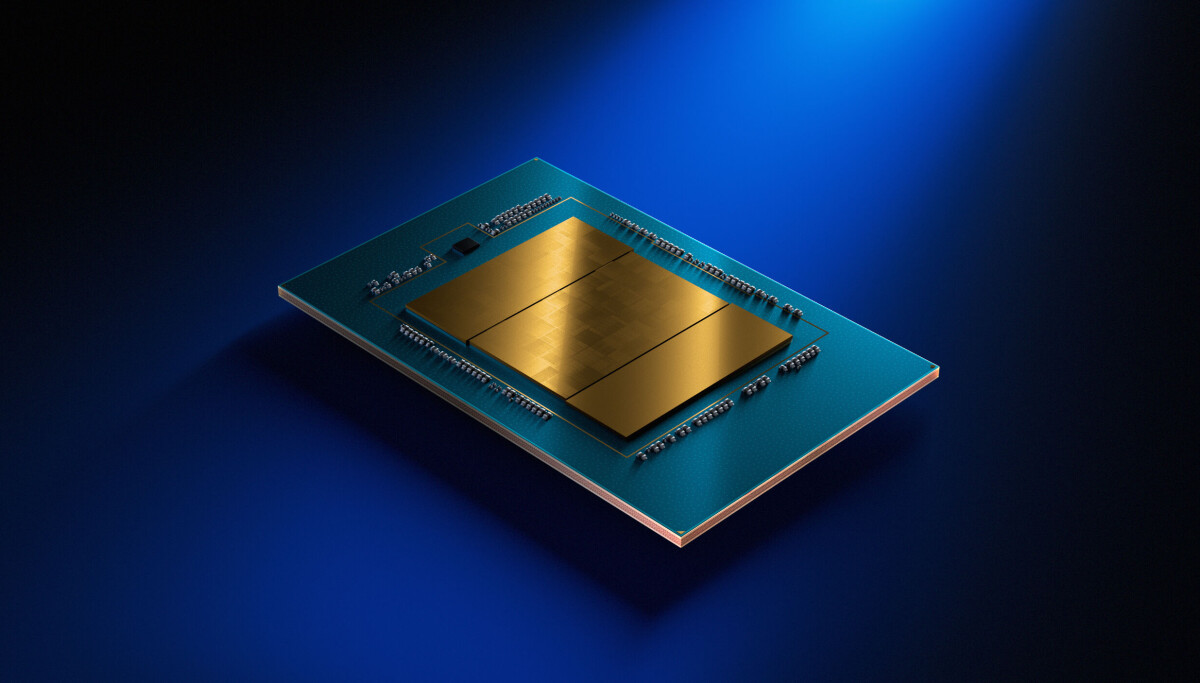
Intel's Data Center & AI group saw its highest server CPU growth in fifteen years, with Q2 2026 sales of $6.26 billion(約1兆円), up 59 percent year-on-year, as demand for CPUs powering AI sandboxes and agentic AI workloads drives recovery. The unit reached 39.5 percent operating margin, though this is still below the 45–50 percent margins Intel enjoyed when it dominated the datacenter market a decade ago. The rebound reflects a shift in AI architecture toward CPU-based execution of autonomous agent tasks, offering Intel an unexpected lifeline after it missed the GPU acceleration wave.
Summaries like this, in your inbox every morning.
Sign up free →What happened
Intel's Data Center & AI group posted $6.26 billion(約1兆円) in sales in Q2 2026, up 59 percent year-on-year, driven by demand for CPUs in AI host servers and sandboxes that execute agentic AI workloads. Operating profit for the unit jumped 3.9X to $2.47 billion(約4000億円), reaching 39.5 percent of revenues—the highest profitability Intel has seen in five years.
Why it matters
The emergence of agentic AI and CPU-based sandboxes that execute code (rather than GPU inference alone) has created unexpected demand for general-purpose server CPUs. Intel's recovery in this segment—despite missing the GPU boom and competing against cheaper Arm chips and AMD's more powerful Epyc lineup—suggests the CPU market is finding new life in AI applications. However, Intel still lacks a competitive AI inference accelerator to rival Nvidia's GPUs.
What to watch
Intel's 18A process ramp was 25 percent higher than target in Q2 and up more than 50 percent from Q1 2026. The company aims for 14A risk production in the second half of 2027 and full high-volume 14A ramp in 2028. Intel's custom chip business (CPUs and IPUs) has a $2 billion(約3200億円) annualized run rate and is projected to reach $4 billion(約6400億円) in the near term against a $100 billion(約16兆円) total addressable market.
Intel's Q2 2026 earnings revealed an unexpected lifeline for the company's datacenter business: the rise of agentic AI and CPU-based sandboxes that execute code. Unlike GPU-centric AI inference, which interprets tokens and generates responses, agentic AI systems autonomously execute tasks—typically in Python—on CPU clusters, creating a new category of general-purpose compute demand that GPUs cannot fully address. This shift, unforeseen by most industry observers, is driving Intel's highest server CPU growth in fifteen years.
The numbers tell the story. Intel's Data Center & AI group posted $6.26 billion(約1兆円) in sales in Q2 2026, a 59 percent year-on-year increase and a 24 percent sequential jump. More strikingly, operating profit for the DCAI unit surged 3.9X to $2.47 billion(約4000億円), reaching 39.5 percent of revenues—the strongest profitability Intel has achieved in five years. However, this milestone falls well short of the historical 45–50 percent operating margins that Intel enjoyed a decade ago when X86 server CPUs dominated the market nearly without competition. To put the recovery in perspective, Intel's peak datacenter quarter was Q2 2020, when the unit generated $9.06 billion(約1.4兆円) in revenue and $3.43 billion(約5500億円) in operating income—a benchmark that illustrates the distance Intel must still travel.
The article emphasizes that this recovery is largely a product of fortunate market timing rather than strategic foresight. Intel missed the GPU acceleration wave under prior executives Brian Krzanich, Bob Swan, and Pat Gelsinger, and even current CEO Lip-Bu Tan faces structural headwinds: AMD's Epyc lineup is more powerful, and hyperscalers are deploying custom Arm server chips that are cheaper. Yet the market for server CPUs is so constrained—scarce alongside DRAM and flash memory—that Intel can sell whatever it manufactures, regardless of competitive positioning.
On the foundry front, Intel is moving to expand its manufacturing footprint. The Intel Foundry group brought in $5.77 billion(約9200億円) in Q2, up 30.5 percent, though it posted a $2.09 billion(約3300億円) operating loss (34 percent smaller than the prior year). Most of those revenues come from internal Intel products ramping in volume; external foundry customers contributed only $293 million(約470億円). The 18A process ramp exceeded Intel's target by 25 percent in Q2 and was up more than 50 percent sequentially from Q1. Intel also reported yield improvements for its Intel 4, 3, and 18A processes. CEO Tan signaled confidence in the advanced-node roadmap, stating on the Q2 earnings call: "I am increasingly confident that the 14A will be highly competitive process offering across key vectors of performance, power, density, cost, and schedule." Intel committed in Q2 to 14A risk production for internal products in the second half of 2027 and full high-volume 14A ramp in 2028.
A bright spot is Intel's custom chip business for CPUs and IPUs (inference processing units), which CEO David Zinsner said has a $2 billion(約3200億円) annualized run rate at the close of Q2 and is projected to reach $4 billion(約6400億円) "in the not too distant future" against a $100 billion(約16兆円) total addressable market. Additionally, Intel's EMIB-T packaging technology is gaining traction even among competitors: Taiwan Semiconductor Manufacturing Co (TSMC), which fabricates many of Intel's chiplets, has welcomed EMIB-T because it cannot produce enough CoWoS-L packaging to meet customer demand. TSMC can fab chips and have customers use EMIB-T when CoWoS-L is unavailable. However, the article notes that Intel still lacks a competitive AI inference accelerator to rival Nvidia's GPUs and the Grok LPUs that Nvidia acquired for $20 billion(約3.2兆円). Intel's partnership with SambaNova is important but does not address this gap; Tan chairs SambaNova but does not control its technology. SambaNova's valuation reached $11 billion(約1.8兆円) after a Series F funding round of $1 billion(約1600億円) three weeks before the article, making acquisition prohibitively expensive for Intel.
Intel's datacenter resurgence hinges on a shift in AI architecture that few anticipated. While the industry expected GPUs to dominate AI inference, the rise of agentic AI—systems that autonomously execute tasks in Python sandboxes rather than simply generating text—has created demand for general-purpose CPU compute that GPUs alone cannot satisfy. This is not a vindication of Intel's strategy under former leadership; rather, it is a fortunate market shift that has given the company breathing room after years of losing datacenter share to AMD's Epyc processors and custom Arm chips deployed by hyperscalers.
Intel's Q2 2026 numbers reflect this inflection point. The $6.26 billion(約1兆円) in DCAI sales (up 59 percent year-on-year) and 3.9X jump in operating profit to $2.47 billion(約4000億円) show real momentum, yet the 39.5 percent operating margin is still a long way from the 45–50 percent margins that characterized Intel's datacenter dominance in 2009–2015. The company peaked at $9.06 billion(約1.4兆円) in quarterly datacenter revenue in Q2 2020, so recovery to historical levels remains a multi-year endeavor.
Meanwhile, Intel's foundry efforts are gaining traction. The 18A process ramp exceeded targets by 25 percent in Q2, and CEO Lip-Bu Tan is committing to 14A high-volume production in 2028. The custom chip business (CPUs and IPUs for specific customers) generates a $2 billion(約3200億円) annualized run rate and is expected to double to $4 billion(約6400億円) soon, competing against a $100 billion(約16兆円) addressable market. This suggests Intel is diversifying beyond commodity server CPUs and positioning itself as a foundry partner—a shift toward higher-margin, capital-intensive work. However, the foundry division still posted a $2.09 billion(約3300億円) operating loss in Q2, highlighting how far Intel must go before foundry profitability offsets its traditional datacenter revenues.
AI-summarized, only the topics you pick — one digest a day via Email, Slack, or Discord.
Free · takes 30 seconds · unsubscribe anytime
No discussion yet for this article
Get curated AI news from 200+ sources delivered daily to your inbox. Free to use.
Get Started FreeFree · takes 30 seconds · unsubscribe anytime
