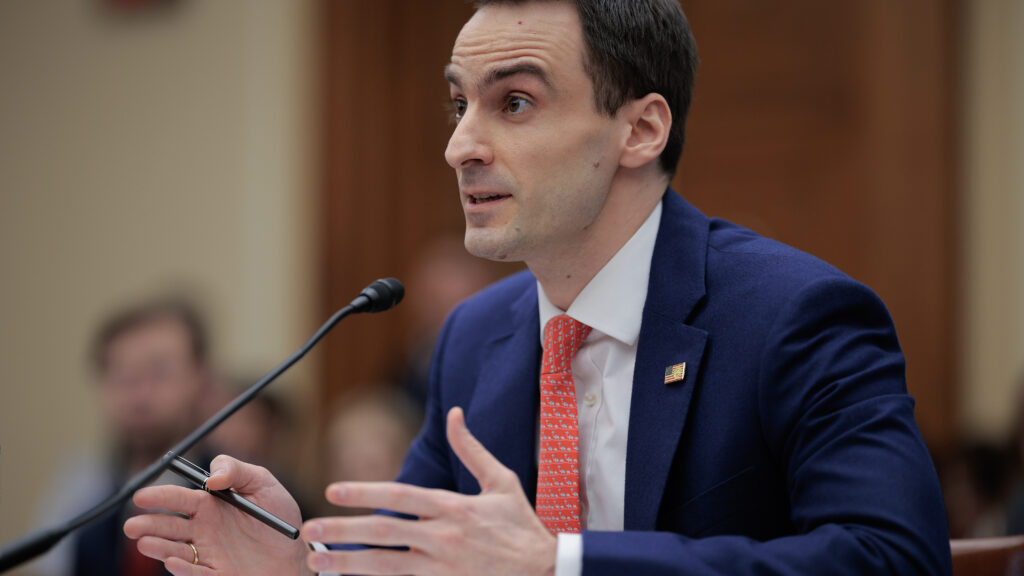
The White House this week proposed a major restructuring of American science funding, pivoting hundreds of billions of research dollars away from universities toward technology and AI companies. The plan, titled "Science: A New Golden Age," draws inspiration from a 1945 blueprint that shaped the U.S. research ecosystem but represents a significant departure from the postwar model. Scientists and advocates have raised concerns that other administration policies—particularly those targeting universities and diversity initiatives—may undermine the stated goal of strengthening American science.
Summaries like this, in your inbox every morning.
Sign up free →What happened
The White House Office of Science and Technology Policy, led by Trump's science adviser Michael Kratsios, released a report titled "Science: A New Golden Age" this week that proposes redirecting hundreds of billions of research dollars from universities to industry, particularly tech and AI companies.
Why it matters
The shift marks a departure from the post-World War II model (inspired by the 1945 manifesto "Science — The Endless Frontier") that established American research universities as the primary engine of scientific discovery. The Trump administration has faced 18 months of criticism from science advocates for what they say amounts to dismantling the federal-academic research partnership that made the United States a global scientific leader.
What to watch
Scientists and advocates worry the plan's stated goal of improving science is being undercut by administration actions targeting immigration, universities, and diversity-focused programs—signaling tension between the stated vision and other policy directions.
The White House Office of Science and Technology Policy, under the direction of Trump's science adviser Michael Kratsios, unveiled "Science: A New Golden Age" this week as its answer to how the federal government should fund and organize American scientific research. The report proposes redirecting hundreds of billions of research dollars from universities to industry, with particular emphasis on technology and artificial intelligence companies.
The proposal draws conceptual inspiration from "Science — The Endless Frontier," a 1945 manifesto authored in the immediate aftermath of World War II. That earlier document became the foundational blueprint for the creation and growth of American research universities and the federal funding mechanisms that supported them. For the past 75+ years, that model has positioned the United States as what the administration itself acknowledges was "the world's most powerful engine of discovery."
The timing of the announcement reflects broader tension within the administration's approach to science and academia. Over the past 18 months, science advocates have accused the Trump administration of dismantling the long-standing social contract between federal government and academic researchers. While the new report frames its goal as improving American science, the administration's other stated positions and policies have generated skepticism among scientists and science advocates. Specifically, the administration has publicly expressed grievances against immigration policy (which has historically drawn talent to the U.S. research enterprise), taken positions against universities as institutions, and worked to curtail or eliminate programs focused on diversity, equity, and inclusion. Scientists and advocates have expressed concern that these concurrent actions—regardless of the report's stated intent—may actually undermine the goal of strengthening American science rather than advancing it.
The White House proposal represents a fundamental reimagining of how the federal government funds scientific research in the United States. For over 75 years, the U.S. research ecosystem has been anchored by universities supported through federal grants—a model established after World War II by the 1945 "Science — The Endless Frontier" manifesto. The new plan signals a pivot toward funding technology and AI companies directly rather than channeling investment through academic institutions.
The timing of this proposal comes after 18 months during which the Trump administration has faced sustained criticism from science advocates who argue that its policies have eroded the federal-academic partnership. The administration's stated objective of improving American science faces credibility challenges, however, given concurrent policy directions: its public opposition to immigration (a major source of scientific talent), skepticism toward universities themselves, and efforts to curtail diversity-focused programs. The report acknowledges longstanding problems in the research ecosystem but does not address whether the proposed shift—and these other policy stances—will actually solve them or create new tensions.
AI-summarized, only the topics you pick — one digest a day via Email, Slack, or Discord.
Free · takes 30 seconds · unsubscribe anytime
No comments yet. Be the first to share your thoughts!
Log in to join the discussion



Get curated AI news from 200+ sources delivered daily to your inbox. Free to use.
Get Started FreeFree · takes 30 seconds · unsubscribe anytime
