Moonshot AI, a Chinese startup founded in 2023, released Kimi K3 on Thursday, a large language model that matches the performance of Anthropic's Claude 3.5 Sonnet at a significantly lower price of $15 per million output tokens versus Claude's $50. The launch shocked markets and investors who expected Chinese AI labs to close the performance gap with U.S. competitors over a longer timeline—Anthropic's CEO had not anticipated such a match for another six months—and sparked a broad semiconductor and tech selloff as traders reassess whether U.S. firms can maintain their lead through computing-power advantages alone.
Summaries like this, in your inbox every morning.
Sign up free →What happened
Moonshot AI, a Beijing-based startup founded in 2023, released Kimi K3 on Thursday, the largest open-weight model ever released, which performed competitively with Anthropic's Claude 3.5 Sonnet and substantially outperformed Anthropic's Claude 3 Opus and OpenAI's GPT-4o according to the company's benchmarks—with K3 priced at $15 per million output tokens, compared to Claude 3.5 Sonnet's $50.
Why it matters
The launch shocked markets and investors who believed U.S. firms could maintain their lead through spending advantages; observers including Anthropic CEO Dario Amodei did not expect a Chinese lab to match U.S. offerings for another six months, yet K3's debut rapidly compressed that timeline and underscores how quickly Chinese AI developers are closing the performance gap. The market selloff was severe: Taiwan Semiconductor Manufacturing Company fell 7%, SoftBank dropped 9.0%, the Nasdaq 100 was down 1.0%, and Nvidia shares fell 1.2%.
What to watch
K3 is priced at $15 per million output tokens versus Claude 3.5 Sonnet at $50 for the same output level. The company, backed by Alibaba, Tencent, Meituan, and HSG (formerly Sequoia China), is reportedly considering an IPO in Hong Kong. Moonshot's earlier models (K2.5 and K2.6) already gained traction among Silicon Valley developers; in March, U.S. coding assistant Cursor acknowledged that Composer 2 ran on Kimi 2.5.
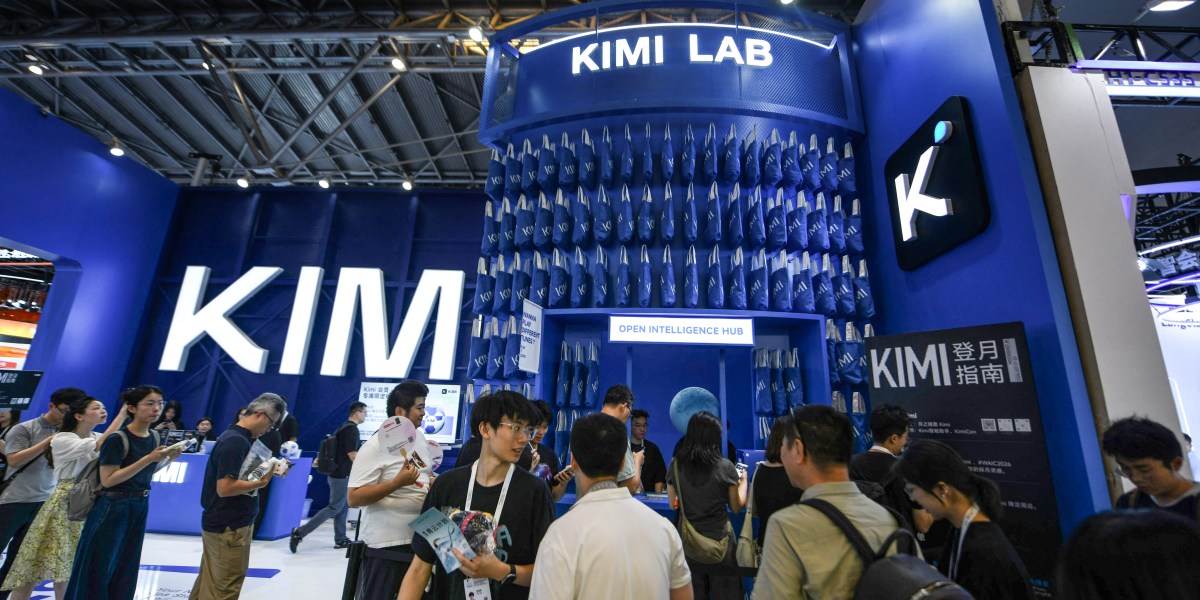
On Thursday, Moonshot AI unveiled Kimi K3, the largest open-weight model ever released, in a move that rippled through global markets and forced a recalibration of expectations about the pace of Chinese AI progress. According to Moonshot's officially-released benchmarks, K3 performed competitively with Anthropic's Claude 3.5 Sonnet—arguably the most powerful publicly available model today—and substantially outperformed Anthropic's Claude 3 Opus and OpenAI's GPT-4o. An independent benchmark from Arena.AI went further, ranking K3 as the single best model currently available, ahead of Anthropic. The company priced K3 at $15 per million output tokens, roughly a third the cost of Claude 3.5 Sonnet's $50 per million output tokens.
The market reaction was swift and severe. Investors interpreted K3's launch as evidence that U.S. firms cannot preserve their extended lead simply through higher spending on computing power—a foundational assumption of U.S. tech strategy. Many observers, including Anthropic CEO Dario Amodei and Tesla CEO Elon Musk, had not expected a Chinese AI lab to match U.S. offerings for another six months to a year. K3's Thursday debut compressed that timeline dramatically. A semiconductor selloff that was already underway accelerated: Taiwan Semiconductor Manufacturing Company fell 7% on Friday despite reporting a 77% jump in quarterly operating profit; SoftBank, often seen as a proxy for OpenAI, dropped 9.0%; and Z.ai, a competing Chinese AI startup, plunged by almost 30% in Hong Kong trading. Fear spread into U.S. markets: as of 2:00pm Eastern time, the Nasdaq 100 was down 1.0%, Nvidia shares fell 1.2% and briefly lost the company's ranking as the world's most valuable, and Meta shares plunged by over 2.4%.
Moonshot AI itself is one of China's upstart AI leaders. Founded in 2023, its Chinese name derives from Pink Floyd's album The Dark Side of the Moon, founder Yang Zhilin's favorite album. The company is backed by Alibaba, Tencent, Meituan, and HSG (formerly Sequoia China), and is reportedly considering an IPO in Hong Kong. This is Moonshot's second time in the spotlight in 2024: earlier versions of Kimi, particularly K2.5 and K2.6, gained traction among Silicon Valley developers for strong coding performance at meaningfully lower cost than Claude. In March, U.S. coding assistant maker Cursor acknowledged that its Composer 2 agent ran on top of Kimi 2.5.
Moonshot's breakthrough fits into a broader pattern of rapid Chinese AI progress. In April, DeepSeek unveiled V4, offering frontier-level performance at $0.87 per million tokens of output and the ability to run on Huawei-made processors. In mid-June, z.ai released GLM-5.2, pointedly announcing the model just days after U.S. officials disrupted access to Anthropic's Claude 3 Fable and Claude 3 Mythos for some international users. Z.ai wrote: "Frontier intelligence should not belong to only a few people, nor be subject to withdrawal by a handful of rules at any moment." Even Meituan, a food delivery platform, launched LongCat 2.0 last month and trained it entirely on Chinese-made semiconductors. All of the top five most-used models on OpenRouter, a popular marketplace for AI developers, are now from Chinese companies: Tencent, Xiaomi, DeepSeek, MiniMax, and z.ai.
Chinese models achieve their cost advantage through multiple mechanisms. Power costs in China are lower than in many parts of the U.S. because of massive investments in generation and transmission infrastructure. Chinese AI companies are willing to sacrifice profit margins to capture market share and establish their models as de facto standards. Ironically, U.S. export controls designed to slow China's AI sector may have inadvertently spurred efficiency: labs forced to work with less capable hardware have learned to squeeze more performance from constrained resources. Most recent Chinese models are now compatible with cheaper local processors; as George Chen of the Asia Group notes, for the cost of one Nvidia chip, a Chinese company can purchase ten local chips from Huawei or other domestic makers. Most critically, Chinese companies embrace open-source release, allowing users to download models, run them locally, and fine-tune them for free—reducing hosting costs to GPUs and energy alone, whereas Anthropic adds R&D and inference costs. On July 17, at the World Artificial Intelligence Conference in Shanghai, President Xi Jinping affirmed that China will remain committed to open-source release and criticized what he called overstretching of national security concepts in AI policy by other countries.
The release of Kimi K3 represents a watershed moment in the perception of China's AI progress. Moonshot AI, founded in 2023 and named after Pink Floyd's album The Dark Side of the Moon (founder Yang Zhilin's favorite), is not an isolated breakthrough—it is the latest in a series of advances that have steadily compressed the timeline expectations for Chinese parity. Earlier in the year, DeepSeek unveiled V4 at rock-bottom prices ($0.87 per million tokens of output), and z.ai released GLM-5.2, positioning itself as a hedge against U.S. export restrictions and access disruptions. Even consumer-internet giants like Meituan have entered the frontier race, successfully training a 1.6 trillion-parameter model entirely on Chinese-made semiconductors, something Paul Triolo of DGA-Albright Stonebridge Group notes would have been "inconceivable in October 2022" before U.S. export controls tightened.
The speed of the shift has unnerved investors and undercut a core assumption in U.S. tech strategy: that American firms could preserve dominance through higher capital expenditure alone. Moonshot's pricing of K3 at $15 per million output tokens, versus $50 for the equivalent U.S. offering, reflects a deeper structural advantage Chinese labs have cultivated: lower power costs (due to China's massive investments in generation and transmission), willingness to sacrifice profit margins to capture market share, and the constraint-driven innovation forced by export controls on advanced chips. Chinese companies have also embraced open-source release strategies, allowing third-party providers to host models at marginal cost (GPUs and energy only), whereas U.S. firms like Anthropic add R&D and inference costs on top. On July 17, President Xi Jinping affirmed at the World Artificial Intelligence Conference in Shanghai that China will remain committed to open-source release and criticized what he called Washington's overreach in invoking national security to restrict frontier model exports.
AI-summarized, only the topics you pick — one digest a day via Email, Slack, or Discord.
Free · takes 30 seconds · unsubscribe anytime
No discussion yet for this article
Get curated AI news from 200+ sources delivered daily to your inbox. Free to use.
Get Started FreeFree · takes 30 seconds · unsubscribe anytime
1 minute a day. The AI essentials.
200+ sources · Email / LINE / Slack