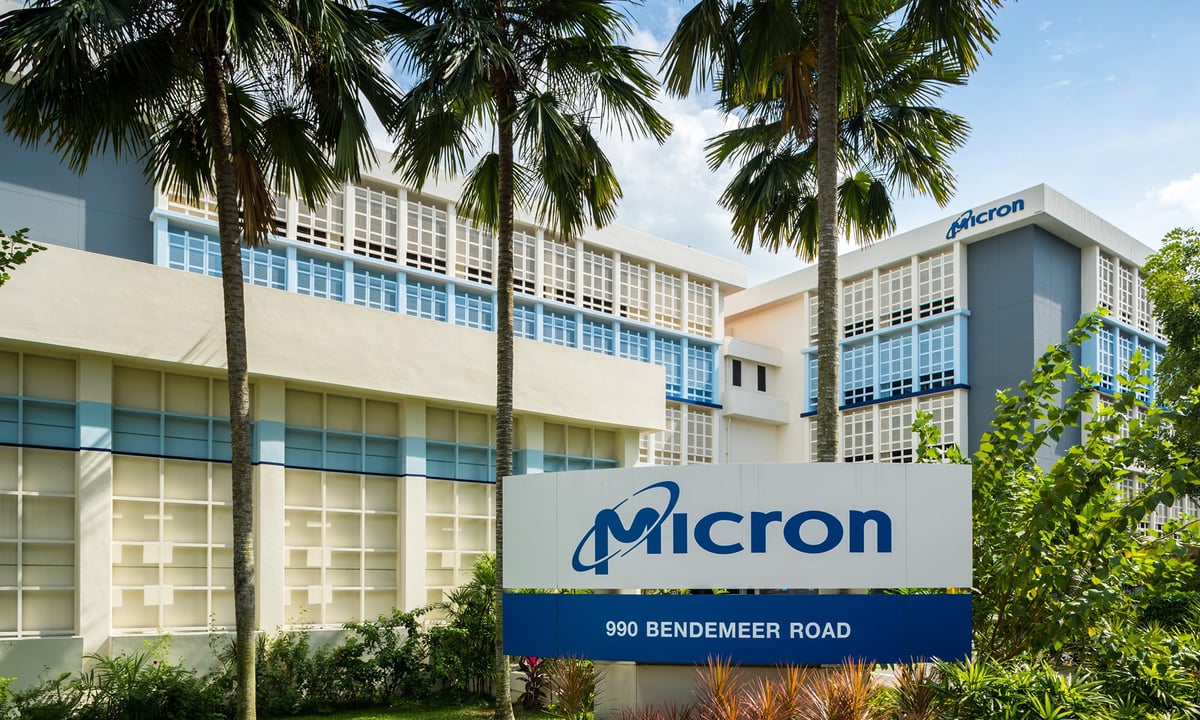
Micron Technology is committing more than $250 billion(約40兆円) to expand U.S. manufacturing capacity for DRAM and high-bandwidth memory chips, positioning itself to capture a larger share of AI infrastructure demand from major cloud providers. The investment aims to create a domestic end-to-end ecosystem that rivals the integrated operations of Asian competitors SK Hynix and Samsung, with Micron targeting 40% domestic DRAM production.
Summaries like this, in your inbox every morning.
Sign up free →What happened
Micron Technology announced a plan to invest more than $250 billion(約40兆円) in U.S. fab expansions to scale DRAM manufacturing and increase high-bandwidth memory (HBM) production. The company is building facilities in New York, Idaho, and Virginia to create an integrated domestic ecosystem for wafer fabrication and advanced packaging.
Why it matters
Hyperscalers like Microsoft, Alphabet, Amazon, and Meta Platforms have shown strong demand for AI infrastructure, including advanced memory chips, which is driving a more durable growth trajectory for memory markets than the traditional PC and smartphone cycles. Micron aims to produce 40% of total DRAM domestically and close the market-share gap with overseas rivals SK Hynix and Samsung.
What to watch
Over the next several years, Micron's multiyear build-out is expected to transform these investments into a cohesive platform for sustained leadership in both DRAM and AI-optimized HBM, directly supporting the company's position throughout the AI infrastructure era.
Micron's $250 billion(約40兆円) investment marks a significant departure from the memory industry's traditional reliance on cyclical demand tied to consumer electronics. The body notes that hyperscalers' sustained appetite for AI infrastructure—particularly HBM stacks, which require large quantities of advanced DRAM wafers and sophisticated packaging—has created a more durable growth opportunity. This secular shift underpins Micron's decision to deepen domestic production rather than follow the historical pattern of memory market cycles.
The company's strategic focus on building an integrated domestic ecosystem mirrors the competitive advantage long enjoyed by SK Hynix and Samsung in Asia. By combining wafer fabrication and advanced packaging under one domestic umbrella across multiple states, Micron is attempting to close a structural gap with overseas rivals and simultaneously achieve its long-term goal of producing 40% of total DRAM domestically. The body indicates this platform approach, built atop the company's existing piecemeal investments, is positioned to support Micron's leadership in both traditional DRAM and AI-optimized memory products throughout the AI infrastructure era.
No discussion yet for this article
Get curated AI news from 200+ sources delivered daily to your inbox. Free to use.
Get Started FreeFree · takes 30 seconds · unsubscribe anytime
1 minute a day. The AI essentials.
200+ sources · Email / LINE / Slack
