
Tines Ltd. today launched Tines 3B, an AI-native workflow platform designed to govern the growing problem of AI-generated software—"Wild Code"—that employees are building and deploying inside enterprises without traditional IT oversight.
IBM data shows 77% of surveyed technology executives said their organizations' AI adoption has already outpaced governance.
Tines 3B lets users describe workflows in natural language, automatically builds and deploys them with credential protection and full logging, and provides a single console to monitor all workflows, apps, and automations across an organization's systems.
What happened
Workflow automation company Tines Ltd. today launched Tines 3B, an AI-native platform that lets users describe workflows in natural language and automatically builds, deploys, and governs them across enterprise systems. The product addresses what Tines calls "Wild Code"—AI-generated software built by employees outside IT processes with no oversight of ownership, trustworthiness, or connections to corporate data.
Why it matters
IBM found in June that 77% of 2,000 technology executives surveyed across 33 geographies said AI adoption at their organizations had already outpaced governance capabilities. Tines 3B isolates each workflow step in a separate environment, protects credentials, logs all activity, and offers a single console to monitor every app, agent, integration and automation across an organization—addressing a gap where shadow AI projects now connect to critical systems without records or accountability.
What to watch
Tines 3B is available today. The company has tripled its enterprise customer base year over year, with net revenue retention at 124%, adoption of AI features grown 302%, and 59% of monthly active users returning weekly. Tines raised $125 million in Series C funding in February 2025 at a $1.125 billion valuation, bringing total funding to $272 million.
Ask the AI about this article →
Tines' launch of Tines 3B comes at a moment when enterprise AI governance has become a critical business problem. IBM's June survey quantified the risk: 77% of 2,000 technology executives across 33 geographies reported that AI adoption at their organizations had outpaced governance capabilities. This gap has created what Tines terms "Wild Code"—untracked, unauthorized AI-generated software connecting to corporate systems and data inside enterprises. By positioning 3B as an AI-native platform, Tines addresses the core tension that co-founder Eoin Hinchy highlighted: "AI has made creating software almost effortless. The hard part isn't building anymore, it's connecting that software to your systems, knowing what's running, whether you can trust it, and who's responsible for it."
The platform's architecture reflects this governance-first design. Every workflow step executes in an isolated environment that disappears after execution, preventing cross-contamination by design rather than policy. Credential protection, full logging, and a single monitoring console across all workflows—whether built in Tines 3B or elsewhere—give enterprises the visibility and control the market is clearly demanding. The self-healing capability that catches edge cases and inconsistencies represents an acknowledgment that governance cannot rely on manual oversight alone when AI systems are generating code at scale.
For example, today's edition would include:
AI-summarized, only the topics you pick — one digest a day via Email, Slack, or Discord.
Free · takes 30 seconds · unsubscribe anytimeWhat is AIToday? →
Ask AI anything about this article. Q&As are published on this page for other readers too.
Israeli startup DataAgent Ltd
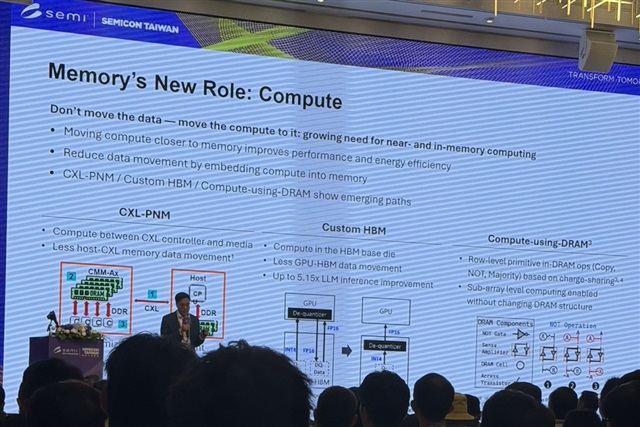
SK Hynix presented a custom HBM concept at SEMICON Taiwan 2026, where compute functions are placed in the base…
Taoyuan is positioning itself as a northern hub for AI data centers (AIDC), citing the Tatan area and an LNG c…
The U.S. Department of Defense announced on August 31 that it has deployed ChatGPT Mil, a customized version o…

Nvidia reported earnings that were both remarkable and boring, reflecting its focus on avoiding a consolidated…

Anthropic has agreed to a $35bn cloud-computing contract with Lambda, a Nvidia-backed cloud provider