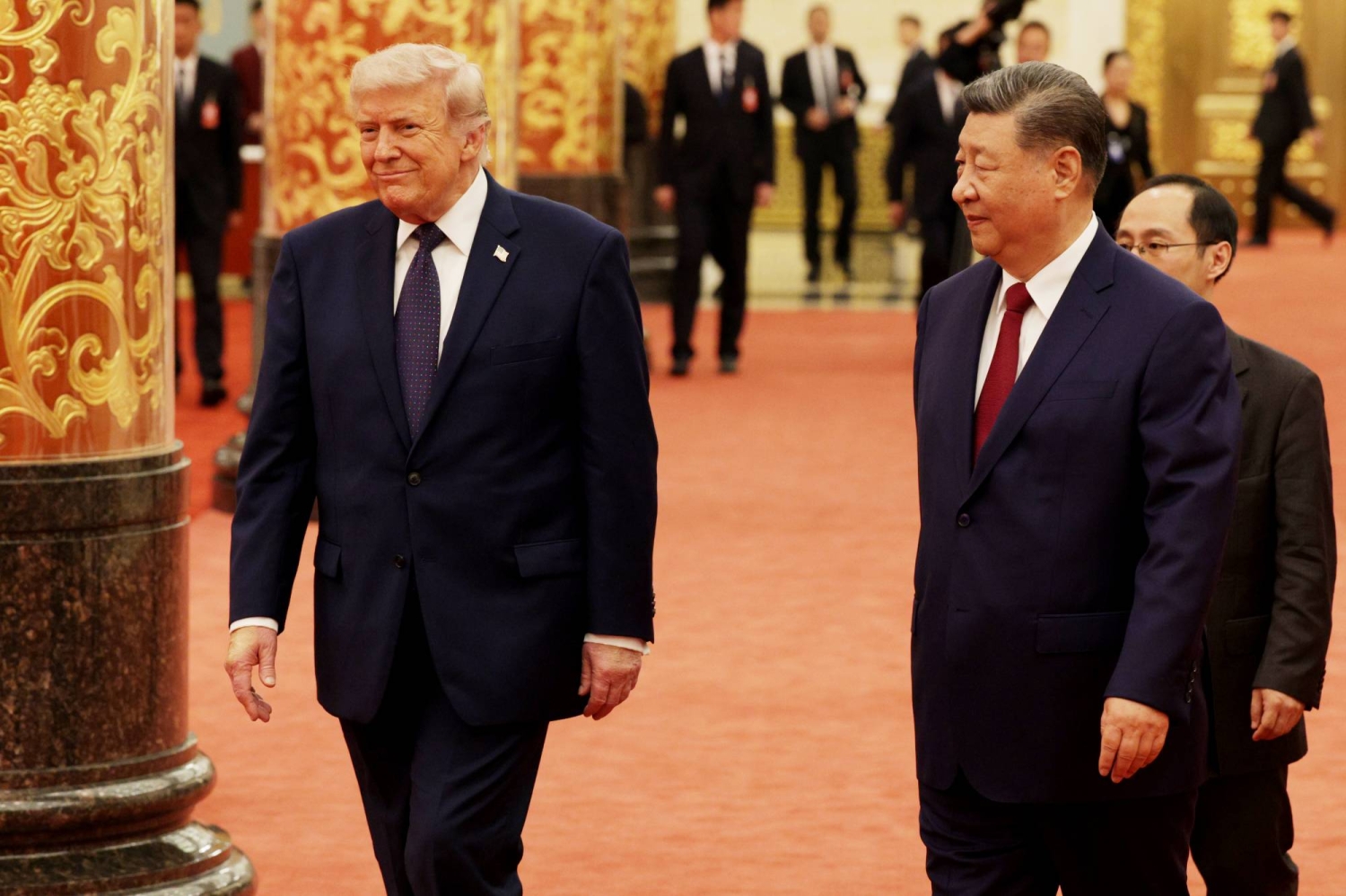
Trump administration officials privately acknowledge that China is not complying with the trade deal signed last year that was meant to open access to critical minerals and rare earths essential for U.S. manufacturing. However, despite this assessment, the U.S. trade team is not planning significant retaliation, even as Trump publicly emphasizes his close relationship with Chinese President Xi Jinping.
Summaries like this, in your inbox every morning.
Sign up free →What happened
Within U.S. President Donald Trump's trade team, staffers at the White House and the Office of the U.S. Trade Representative acknowledge that Beijing is not abiding by the Trump administration's understanding of the trade deal struck between Trump and Chinese President Xi Jinping last year in South Korea.
Why it matters
Reopening access to critical minerals and rare earths—crucial for U.S. companies manufacturing cars and fighter jets—was a central objective of the pact. If China is not delivering on that commitment and the U.S. is not taking action, American manufacturers dependent on those materials may face continued supply constraints.
What to watch
The gap between the administration's public messaging (Trump has been touting a close personal relationship with Xi) and its private assessment (that China is not honoring the deal) suggests the dispute may not escalate into open retaliation in the near term.
A trade deal brokered between U.S. President Donald Trump and Chinese President Xi Jinping in South Korea last year was intended to unlock U.S. access to critical minerals and rare earths, materials vital to American manufacturing across cars, electronics, and military hardware like fighter jets. However, internal discussions within Trump's trade apparatus paint a concerning picture. Staffers at the White House and the Office of the U.S. Trade Representative, speaking anonymously to preserve confidentiality of internal deliberations, have reached a consensus: Beijing is not honoring the Trump administration's understanding of the agreement. Despite this acknowledgment of Chinese non-compliance, the same officials have concluded that the U.S. will not pursue meaningful retaliation. Publicly, Trump has been promoting what he describes as a close personal relationship with Xi Jinping, contrasting sharply with the private assessment among his trade team that China is cheating on the pact. The result is a tension between enforcing the agreement and maintaining the diplomatic posture the administration has publicly adopted toward Beijing.
The trade deal Trump negotiated with Xi Jinping in South Korea last year was designed to address a longstanding U.S. concern: securing reliable access to critical minerals and rare earths that underpin American manufacturing across industries from automotive to defense. These materials are essential inputs for products ranging from consumer electronics to fighter jets, making supply reliability a national economic and security interest. Yet internal Trump administration discussions reveal a stark disconnect between the pact's terms and its implementation. China, according to White House and USTR staffers, is simply not following through on what the administration understood the agreement to require. This creates a predicament: the administration has identified Chinese non-compliance but has concluded that it will not pursue significant retaliation. The mismatch between Trump's public statements—emphasizing a personal rapport with Xi—and the private assessment of his own team suggests that diplomatic and political considerations may be outweighing enforcement pressure.
No discussion yet for this article
Get curated AI news from 200+ sources delivered daily to your inbox. Free to use.
Get Started FreeFree · takes 30 seconds · unsubscribe anytime
1 minute a day. The AI essentials.
200+ sources · Email / LINE / Slack
