Summaries like this, in your inbox every morning.
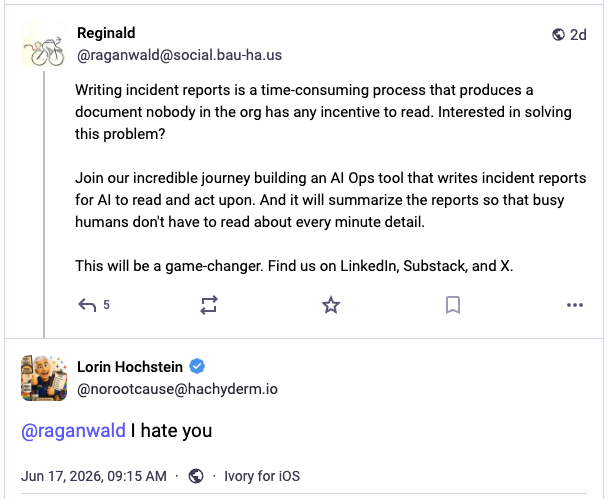
Sign up free →What happened: A discussion emerged about using large language models (AI that understands and generates text) to write incident reports—documents that explain what went wrong when a system fails. The concern is that an AI could plausibly invent connections between systems or miss actual interactions, and reviewers might not scrutinize the output closely enough to notice.
Why it matters: Writing forces humans to confront gaps in their own understanding. When an AI writes the report instead, "nobody did the hard work of actually synthesizing the data," so fabricated or incomplete explanations can slip through undetected. Unlike buggy code (which fails testing) or wrong operational fixes (which don't resolve the incident), a poor report looks correct on the surface but teaches the wrong lesson, curtailing organizational learning.
What to watch: The author fears that because incident reports are time-consuming to write, "the temptation to use AI tools to generate them will be overwhelming." The risk is that these reports become simulacra—correct in form but lacking genuine insight—especially if organizations also use AI to summarize them afterward.
No comments yet. Be the first to share your thoughts!
Log in to join the discussion




Get curated AI news from 200+ sources delivered daily to your inbox. Free to use.
Get Started FreeFree · takes 30 seconds · unsubscribe anytime
5 minutes a day. The AI essentials.
200+ sources · Email / LINE / Slack
