Amazon SageMaker Python SDK v3 now integrates generative AI inference optimization directly into notebook workflows, automating the process of benchmarking endpoints and generating ranked deployment recommendations based on cost-performance tradeoffs.
Previously, these capabilities required separate tools or API calls; now they are native SDK operations, letting teams find the optimal instance type, framework, and serving parameters without manual trial and error.
What happened
Amazon SageMaker Python SDK v3 (version 3.17.0 and later) now exposes generative AI inference recommendations directly in notebook workflows, letting users benchmark endpoints, generate deployment recommendations ranked by cost-performance tradeoff, and deploy the top configuration to a live endpoint—all without leaving the notebook.
Why it matters
Previously, these optimization capabilities required using Amazon SageMaker Studio or writing Boto3 API calls by hand. By integrating them into the Python SDK, AWS makes it simpler for machine learning teams to automate the trial-and-error process of finding the right instance type, framework configuration, and serving parameters for generative AI models in production.
What to watch
The SDK measures key performance metrics—request throughput, time-to-first-token (TTFT), end-to-end latency, output token throughput, and inter-token latency—and ranks recommendations by your chosen performance target. Users can also hydrate a ModelBuilder from a completed recommendation job using ModelBuilder.from_recommendation_job(job_name), enabling handoff between experimentation and deployment workflows.
Ask the AI about this article →
Optimizing generative AI inference deployment traditionally involves manual benchmarking across multiple instance types, container versions, and concurrency settings—a time-consuming process of trial and error. The Amazon SageMaker Python SDK integration addresses this friction by automating the entire workflow: the service deploys a model on each candidate configuration, runs a load test matching the user's traffic pattern, and returns a ranked list optimized for the chosen performance target (such as minimizing time-to-first-token for latency-sensitive applications or maximizing throughput for batch workloads). By exposing these capabilities as native SDK operations within the notebook, AWS removes the need to switch to Amazon SageMaker Studio or construct low-level Boto3 API calls, making the optimization workflow fit naturally into existing data science and MLOps pipelines.
The integration also supports production deployment patterns. Data scientists and MLOps teams often operate in separate workflows—the former experimenting and generating recommendations, the latter deploying and monitoring in production. The new `ModelBuilder.from_recommendation_job()` method enables this separation, allowing a completed recommendation job to be hydrated and deployed in a different session or process, thereby bridging experimentation and release cycles.
For example, today's edition would include:
AI-summarized, only the topics you pick — one digest a day via Email, Slack, or Discord.
Free · takes 30 seconds · unsubscribe anytimeWhat is AIToday? →
Ask AI anything about this article. Q&As are published on this page for other readers too.
Israeli startup DataAgent Ltd
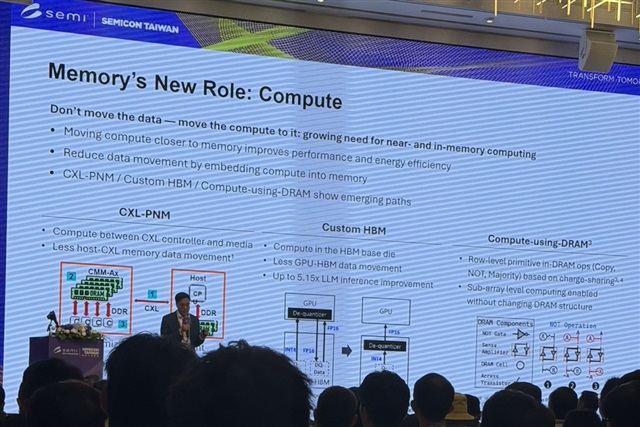
SK Hynix presented a custom HBM concept at SEMICON Taiwan 2026, where compute functions are placed in the base…
Nvidia reported earnings that were both remarkable and boring, reflecting its focus on avoiding a consolidated…

Anthropic has agreed to a $35bn cloud-computing contract with Lambda, a Nvidia-backed cloud provider

The Supreme Court of Japan has included about ¥60 million in its fiscal 2027 budget request for AI-related exp…

The Consumer Affairs Agency said Tuesday it will use generative AI to analyze about 900,000 annual consultatio…