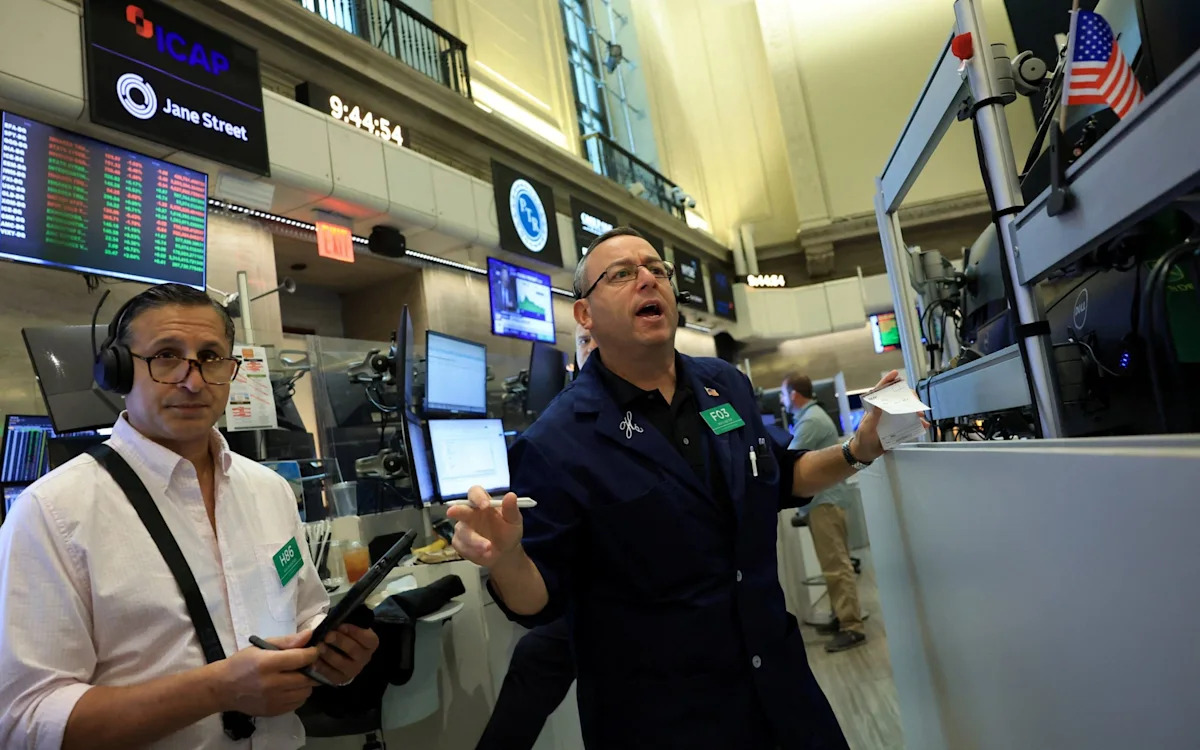
Wall Street's tech-heavy Nasdaq Composite plunged 1.9% on Friday amid a sharp selloff in AI-linked stocks, the largest drop in a month. The decline was triggered by investor concerns that AI companies' valuations have gotten ahead of fundamentals, exacerbated by Chinese startup Moonshot's unveiling of a new large language model (Kimi K3) that can run at far lower cost than leading US systems like OpenAI. Chip stocks suffered the heaviest losses after surging earlier in the year, with declines spreading from Japan and Taiwan to US markets.
Summaries like this, in your inbox every morning.
Sign up free →What happened
The Nasdaq Composite fell 1.9% on Friday in its sharpest drop in a month, with chip stocks hit hardest after earlier surges. The selloff followed sharp declines in Japan (Nikkei 225 down 4%) and Taiwan (Taiex down 6.5%), where chip giant TSMC fell 7.3% despite reporting record second-quarter profit. Chinese AI startup Moonshot unveiled Kimi K3, described as the world's largest open AI model by parameter count.
Why it matters
Investors are questioning whether AI-linked companies' soaring valuations are justified, triggering what one portfolio manager at Neuberger Berman called an across-the-board "bloodbath." Chinese AI models can run at a fraction of the cost that OpenAI charges, raising concerns about the huge infrastructure investments that have fueled the AI boom—and whether returns will match the spending.
What to watch
No single trigger caused the downturn, which arrived as major tech companies prepare to report second-quarter results. Oil prices have also surged more than 15% this month to over $85 a barrel, adding to market pressure from renewed Middle East hostilities.
Wall Street experienced a sharp decline on Friday as investors reassessed the AI sector after weeks of rapid gains. The Nasdaq Composite, which is dominated by tech companies, plunged 1.9% in its sharpest fall in a month. Chip manufacturers, which had led the earlier rally on surging demand, were hit hardest. The selloff was preceded by sharp declines in Japan and Taiwan: Japan's benchmark Nikkei 225 sank 4% on Friday, having declined more than 10% since its record high on June 25. Taiwan's Taiex index shed 6.5% after TSMC, a $2 trillion(約320兆円) chip giant, fell 7.3% a day after announcing record second-quarter profit but higher than expected spending plans.
One portfolio manager at financial adviser Neuberger Berman, Kei Okamura, described the market action bluntly: "The word 'bloodbath' is accurate because it is across the board." Jim Reid, an analyst at Deutsche Bank, said: "Global equities are continuing to slump, as fresh doubts about the AI trade have driven a pronounced sell-off in tech stocks." Reid noted there had been no single trigger for the downturn.
A key factor was competition and cost. On Friday, Beijing-based startup Moonshot unveiled Kimi K3, which it described as the world's largest open AI model by parameter count, an indicator of its complexity. The model can perform close to the levels of tools from US giant Anthropic. Industry analyst Lian Jye Su noted that Chinese models were gaining traction because they could be deployed far more cheaply than leading US systems: "They can be run at a fraction of the cost that OpenAI charges its clients." This raised fresh concerns about the huge investments into AI infrastructure that have fueled the AI boom and whether those investments would deliver expected returns.
Additional pressure came from geopolitics and energy prices. Markets have also come under pressure from renewed hostilities in the Middle East, which sent oil prices soaring more than 15% this month to over $85 a barrel. The selloff occurred as the world's biggest technology companies prepared to report their second-quarter results, setting the stage for earnings to become the next test of investor confidence in AI-linked valuations.
The Friday selloff represents a pivot point in the AI investment cycle. For months, chip manufacturers and AI-adjacent companies rallied on surging demand, but investors are now openly questioning valuations—a shift crystallized by one portfolio manager's assessment that losses are "across the board." The timing is notable: the downturn arrived as major tech firms prepared to report second-quarter earnings, suggesting that profit reports themselves may be the litmus test for whether the AI infrastructure boom is sustainable.
A key driver is cost competition. Moonshot's Kimi K3 announcement underscores that Chinese startups can deliver comparable AI capabilities at sharply lower prices than OpenAI or Anthropic, which may pressure the margins and capital intensity assumptions underlying current AI stock valuations. This is not merely a US-China rivalry; it directly affects the expected return on the "huge investments into AI infrastructure" that have propelled the boom. The body notes no single trigger caused the selloff, which points to a broader reassessment rather than a discrete shock—a pattern consistent with a valuation reset.
AI-summarized, only the topics you pick — one digest a day via Email, Slack, or Discord.
Free · takes 30 seconds · unsubscribe anytime
No discussion yet for this article
Get curated AI news from 200+ sources delivered daily to your inbox. Free to use.
Get Started FreeFree · takes 30 seconds · unsubscribe anytime
1 minute a day. The AI essentials.
200+ sources · Email / LINE / Slack
