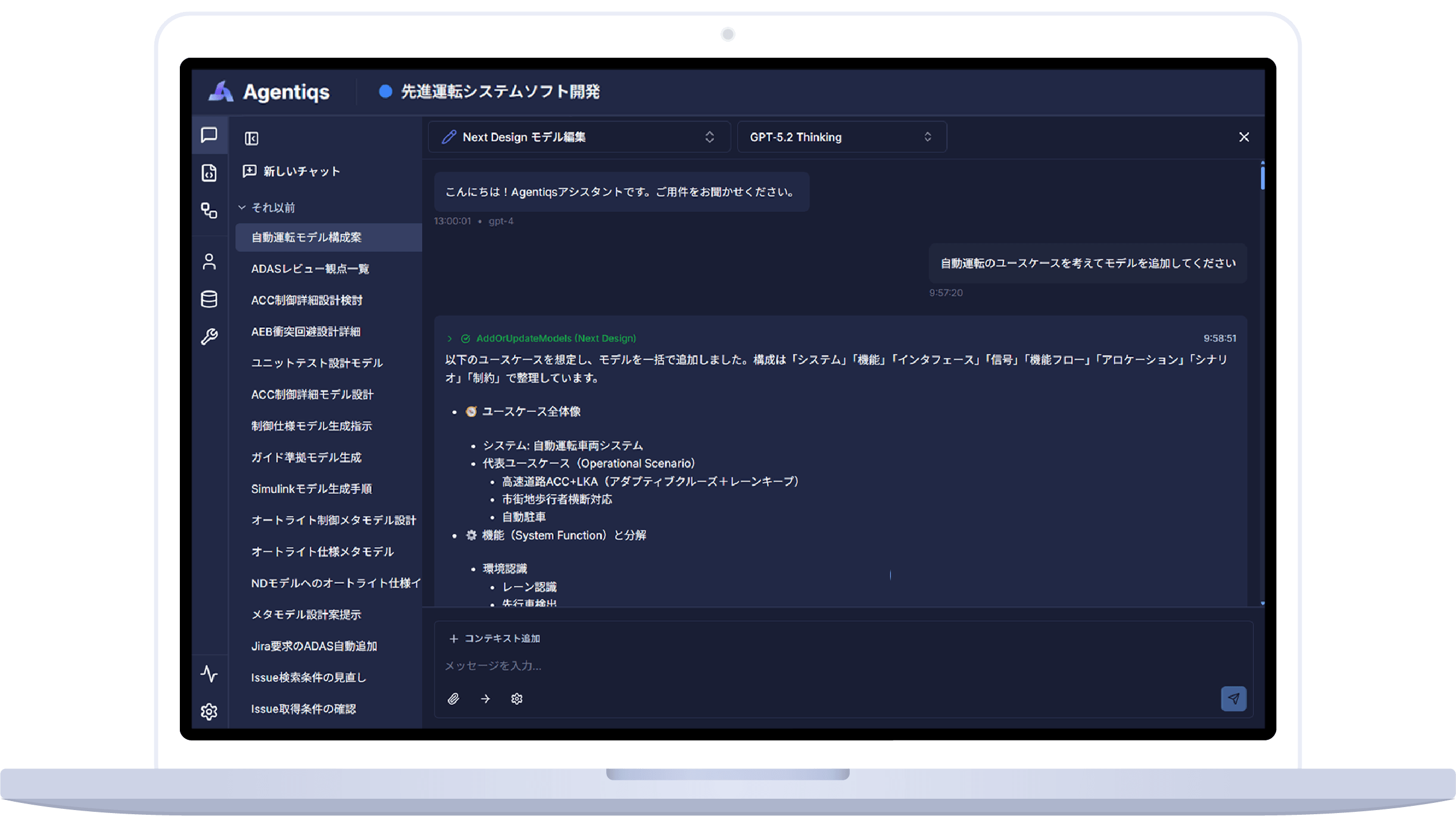
Denso Create launched DC Agentiqs V1.2, an AI agent platform for software development. It lets teams reuse organizational knowledge and design assets.
New features include Agent Skills and a toolkit for Next Design. A free trial is now available.
Pricing starts at 36,000 yen per user yearly.
What happened
Denso Create released DC Agentiqs V1.2 on September 4, 2026, and also started offering a free evaluation version. The new version adds 'Agent Skills' to link organizational knowledge and existing design assets, and introduces the 'Next Design AI toolkit' for users of its design tool.
Why it matters
The platform aims to move AI use in software development from merely assisting engineers to having AI agents autonomously execute development tasks. It addresses issues like AI answers lacking completeness and reproducibility, and adapts to each site's unique environment, processes, and tools.
What to watch
The trial’s value hinges on whether users see enough gain from the new agent-driven tasks to move from evaluation to paid seats after the free period ends. Watch the Standard Edition price of 36,000 yen (including tax 39,600 yen) per user per year as the entry point for that decision.
Ask the AI about this article →
Summaries like this, in your inbox every morning.
The new version of DC Agentiqs addresses a common problem in software development: AI tools often fail to fit into the specific environments and processes of each team, and their outputs can lack consistency. By introducing Agent Skills, the platform lets teams formalize their own design rules, review perspectives, and expert procedures, making AI assistance more reliable and reusable. The addition of a toolkit for Next Design suggests a focus on integrating with existing design assets, potentially easing the transition for companies already using Denso Create's design tools.
The emphasis on enterprise features like Entra ID authentication and confidential file protection indicates that DC Agentiqs is aimed at corporate users who need to manage AI use securely. The pricing, starting at 36,000 yen per user per year, positions it as a professional tool. While the announcement does not provide customer numbers or performance data, the move to autonomous execution of development tasks points to a broader trend of AI agents taking on more responsibility in software engineering. However, the actual impact will depend on real-world adoption and how well these agents handle complex, context-rich projects.
For example, today's edition would include:
AI-summarized, only the topics you pick — one digest a day via Email, Slack, or Discord.
Free · 30 seconds with Google · unsubscribe anytimeWhat is AIToday? →
Ask AI anything about this article. Q&As are published on this page for other readers too.
JM-Applied, a Taiwanese semiconductor gas equipment maker and supply chain member for Micron and TSMC, said on…

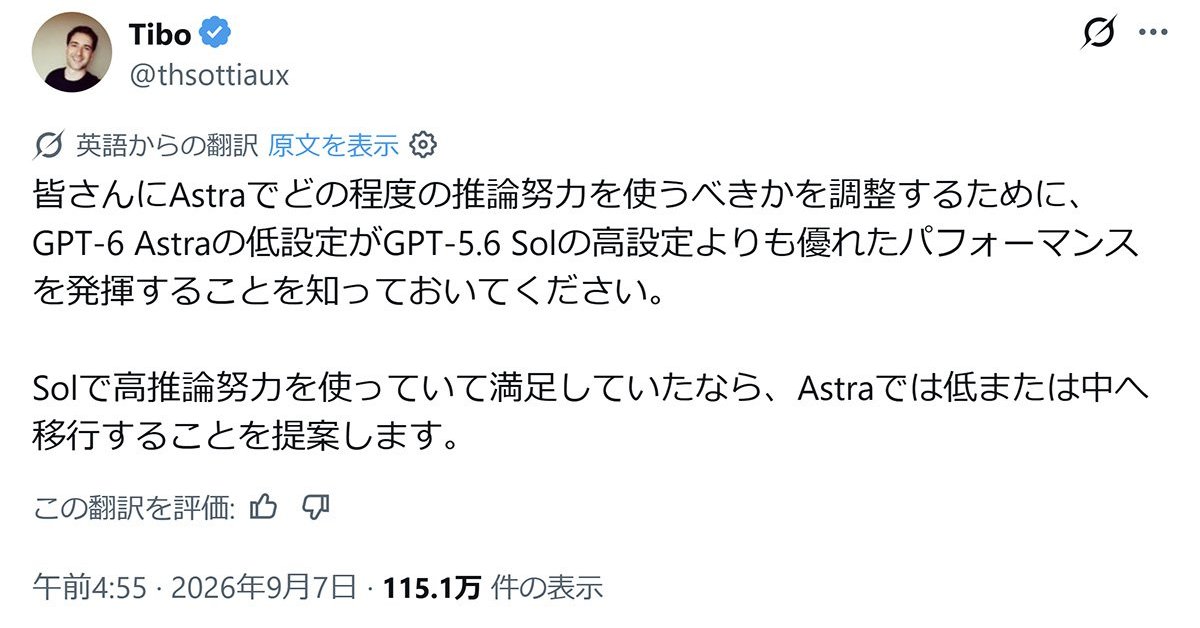
OpenAI's product lead Tibo Sotiou posted on X on September 6 that GPT-6 Astra's 'low' setting outperforms GPT-…
Nvidia disclosed roughly $99 billion of public and private equity investments as of July 26, plus about $25 bi…
In January, Ukraine's defense ministry said it would share millions of data points from tens of thousands of d…

OpenAI Group PBC acknowledged it did not publicly disclose an episode where its AI agents wrote to outside web…

Eaton is expanding beyond traditional power management into modular power deployment, next-generation DC conve…