What happened
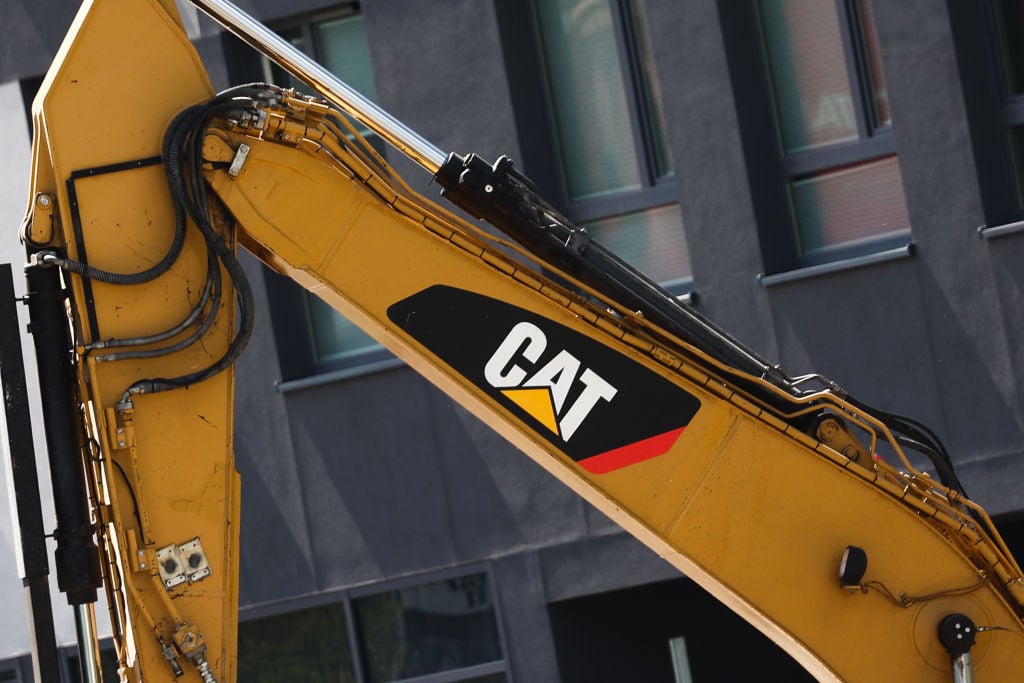
Caterpillar's stock has risen 265% over three years, driven by demand for its earth-moving equipment in AI data center construction and its Power & Energy segment's role in generating on-site electricity for those facilities. The stock is now trading near $1,000 per share and accounts for 10.6% of the Dow Jones Industrial Average (second only to Goldman Sachs).
Why it matters
Caterpillar's outsized weighting in the price-weighted Dow raises the question of whether a stock split is imminent — similar to the splits Amazon and Alphabet executed in 2022 to narrow their influence on the index. However, Goldman Sachs (which combined with Caterpillar makes up 23.5% of the Dow) may be a stronger candidate for a split, especially if such a move could clear the way for Meta Platforms to enter the index.
What to watch
Caterpillar is a cyclical company, and management may choose to wait and observe how the AI infrastructure market develops rather than rush into a stock split. The Dow can also rebalance naturally over time through market performance — Boeing, for example, fell from over 11% of the index in 2019 to just 2.5% without any split, driven by underperformance and index adjustments.
Ask the AI about this article →
Summaries like this, in your inbox every morning.
Caterpillar's 265% three-year gain reflects convergence of two powerful forces: the AI infrastructure build-out and its own cyclical exposure to commodity demand. The company's Power & Energy segment is particularly well-positioned, as hyperscalers increasingly seek to avoid grid interconnection delays by generating their own electricity on-site — a trend that will likely persist as AI energy demands intensify and capital expenditures remain elevated.
The Dow's price-weighted structure means that Caterpillar's surge to 10.6% weighting has created an imbalance. Goldman Sachs and Caterpillar together now represent 23.5% of the index, whereas the two largest S&P 500 constituents account for only 14.4% of that cap-weighted index. Precedent exists: Amazon and Alphabet both split in 2022, partly to normalize their Dow weighting and facilitate broader index inclusion strategies. However, management may elect restraint — the article notes that the Dow can rebalance naturally over time, as Boeing's fall from over 11% in 2019 to 2.5% by underperformance alone demonstrates. Because Caterpillar is cyclical, waiting to clarify the AI infrastructure cycle's trajectory may be the prudent course.
For example, today's edition would include:
AI-summarized, only the topics you pick — one digest a day via Email, Slack, or Discord.
Free · 30 seconds with Google · unsubscribe anytimeWhat is AIToday? →
Ask AI anything about this article. Q&As are published on this page for other readers too.
Dell reported fiscal 2027 second-quarter revenue of $47 billion, up 58% year over year, with adjusted EPS up 2…

Tesla is rated a Sell at $354.08, with losses of $1.1 billion in free cash flow and a 369x earnings multiple
Greg Abel took over as CEO of Berkshire Hathaway at the start of 2026 and is clearly looking at AI as a growth…

Goldman Sachs has stated that the AI trade is barely started, but the stocks that have driven gains so far wil…

Applied Materials (AMAT) is highlighted as potentially 28% undervalued, amid rising interest driven by the AI…

BlackRock, the world's largest asset manager, has flagged a potential collision between the ongoing AI boom an…