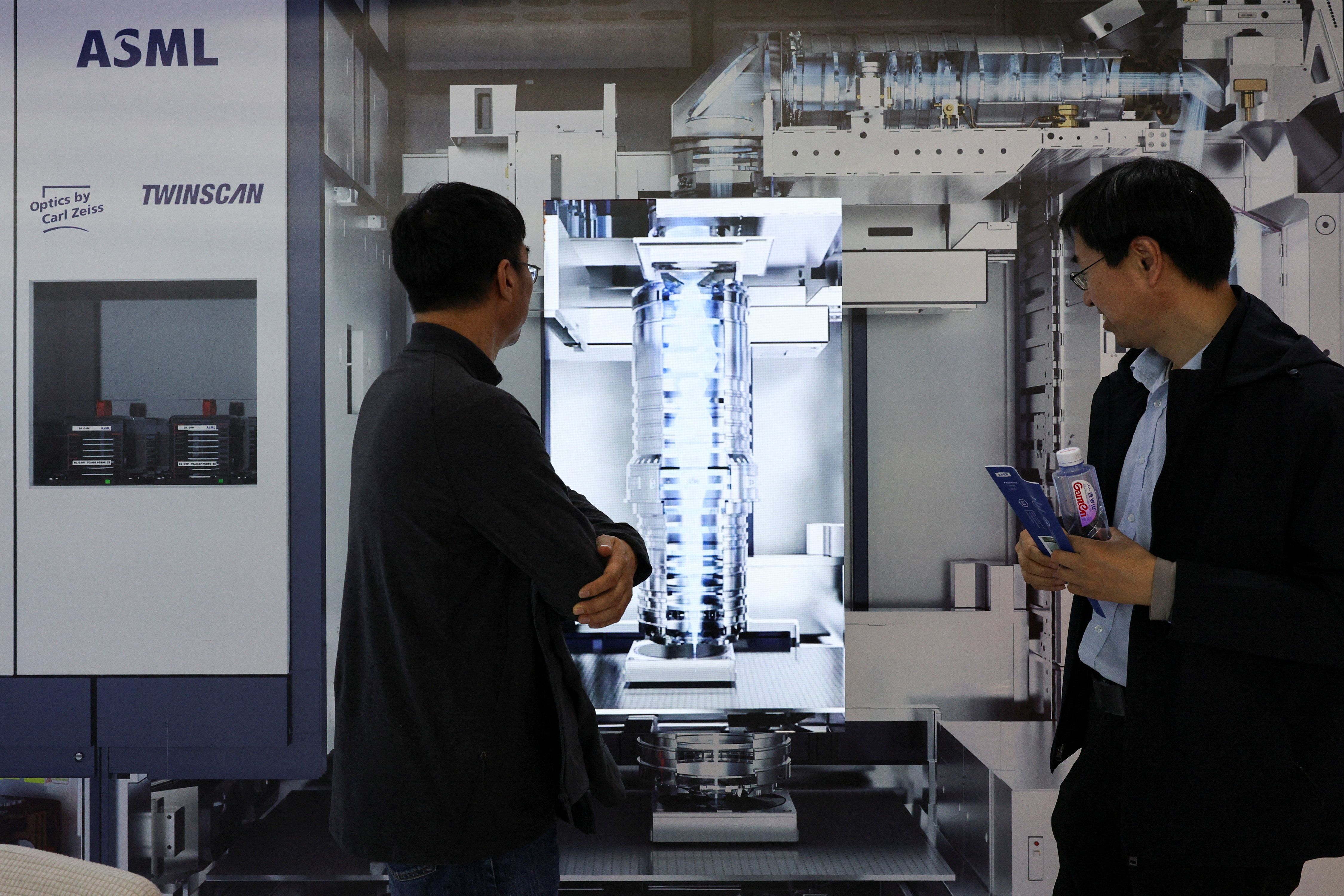
China's chipmakers posted a 2,850% profit jump in the first half of the year, with memory chipmaker CXMT's stock jumping 466% on its debut, signaling that Beijing's push to build a self-sufficient semiconductor industry is gaining momentum. The breakthrough comes as reports emerge of a Chinese state-backed firm mass-producing lithography machines—a key technology for chip manufacturing—and China's AI models now rival those from leading US labs, suggesting the country is successfully overcoming the AI compute shortage created by Washington's export controls on advanced chips.
Summaries like this, in your inbox every morning.
Sign up free →What happened
Chinese chipmakers' first-half profits jumped 2,850%, while memory chipmaker CXMT's stock soared 466% on its market debut. Shares in Dutch chip-equipment maker ASML fell after reports that a Chinese state-backed company is mass-producing lithography machines—a critical technology for chip manufacturing.
Why it matters
Washington's chip export controls aimed to limit China's AI development, but China is now demonstrating it can overcome that constraint. With AI models matching those from leading US labs and abundant energy supplies, China is extracting greater efficiencies from less-advanced hardware, suggesting the domestic semiconductor strategy is working.
What to watch
CXMT is characterized as China's best hope for building self-sufficiency in memory chips, a core component of AI infrastructure. The emergence of Chinese-made lithography machines signals that Beijing may be able to reduce dependence on foreign suppliers for the equipment needed to manufacture advanced semiconductors.
China's semiconductor ambitions received a substantial boost in the first half of the year when chipmakers collectively posted a 2,850% profit jump, demonstrating that years of domestic investment are beginning to yield financial returns. The momentum accelerated with the blockbuster market debut of CXMT, a memory chipmaker that Beijing views as central to achieving semiconductor self-sufficiency. CXMT's stock surged 466% on its first trading day, reflecting investor enthusiasm for China's ability to produce a critical component of AI infrastructure domestically. The listing came amid a broader shift in global semiconductor dynamics: reports emerged that a Chinese state-backed company is now mass-producing lithography machines, sophisticated equipment essential for manufacturing advanced chips. The news hit Dutch tech giant ASML hard, sending its shares downward as investors confronted the prospect of losing a key market and watching a technological monopoly erode. These breakthroughs suggest Beijing's efforts to build an insulated domestic semiconductor supply chain are succeeding faster than many observers expected. Underpinning this progress is a strategic reality: China now has AI models that rival those from leading US laboratories, and it possesses abundant energy supplies to power data centers and chip manufacturing. By wringing greater efficiencies from less-advanced hardware—the kind still accessible despite Washington's chip export controls—China is demonstrating it can overcome the compute shortage that the restrictions were designed to create. The convergence of domestic chipmaking capacity, lithography machine production, efficient AI models, and cheap energy suggests China is building a self-reinforcing ecosystem that reduces its vulnerability to future US export controls.
China's semiconductor industry is reaching a turning point after years of US export controls designed to constrain its AI capabilities. The 2,850% profit surge among Chinese chipmakers signals that domestic investment and innovation are beginning to offset the impact of Washington's restrictions on advanced chip sales. CXMT's blockbuster listing represents a watershed moment—memory chips are essential to AI systems, and a successful Chinese producer could significantly reduce Beijing's reliance on foreign suppliers. The emergence of Chinese-made lithography machines is even more striking, as these machines have long been controlled by a handful of foreign companies, particularly ASML. Losing this monopoly would represent a fundamental shift in semiconductor supply chains. Taken together, these developments suggest China is not merely surviving under export controls but is actively building out the full technology stack needed for independent AI development. The fact that China's AI models now rival leading US labs, combined with abundant energy resources, indicates that Beijing has found workarounds to compute limitations—likely through more efficient use of less-advanced chips. This represents a strategic failure for US export controls if China can maintain this trajectory.
AI-summarized, only the topics you pick — one digest a day via Email, Slack, or Discord.
Free · takes 30 seconds · unsubscribe anytime
No discussion yet for this article
Get curated AI news from 200+ sources delivered daily to your inbox. Free to use.
Get Started FreeFree · takes 30 seconds · unsubscribe anytime
