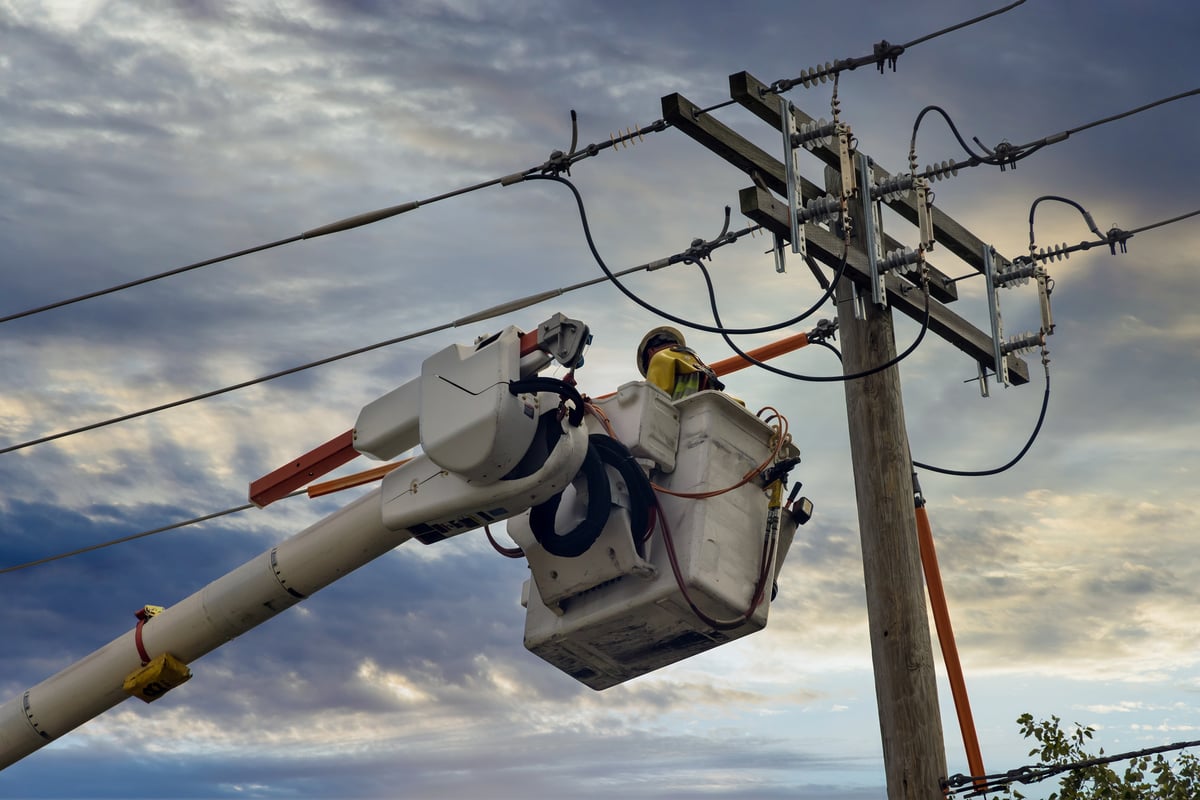
Quanta Services' record $48.5 billion(約7.8兆円) backlog reflects surging demand for the physical infrastructure—power lines, substations, interconnections—needed to support AI data centers.
The company benefits from owning its own workforce-training pipeline, which competitors cannot quickly replicate, positioning it as a play on the non-chip side of the AI build-out that CEO Jensen Huang has highlighted as the true constraint.
What happened
Quanta Services, a specialty contractor that builds power infrastructure for data centers, reported a record backlog of $48.5 billion(約7.8兆円). The company frames its longer-term opportunity as a $2.4 trillion(約380兆円) addressable market through 2030, driven by aging grids, new power generation, and the electricity demands of AI facilities.
Why it matters
Nvidia CEO Jensen Huang has argued that the real bottleneck in AI build-out is not chips alone, but the skilled tradespeople—electricians, pipefitters, grid crews—needed to construct the physical infrastructure those chips depend on. Quanta's record backlog confirms this thesis is translating into real business demand.
What to watch
Quanta owns Northwest Lineman College and runs advanced training centers that develop workers across its service lines. Because journeyman lineworkers take years to train, the company's control over its own labor supply is a durable competitive edge in a market where nearly every contractor says people, not demand, are the limit.
Ask the AI about this article →
Nvidia CEO Jensen Huang has long argued that the real constraint on AI infrastructure expansion is not silicon but the skilled trades—the electricians, pipefitters, and grid workers needed to build out data centers, power plants, and transmission lines. Quanta Services' record $48.5 billion(約7.8兆円) backlog suggests this thesis is manifesting in actual business momentum. The company is positioned at the intersection of two long-term tailwinds: aging power grids requiring modernization, and the immense electricity demands of new AI compute clusters.
Where Quanta's competitive position becomes most interesting is its control over labor supply. By owning Northwest Lineman College and running in-house training centers, the company manufactures its own skilled workforce rather than competing against other contractors for scarce workers in the open market. In an industry where nearly every participant cites labor shortage as the binding constraint, this pipeline is a genuine, hard-to-replicate advantage. That said, the same labor constraint that benefits Quanta may also limit how quickly it can grow—even its own training capacity has a ceiling. The company is also exposed to risks common to infrastructure contractors: project delays, dependence on utility and data-center customer spending plans, and stock valuation pressure after a sharp recent run.
For example, today's edition would include:
AI-summarized, only the topics you pick — one digest a day via Email, Slack, or Discord.
Free · takes 30 seconds · unsubscribe anytimeWhat is AIToday? →
Ask AI anything about this article. Q&As are published on this page for other readers too.

