Clara Shih quit Meta to warn that AI will disrupt many jobs.
She predicts one in five corporate roles will face major challenges.
Her foundation offers free tools to help workers adapt.
What happened
Clara Shih, former CEO of Salesforce AI and ex-Meta business AI leader, quit Meta this spring to start the New Work Foundation and consumer brand Dear CC. She says watching AI agents collapse a 10-step product development process into one or two people radicalized her.
Why it matters
Shih predicts one in five corporate roles will be 'especially going to be challenged' by AI. She admits the optimistic story she told about AI freeing workers for higher-order tasks has 'primarily not been true,' citing customer support reductions from around 9,000 to 5,000 staff at Salesforce.
What to watch
The New Work Foundation offers free tools like Field Report, which shows AI exposure by major and occupation, and Game Plan, a mentoring app for rejected applicants. Shih's taxonomy, borrowed from MIT's David Autor, outlines three ways AI reshapes jobs, including case three where expert tasks get automated and job quality drops.
Ask the AI about this article →
Clara Shih's departure from Meta marks a notable shift in perspective from a top tech executive who once helped build AI products. Her account of seeing AI agents reduce a multi-step product development process to one or two people is a concrete illustration of how AI can transform work. She notes that while optimists argue routine tasks get automated, freeing workers for higher-value work, her experience building Salesforce's Agentforce showed that this was 'primarily not true' for customer support, where staff went from around 9,000 to 5,000.
The implications are significant for entry-level jobs, which Shih herself began eliminating at Meta. She predicts that one in five corporate roles will be especially challenged. Her taxonomy, borrowed from MIT economist David Autor, suggests that the impact varies: some jobs face direct substitution, some benefit from automating routine tasks, and others see an influx of workers due to lower barriers to entry, leading to lower-quality jobs, as with taxi drivers. This framework helps explain why AI's effect is not uniform across the economy.
The New Work Foundation's free resources, like Field Report and Game Plan, aim to help entry-level workers navigate this transition. However, Shih admits that 'no one knows' exactly how this plays out, underscoring the uncertainty. Her focus on the transition, rather than the end state, highlights a concern that the path to an AI-driven economy could be disruptive for many workers, even if the destination is positive.
For example, today's edition would include:
AI-summarized, only the topics you pick — one digest a day via Email, Slack, or Discord.
Free · takes 30 seconds · unsubscribe anytimeWhat is AIToday? →
Ask AI anything about this article. Q&As are published on this page for other readers too.
Home Depot is bringing its Magic Apron AI assistant to all U.S
Lam Research has started construction on an R&D center in Tualatin, Oregon, as part of a $3 billion, five-year…

GE Vernova raised its 2026 revenue guidance to between $45.5 billion and $46.5 billion from a prior range of $…
Nvidia has paused revenue-sharing deals with AI cloud companies, according to a Wall Street Journal report cit…

ECRI, a nonprofit patient safety organization, is expanding its reporting system to include errors involving a…

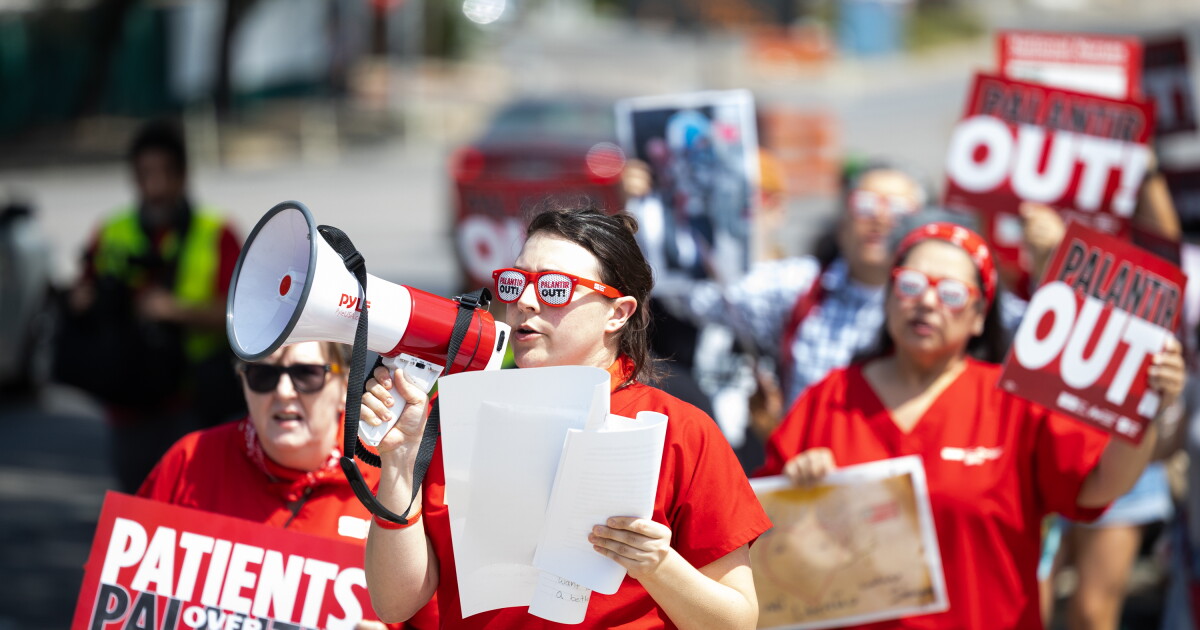
Dozens of protesters gathered Thursday outside 8VC, a venture capital firm in Austin, to protest Palantir's AI…