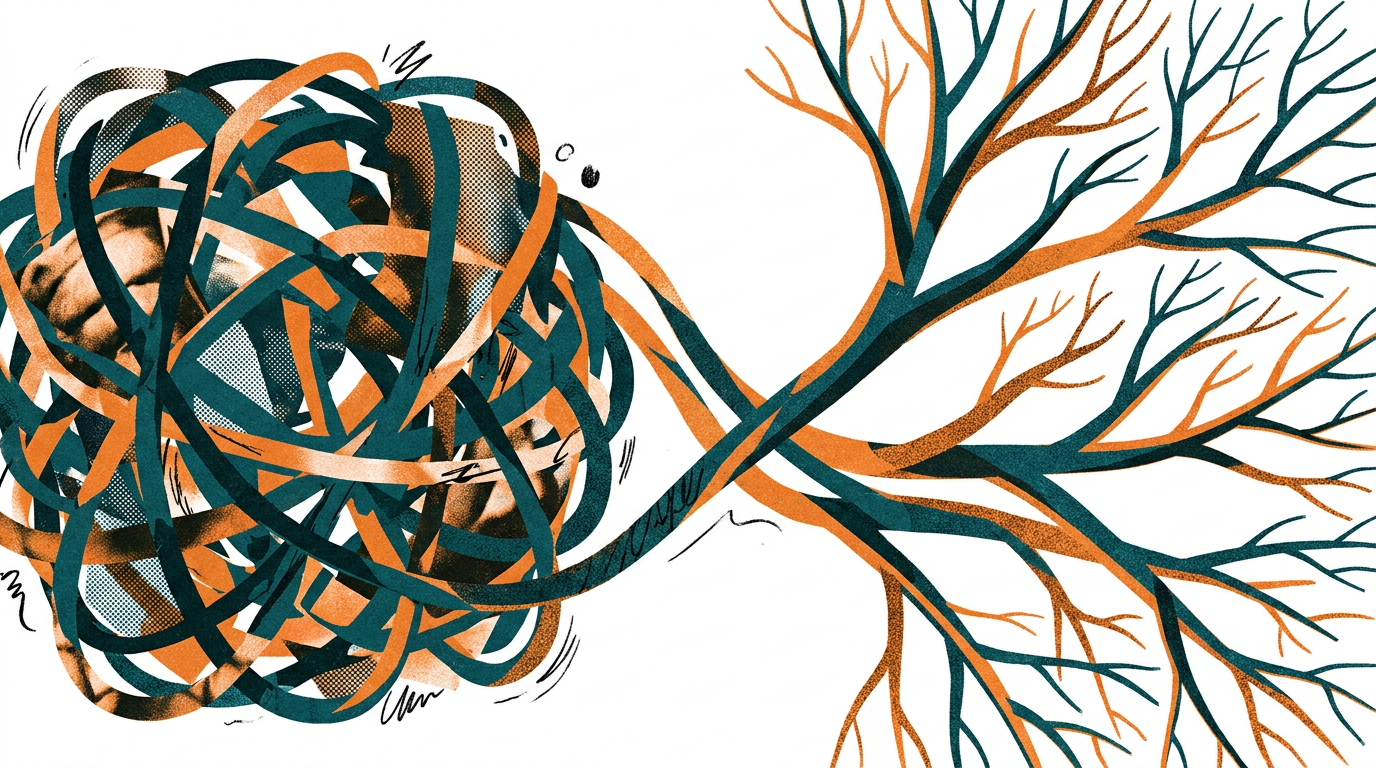
A new survey documents empirical research on AI consciousness being conducted by major labs including Anthropic and Google DeepMind, as well as dedicated organizations like Eleos AI and Reciprocal Research. Rather than waiting for philosophers to solve the hard problem of consciousness, researchers are applying methods from psychology and cognitive science to investigate whether current AI systems might have subjective experience.
Summaries like this, in your inbox every morning.
Sign up free →何が起きたか
A survey documents empirical research on whether AI systems might be conscious, drawing on methods from psychology, cognitive science, and mechanistic interpretability. Anthropic, Google DeepMind, and dedicated organizations like Eleos AI and Reciprocal Research are now actively researching the question.
なぜ重要か
The research treats AI consciousness as a question that can be investigated now using existing scientific methods, rather than waiting for a solution to the philosophical hard problem of consciousness. This represents a shift toward treating consciousness as a measurable research question applicable to AI systems.
注目点
Results from this work are currently scattered across journals, preprints, blog posts, and unpublished manuscripts, suggesting the field is still consolidating. The survey aims to collect these findings in one place for the first time.
This survey collects empirical research on AI consciousness, treating the question as researchable within the domain of current scientific methods. Rather than waiting for the philosophical hard problem of consciousness to be solved—the long-standing debate about why subjective experience exists at all—researchers are applying familiar tools from psychology, cognitive science, and mechanistic interpretability to investigate AI systems directly.
The institutional footprint has expanded notably. Anthropic and Google DeepMind, two of the largest AI research organizations, have researchers dedicated to the question. Beyond the major labs, organizations like Eleos AI and Reciprocal Research have been established specifically to focus on AI consciousness research. This institutional backing signals serious research investment.
Currently, the body of work on AI consciousness is scattered across multiple publication venues: peer-reviewed journals, preprints, blog posts, and unpublished manuscripts. No single repository or agreed-upon framework yet exists. The survey aims to consolidate these findings into one place, making the research more accessible and allowing researchers to build on each other's work more effectively. The author's epistemic stance is agnostic—not claiming that any current system is conscious, only that the question is answerable through empirical investigation.
The survey reflects a growing view among AI researchers that consciousness—whether defined as subjective experience—need not remain purely philosophical territory. By framing the question as empirically tractable through existing scientific methods, researchers are treating AI consciousness as a measurable phenomenon rather than an intractable puzzle. This approach has attracted enough institutional backing (major AI labs and dedicated nonprofits) to generate a body of work worth consolidating.
The scattered publication venues—journals, preprints, blog posts, unpublished work—suggest the field is still establishing itself. No single accepted framework or standard methodology has yet emerged, which is typical of early-stage research domains. The survey itself serves as a signal that the field has reached a critical mass: enough researchers are working on the problem, from enough different angles, that coordination and knowledge-sharing have become valuable.
AI-summarized, only the topics you pick — one digest a day via Email, Slack, or Discord.
Free · takes 30 seconds · unsubscribe anytime
No discussion yet for this article
Get curated AI news from 200+ sources delivered daily to your inbox. Free to use.
Get Started FreeFree · takes 30 seconds · unsubscribe anytime
1 minute a day. The AI essentials.
200+ sources · Email / LINE / Slack