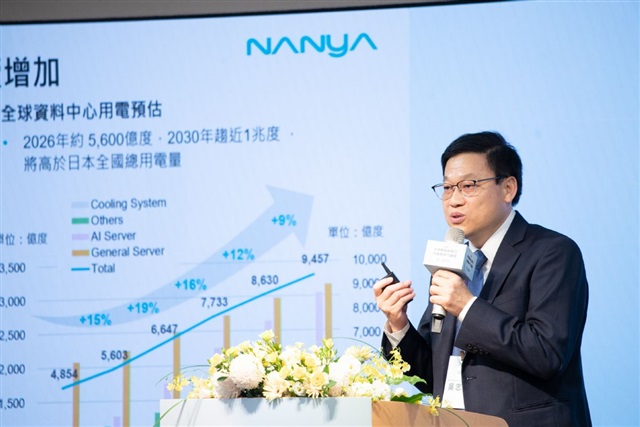
Taiwan's government-funded Industrial Technology Research Institute convened chip industry executives and government officials on July 21 to address escalating power consumption and heat generation challenges posed by AI computing growth. The forum reflects industry recognition that electricity and thermal management have become critical bottlenecks limiting AI infrastructure expansion.
Summaries like this, in your inbox every morning.
Sign up free →What happened
Taiwan's Industrial Technology Research Institute (ITRI), a government-funded research body, held a forum on July 21 bringing together government officials and industry executives to address electricity demand and heat generation driven by AI computing.
Why it matters
AI workloads are creating acute power and thermal bottlenecks that chip makers and data-center operators must solve. Cooling and energy efficiency have become critical constraints on how fast the industry can scale AI infrastructure.
What to watch
The forum signals that Taiwan's government and chip sector recognize power and thermal management as a central technical and policy issue as AI deployment accelerates.
Taiwan's Industrial Technology Research Institute, a government-funded research body, organized a high-level forum on July 21 to bring together government officials and industry executives to tackle two intertwined challenges emerging from the surge in AI computing: surging electricity demand and heat generation. The event highlights a critical inflection point in AI infrastructure deployment. As AI models grow larger and inference demand accelerates, data centers and compute facilities are consuming unprecedented amounts of power and producing correspondingly high heat loads. Cooling and power efficiency are no longer secondary concerns—they are bottlenecks limiting how quickly and cost-effectively the industry can deploy and scale AI systems. By convening both policy makers and chip and system vendors, ITRI is treating power and thermal management as a problem requiring industry-wide coordination rather than isolated corporate R&D. The forum underscores Taiwan's strategic interest in maintaining leadership in AI infrastructure, recognizing that nations and companies that solve the power and cooling puzzle first will have a competitive edge in the race to deploy larger, more capable AI systems.
Taiwan's Industrial Technology Research Institute—a state-backed research organization—is positioning itself at the center of one of the semiconductor industry's most pressing near-term challenges. As AI computing workloads expand globally, the power draw and heat output from data centers and edge servers have become a primary constraint on deployment speed and density. By convening both government and private-sector stakeholders on July 21, ITRI is signaling that power and thermal management are no longer purely technical problems for individual chip or system designers, but strategic issues requiring coordinated policy and industry response. This reflects the reality that solving these bottlenecks—whether through new cooling architectures, more efficient chip designs, or grid-level power planning—will likely require alignment across Taiwan's semiconductor ecosystem and government support.
AI-summarized, only the topics you pick — one digest a day via Email, Slack, or Discord.
Free · takes 30 seconds · unsubscribe anytime
No discussion yet for this article
Get curated AI news from 200+ sources delivered daily to your inbox. Free to use.
Get Started FreeFree · takes 30 seconds · unsubscribe anytime
1 minute a day. The AI essentials.
200+ sources · Email / LINE / Slack
