AIToday

AI agents automate complex tasks beyond RPA's reach, say Japanese firms

AINOW1d ago5 min read
AI agents automate complex tasks beyond RPA's reach, say Japanese firms

Key takeaway

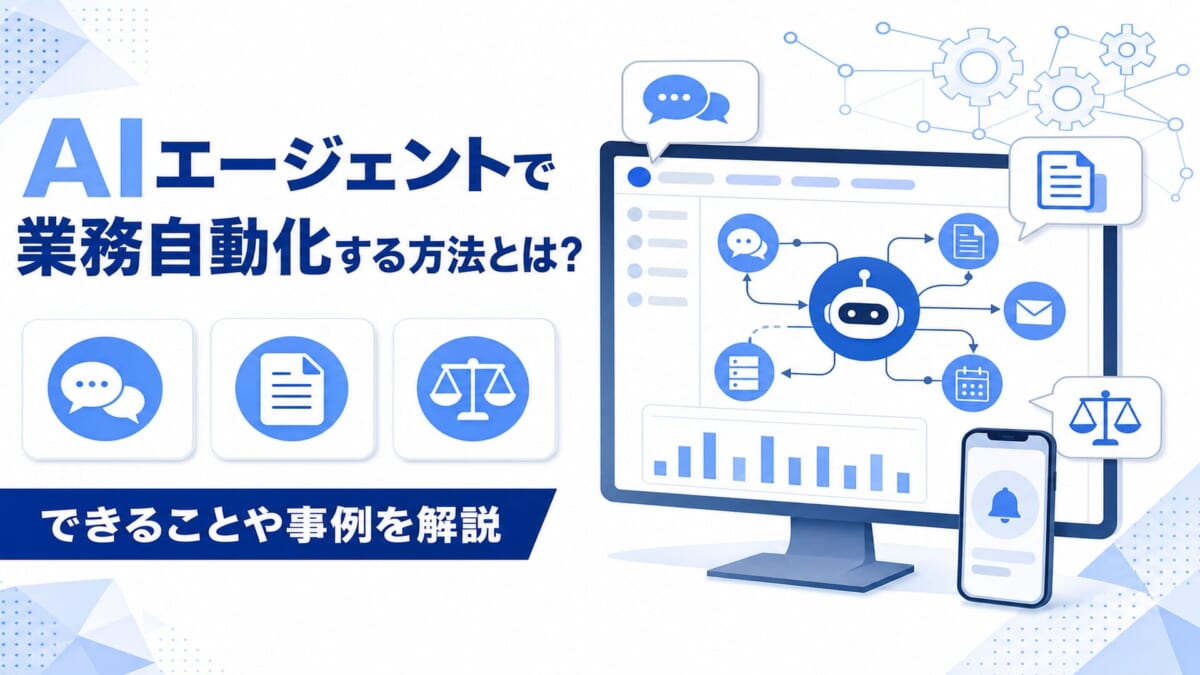
AI agents—software systems that autonomously plan and execute multi-step tasks—are entering mainstream use in Japan. Unlike simpler generative AI or chatbots, agents can handle judgment calls and adapt to unexpected situations, making them suited for customer support, equipment repair diagnostics, and financial processing. Daikin and Hitachi are testing factory diagnostics agents; JAL has deployed agents across 56 airports; LINE Yahoo's tests showed agents can handle over 300,000 inquiries monthly. The approach works best when paired with careful pilots, human oversight, and security controls—not as a wholesale RPA replacement.

Summaries like this, in your inbox every morning.

Sign up free →

3 Key Points

  • What happened

    Japanese companies including Daikin, Hitachi, JAL, and LINE Yahoo are deploying AI agents—autonomous systems that plan and execute multi-step work—to handle customer support, equipment diagnostics, and administrative tasks. Daikin and Hitachi began trial operation in April 2025 at a factory; LINE Yahoo confirmed in a September 2025 announcement that its PoC showed the ability to handle over 300,000 customer inquiries monthly.

  • Why it matters

    AI agents differ from generative AI (which answers one question at a time) and chatbots (which follow predefined scripts). They can tackle judgment-heavy work—like diagnostics or personalized customer replies—that traditional RPA cannot handle, potentially freeing staff from repetitive work to focus on complex decisions. For businesses, this means a wider automation range without replacing existing RPA systems.

  • What to watch

    Success depends on careful sequencing. Experts recommend starting with small pilots on high-volume, measurable tasks (like invoice processing or support triage), then expanding only after confirming results. Security and human oversight remain critical—companies must limit AI agent access permissions and keep humans in the loop for high-impact decisions like refunds.

FAQ

How does an AI agent differ from generative AI like ChatGPT?
Generative AI answers one question at a time. An AI agent receives a goal, makes its own plan, calls multiple tools or AI systems in sequence, and completes a full task without human intervention—for example, extracting expense data, categorizing it, and generating a monthly report all on its own.
What kind of work can AI agents do today?
Customer support (checking order history, providing personalized replies), sales research (gathering company news and drafting emails), invoice processing (reading documents, categorizing charges, entering data into accounting systems), meeting transcription and task assignment, and weekly or monthly report generation from multiple data sources.
Should we replace RPA with AI agents?
No. RPA excels at rule-based repetitive work; AI agents handle judgment-heavy tasks. The best approach is to combine them—let the AI agent decide what to do, then have RPA handle the system input work. This broadens automation scope without discarding existing RPA investments.

Discussion

No discussion yet for this article

Stay ahead with AI news

Get curated AI news from 200+ sources delivered daily to your inbox. Free to use.

Get Started Free

Free · takes 30 seconds · unsubscribe anytime

1 minute a day. The AI essentials.

200+ sources · Email / LINE / Slack

Get it free →

