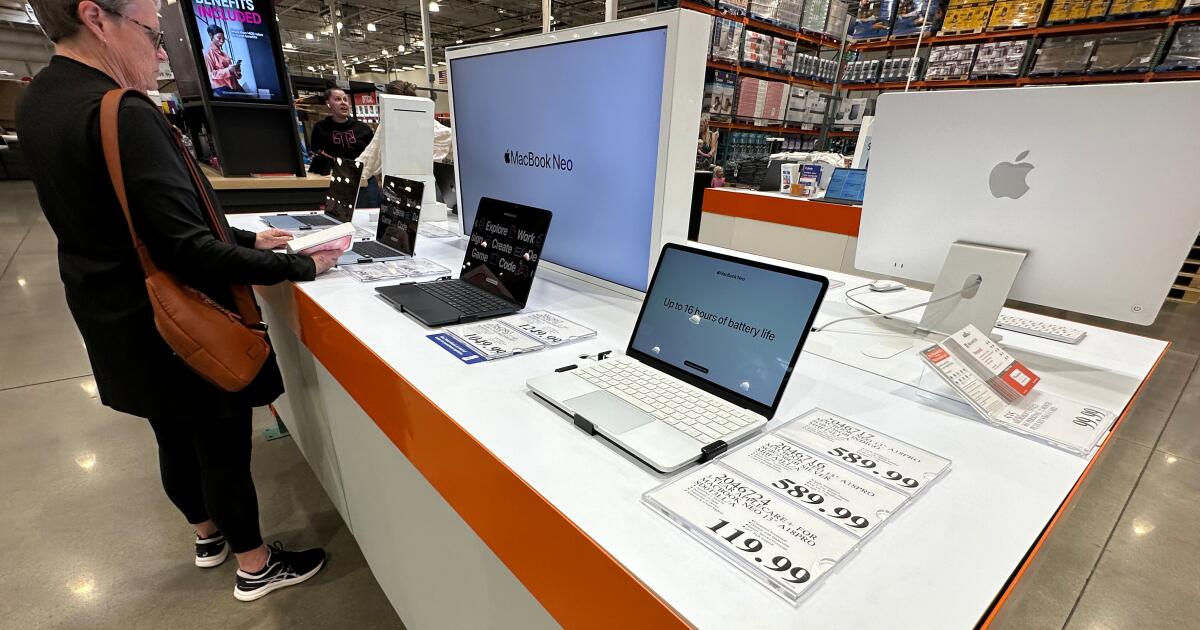
A massive wave of investment in AI data centers is pushing up prices for computer chips, electronics, and electricity. Just four major tech companies (Alphabet, Amazon, Meta, and Microsoft) are expected to invest $720 billion(約120兆円) this year on data centers, creating shortages that have driven memory chip costs up as much as 400%. Companies like Apple, Microsoft, and Sony have already announced significant price increases for laptops, iPads, consoles, and other consumer electronics. Economists warn this could keep inflation elevated through the end of the year and may force the Federal Reserve to raise interest rates, potentially increasing borrowing costs for consumers.
Summaries like this, in your inbox every morning.
Sign up free →What happened
Investment in AI data centers — expected to top $700 billion(約110兆円) this year — is driving up prices for memory chips (projected to surge as much as 400% between 2024 and end of this year), processors, and electricity. Major tech companies including Apple, Microsoft, Sony, Dell, and HP have already raised prices on laptops, iPads, gaming consoles, and computers; Apple boosted MacBook prices by about 15% to 25%, with a top-line model now costing $1,999 up from $1,699.
Why it matters
Economists expect the cost pressures to keep inflation elevated at least through the end of this year, with AI investment boosting core consumer prices (which exclude food and energy) by roughly half a percentage point by year-end. This could prevent the Federal Reserve from hitting its 2% inflation target and may prompt the central bank to raise interest rates, which would increase borrowing costs for auto loans, mortgages, and business loans. Fed officials are closely monitoring June's inflation report and acknowledge that if demand for AI-related gear outstrips supply, they may not be able to overlook the impact.
What to watch
Electricity prices rose 5.9% in May compared with a year earlier, and experts expect electricity demand from AI to push up utility costs into 2028 or even beyond. Goldman Sachs forecasts electricity prices will rise 6% this year and next, and an above-average 3% in 2028. Many analysts expect price hikes for iPhones to follow Apple's laptop and iPad increases.
The surge in AI infrastructure spending is creating a new inflation pressure point for the U.S. economy and the Federal Reserve. Just four companies — Alphabet, Amazon, Meta, and Microsoft — are expected to invest $720 billion(約120兆円) this year, mostly on data centers. This concentrated demand has strained semiconductor supplies, causing memory chip costs to spike dramatically. The immediate consumer impact is already visible: Apple, Microsoft, Sony, Dell, and HP have all announced price increases for laptops, gaming consoles, and other electronics within recent weeks.
The inflation threat operates on two channels. First, the shortage of computer chips has driven up the cost of consumer electronics directly. Second, AI data centers are consuming enormous amounts of electricity, forcing utilities to add capacity at considerable expense and raising power prices. Electricity costs rose 5.9% in May compared with a year earlier, and experts expect AI-driven demand to keep pushing utility costs higher into 2028 or beyond. While the overall impact — roughly half a percentage point on core inflation by year-end — may sound modest, it comes on top of other recent price shocks (tariffs, Iran-related gasoline spikes) and could prevent the Fed from achieving its 2% inflation target.
Fed officials are acutely aware of the risk. Fed Chair Kevin Warsh has acknowledged that AI investment is currently boosting demand, and John Williams, president of the Federal Reserve Bank of New York and vice chair of the rate-setting committee, has signaled that if AI-driven demand persistently outstrips supply, the Fed may need to raise rates rather than ignore the pressure. The central concern is that a series of temporary cost shocks — rather than a single isolated spike — could harden into more sustained inflation, which has already exceeded the Fed's target for more than five years.
No comments yet. Be the first to share your thoughts!
Log in to join the discussion


Get curated AI news from 200+ sources delivered daily to your inbox. Free to use.
Get Started FreeFree · takes 30 seconds · unsubscribe anytime
1 minute a day. The AI essentials.
200+ sources · Email / LINE / Slack
