What happened
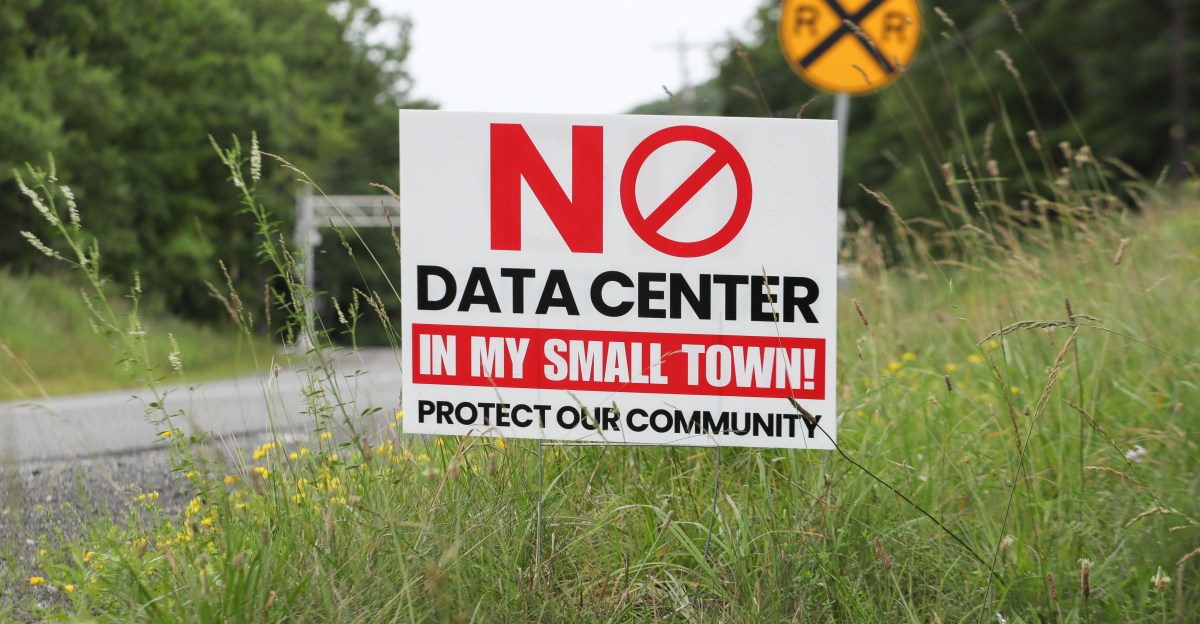
Opposition groups in the US blocked or delayed at least 75 data center projects worth $130 billion(約21兆円) from January to March 2026, according to a Data Center Watch study. The number of active opposition groups more than doubled from 396 at the end of 2025 to 833 by the end of Q1 2026, spanning 49 states, with over 235,000 petition signatures collected in that quarter alone. High-profile projects blocked include Blackstone's QTS $12 billion(約1.9兆円) campus in Wisconsin, a Delaware City facility deemed prohibited under state coastal law, and a 2,000-acre QTS campus in Virginia.
Why it matters
Communities are reporting rising energy costs, water quality issues, and noise and light pollution from AI data centers. Commercial energy demand is projected to surpass residential demand for the first time this year due to the AI buildout, with that demand expected to double by 2027. The tension stems from President Trump's executive order to fast-track data center construction as part of his AI strategy against China, while residents and some lawmakers push back on environmental and utility cost concerns.
What to watch
Federal legislation remains uncertain—Senator Bernie Sanders and Representative Alexandria Ocasio-Cortez introduced a bill to pause new AI data center construction until Congress passes laws protecting residents, while the Ratepayer Protection Act and GRID Act are backed by lawmakers from both parties. Local governments have enacted 28 laws across both Democrat- and Republican-led states to regulate AI data centers, but the patchwork approach leaves communities with limited tools as massive projects like Meta's $27 billion(約4.3兆円) Hyperion facility in Louisiana, Google's $10 billion(約1.6兆円) Project Mica in Missouri, and the $500 billion(約80兆円) Stargate data centers move forward.
Summaries like this, in your inbox every morning.
The resistance to AI data center construction reflects a collision between the federal government's infrastructure ambitions and local communities' immediate economic and environmental concerns. Apple's 2015 effort to build a data center in Athenry, Ireland, foreshadowed today's pattern: even a company promising renewable energy and community benefits faced years of legal delay from a small group of activists. Now, with AI data centers consuming as much energy as entire states, opposition is far broader—the number of active opposition groups more than doubled in just three months (from 396 to 833), and the political landscape has fractured. President Trump's executive order to fast-track these facilities sits in direct tension with legislation from Senator Sanders and Representative Ocasio-Cortez, while Republican candidates in midterm races are distancing themselves from Trump's data center-friendly stance to appeal to residents in their districts.
The patchwork of local and state responses—28 laws enacted across both Democrat- and Republican-led states—suggests that without federal consensus, communities will continue to fight each project individually. Florida has introduced rules to prevent cost-shifting to residents, Idaho has restricted water usage, and Washington has removed tax breaks; however, these measures operate in isolation. Meanwhile, tech companies and their backers are pursuing a legislative middle ground through the Ratepayer Protection Act and GRID Act, attempting to secure buildout approval by promising to absorb energy costs or use off-grid power. The outcome remains uncertain: federal legislation is still working through Congress, and the study showing $130 billion(約21兆円) in blocked projects over three months suggests that opposition's momentum may be accelerating faster than the policy framework can accommodate it.
Pick your industry and the AI tools you use, and get news related to your work every day.
Free · 30 seconds with Google · unsubscribe anytimeWhat is AIToday? →
Ask AI anything about this article. The AI reads this article, earlier AIToday articles, and Wikipedia, and cites its sources. Q&As are published on this page for other readers too.

