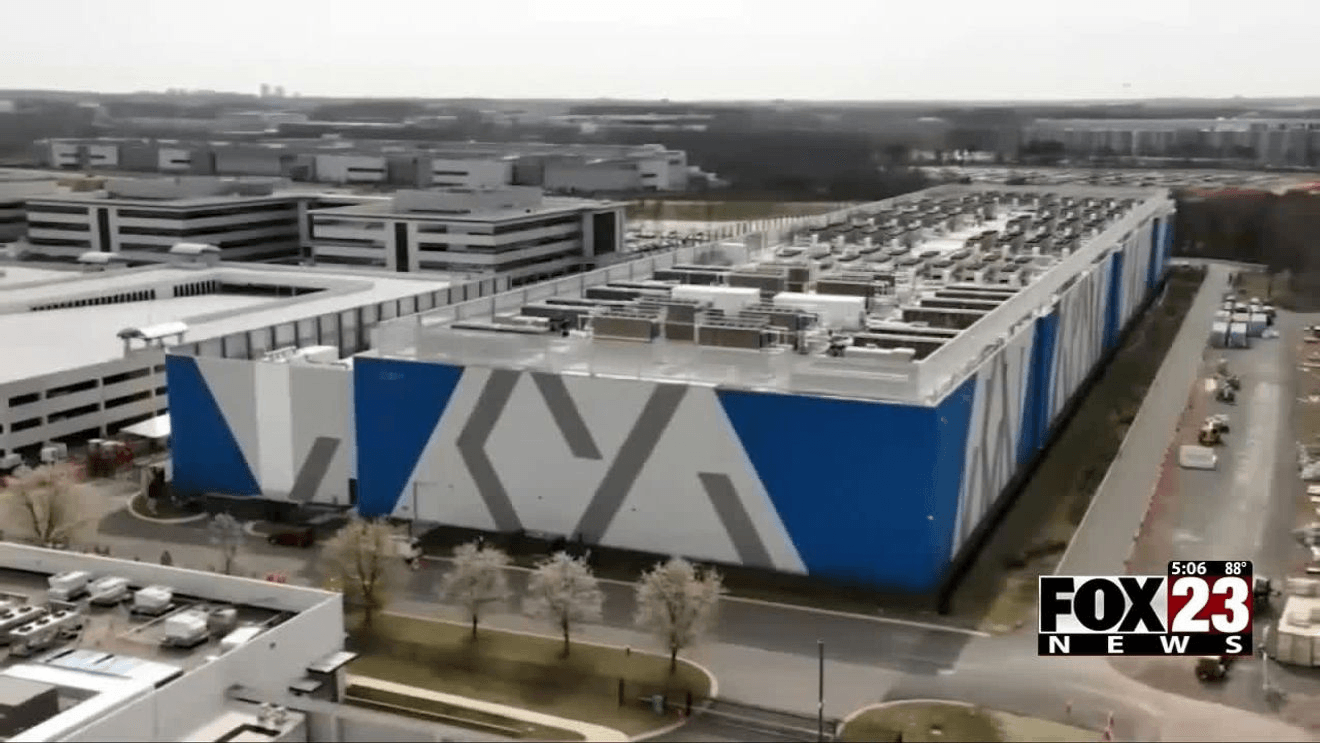
Oklahoma utilities have committed to ensuring that the costs of serving large AI data centers are paid by the companies operating them, not by residential customers. Public Service Company of Oklahoma and OG&E joined a White House-backed Ratepayer Protection Pledge this week, following passage of the Data Center Consumer Ratepayer Protection Act earlier in the year. However, public concern remains high: roughly three quarters of social media respondents expressed worry about how data-center expansion could affect electric bills, grid reliability, and local infrastructure.
Summaries like this, in your inbox every morning.
Sign up free →What happened
Public Service Company of Oklahoma (PSO) and OG&E this week joined the Ratepayer Protection Pledge, a White House-backed initiative requiring large energy users such as AI data centers to bear their own service costs rather than passing them to residential customers. Oklahoma also passed the Data Center Consumer Ratepayer Protection Act (House Bill 2992) earlier this year to prevent cost-shifting to existing ratepayers.
Why it matters
Data centers, which power artificial intelligence with thousands of servers running around the clock, consume significant electricity and require additional cooling during hot months, placing stress on the grid if communities don't plan ahead. Kerry Duggan, a former U.S. Department of Energy official, warned that an overloaded grid risks ratepayers seeing higher bills unless developers bring their own power and infrastructure. PSO's regulatory director noted that large-load customers paying their full share could actually reduce the slice of costs borne by residential customers.
What to watch
Despite utility assurances, roughly three quarters of social media respondents expressed concern about data-center impacts on electric rates, grid reliability, and infrastructure. Duggan urged residents to ask questions, engage with local leaders, and hold officials accountable during approval processes—particularly for projects like Project Anthem, Meta's multi-billion dollar data center under construction between Tulsa and Coweta.
Oklahoma is experiencing a wave of large-scale artificial intelligence data-center development that state leaders say brings jobs and investment but also risks straining electrical infrastructure and raising costs for residential customers. This week, utilities Public Service Company of Oklahoma (PSO) and OG&E joined the Ratepayer Protection Pledge, a White House-backed initiative designed to ensure that companies operating large energy-consuming facilities—particularly AI data centers—pay for their own service costs rather than shifting them to existing residential ratepayers.
The timing reflects real pressure. Meta is constructing Project Anthem, a multi-billion dollar data center between Tulsa and Coweta, while other firms continue to scout Oklahoma for similar sites. AI data centers operate thousands of servers around the clock, consuming significant electricity and requiring substantial cooling, especially during Oklahoma's hot months. Kerry Duggan, formerly with the U.S. Department of Energy, explained that without planning, this demand can overload the electrical grid. She used a traffic analogy: "If the grid is already congested, bringing additional power generation online is like moving a semi-truck from bumper-to-bumper traffic at 5 p.m. to an open highway at 3 a.m." Duggan urged communities to demand that developers bring their own power sources, battery storage, and water-efficient cooling systems before approving projects.
Oklahoma lawmakers anticipated these concerns earlier this year by passing the Data Center Consumer Ratepayer Protection Act (House Bill 2992), which requires large-load customers, including qualifying data centers, to be "allocated their equitable share of the costs associated with providing electric service." PSO has proposed a large-load tariff before the Oklahoma Corporation Commission embodying the same principle. PSO's regulatory director, Amy Brown, argued that properly structured tariffs could benefit residential customers: as large-load customers pay their full share, "the slice paid for by the residential customers will be getting smaller."
Despite these assurances, public concern runs deep. When FOX23 asked viewers on social media how they felt about data-center expansion in Oklahoma, roughly three quarters said they remained concerned about impacts on electric rates, grid reliability, and local infrastructure. Duggan encouraged residents to stay engaged, asking questions and holding elected officials accountable during the approval process. She emphasized that communities have leverage before projects are greenlit and should use it to secure commitments that protect their interests.
Oklahoma is confronting a critical tension as it recruits large-scale artificial intelligence data centers: how to attract major investment and jobs without burdening existing residents with the cost of new infrastructure. The Ratepayer Protection Pledge and House Bill 2992 represent the state's attempt to answer this question by legally requiring data-center operators to shoulder their fair share of grid and system costs. Kerry Duggan, a former U.S. Department of Energy official, underscores the stakes: data centers' continuous operation and cooling demands place genuine stress on an already-busy electric grid, particularly during Oklahoma's hottest months. Her traffic analogy—comparing grid congestion to rush-hour traffic—illustrates why advance planning matters: simply adding more power generation to an already-congested system without addressing underlying constraints may not solve the problem.
The utilities' framing suggests that alignment is possible: PSO's regulatory director noted that if large-load customers truly pay their equitable share, the slice of system costs borne by residential customers could actually shrink. Yet public skepticism remains strong. Three quarters of social media respondents expressed concern about rates, reliability, and infrastructure impact, suggesting that pledges and legislation alone have not fully reassured residents. Duggan's emphasis on local leverage—encouraging communities to negotiate terms, demand that developers bring their own power and storage solutions, and hold elected officials accountable before projects are approved—reflects a recognition that regulatory protections require active community engagement to be meaningful.
AI-summarized, only the topics you pick — one digest a day via Email, Slack, or Discord.
Free · takes 30 seconds · unsubscribe anytime
No comments yet. Be the first to share your thoughts!
Log in to join the discussion




Get curated AI news from 200+ sources delivered daily to your inbox. Free to use.
Get Started FreeFree · takes 30 seconds · unsubscribe anytime
