Syntiant, a maker of ultra-low-power AI chips for edge devices, has filed for an IPO backed by Intel, Microsoft, and Knowles.
The filing comes two months after Cerebras went public and has since fallen 45%, signaling mixed investor appetite for new chip companies despite broader semiconductor enthusiasm.
Syntiant reported a net loss of $20.9 million(約33億円) on revenue of $64.5 million(約100億円) in Q1 2026.
What happened
Syntiant, an Intel-backed chipmaker founded in 2017, has filed for an initial public offering on Monday, seeking to raise capital amid growing enthusiasm for AI semiconductors. The company designs ultra-low-power AI processors and software for edge devices—machines that run machine learning locally rather than in the cloud. Syntiant posted a net loss of $20.9 million(約33億円) on revenue of $64.5 million(約100億円) for Q1 2026, compared with a net loss of $14.1 million(約23億円) on revenue of $66.6 million(約110億円) a year earlier.
Why it matters
The timing underscores a divergence in chip stocks—while Nvidia's recent performance has been muted, peers like Intel and AMD have posted outsized gains. However, Cerebras Systems, which went public two months ago in May, has fallen 45% from its opening price, signaling investor caution toward new chip IPOs even as semiconductor enthusiasm remains. For Syntiant, edge AI (AI running directly on devices rather than remote servers) represents a growing market where companies seek energy-efficient solutions for battery-powered devices requiring low latency.
What to watch
Syntiant will trade under the symbol "SYTN" once listed. Citigroup, BofA Securities, UBS Investment Bank, and Needham & Company are underwriting the offering; the size was not disclosed. Investors in the company include Intel Capital, Microsoft Global Finance, and Knowles Corp.
Ask the AI about this article →
Syntiant's IPO filing arrives at a moment of sharp divergence in the semiconductor sector. While the broader enthusiasm for AI-related technologies remains, the sharp 45% decline in Cerebras shares since May suggests that not all chip IPOs are finding sustained investor support, even amid industry-wide semiconductor gains elsewhere. Intel and AMD have posted outsized gains, yet Nvidia—long the sector bellwether—has delivered muted returns, and Cerebras has moved decidedly downward. This fragmentation makes Syntiant's filing a test of investor appetite for specialized chip companies with narrower market focus.
Syntiant's core positioning in edge AI—ultra-low-power processors for always-on inference directly on devices—addresses a real technical need (low latency, minimal power consumption) that differs from the cloud-centric AI infrastructure that has dominated recent semiconductor conversations. The company's backing by Intel Capital, Microsoft Global Finance, and Knowles suggests institutional confidence, and its Q1 2026 financials show revenue holding steady year-over-year ($64.5 million(約100億円) vs. $66.6 million(約110億円)), though losses widened from $14.1 million(約23億円) to $20.9 million(約33億円). Whether public markets will value edge AI chip makers as a distinct category—or lump them into the broader chip-sector skepticism currently affecting new listings—remains to be seen as trading under the ticker "SYTN" approaches.
For example, today's edition would include:
AI-summarized, only the topics you pick — one digest a day via Email, Slack, or Discord.
Free · takes 30 seconds · unsubscribe anytimeWhat is AIToday? →
Ask AI anything about this article. Q&As are published on this page for other readers too.
Phonely Ltd. launched Alma, a large language AI model built for voice agents and trained on over 10 million re…

Aranya Inc., a startup founded last year, launched today with $11 million in funding

CBTS Technology Solutions LLC launched Forge Agents, a platform that turns a plain-language job description in…

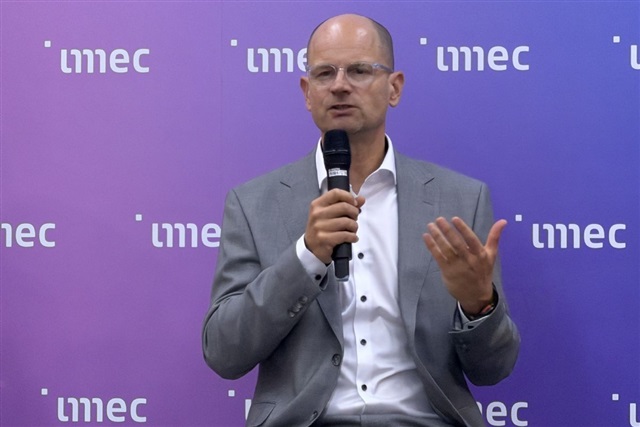
Imec CEO Patrick Vandenameele said at SEMICON Taiwan 2026 that the Belgian research center is broadening its c…
Alphabet's AI Overviews now reach over 2.5 billion monthly users through Google Search, and its ad business ge…
Sarah O’Connor's book 'We Are Not Machines' explores how mechanization and AI have transformed the workforce…