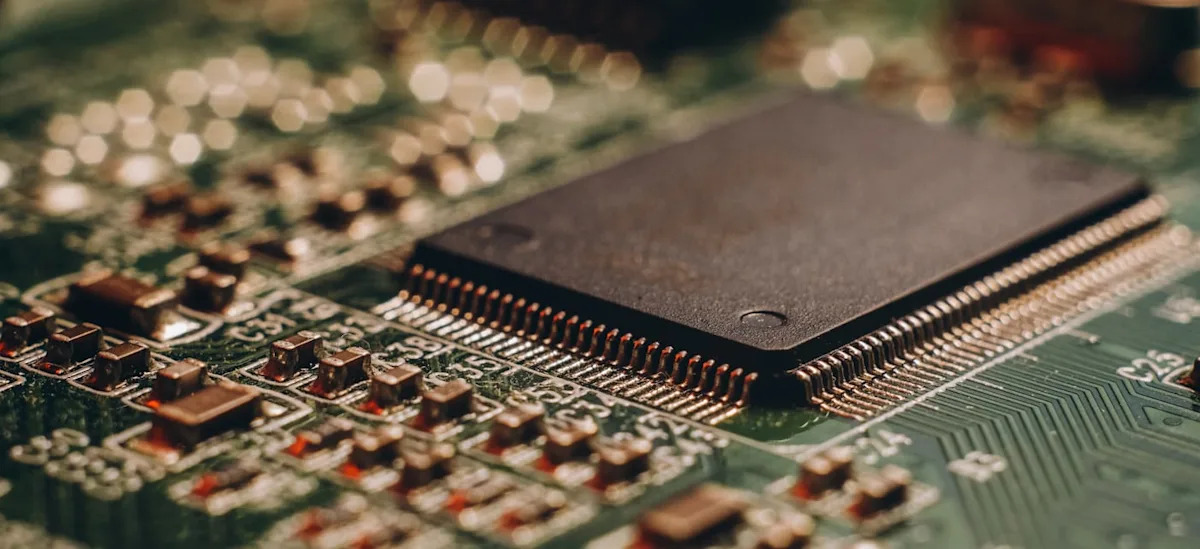
Broadcom and Marvell Technology dominate the market for custom AI chip design—a segment where hyperscalers like Google, Meta, OpenAI, and Apple partner with these firms to build chips tailored to their own workloads rather than relying entirely on Nvidia. Broadcom leverages a diversified portfolio spanning AI silicon, networking gear, and software; Marvell pursues a focused strategy combining custom chips with optical interconnect technology to lock in customer relationships. Both companies are benefiting from hyperscalers' push to reduce Nvidia dependence and control their own chip destiny.
Summaries like this, in your inbox every morning.
Sign up free →What happened
Broadcom and Marvell Technology are the two dominant partners helping major cloud companies (including Google, Meta, OpenAI, Anthropic, and Apple) design custom AI chips instead of relying solely on Nvidia's off-the-shelf processors. Broadcom recently moved into high-volume production of its latest networking switch chip and jointly designed a chip with OpenAI. Marvell pursues a narrower focus, pairing custom chip design with optical interconnect technology.
Why it matters
As hyperscalers race to control their own chip destiny and reduce dependence on Nvidia, demand for custom chip design partners has exploded. Broadcom's diversified business—spanning AI silicon, networking gear, and infrastructure software—gives it a steadier foundation than a pure-play chip company. Marvell's strategy of bundling optical interconnect technology with custom chips creates stickier customer relationships, making it harder for rivals to displace.
What to watch
Broadcom's one-stop-shop approach to building the guts of an AI data center (combining accelerators, networking equipment, and software) positions it as an established heavyweight, while Marvell's focused strategy on hyperscaler customers and optical interconnect technology represents a leaner, more targeted challenger model.
The custom AI chip market has emerged as a consequential counterpoint to Nvidia's dominance, driven by hyperscalers' strategic desire to own their silicon and optimize it for their own workloads. Broadcom and Marvell occupy this space differently, reflecting two viable business models in the same opportunity.
Broadcom's advantage lies in its breadth and diversification. By combining custom accelerators, networking infrastructure (a critical component for linking thousands of chips inside a data center), and infrastructure software, it positions itself as the comprehensive partner for building entire AI data center architectures. This diversification also provides resilience: if one market segment weakens, others can offset the decline. The company's recent disclosure of Apple as a customer and its joint chip design with OpenAI signal its deep entrenchment across the hyperscaler ecosystem.
Marvell's strategy is more economical and focused. Rather than attempting to be a full-stack provider, it concentrates on custom chip design paired with optical interconnect technology—the high-speed infrastructure that moves data between processors. This pairing creates a form of customer lock-in: once a hyperscaler integrates Marvell's optical technology into its custom chip architecture, the switching cost to a competitor rises. The article characterizes Marvell as "smaller" and "hungrier," suggesting a leaner cost structure and more agile execution, which could appeal to customers seeking an alternative to Broadcom's broader (and potentially more expensive) integration.
The valuation divergence mentioned in the article's headline suggests the market prices these two companies differently, likely reflecting different growth outlooks, profitability profiles, and risk assessments for each model. Both are benefiting from the same secular trend—hyperscaler chip autonomy—but each is capturing value through a distinct competitive position.
No comments yet. Be the first to share your thoughts!
Log in to join the discussion

Get curated AI news from 200+ sources delivered daily to your inbox. Free to use.
Get Started FreeFree · takes 30 seconds · unsubscribe anytime
1 minute a day. The AI essentials.
200+ sources · Email / LINE / Slack
