Summaries like this, in your inbox every morning.
Sign up free →Companies including Harmonic (with its Aristotle system), Axiom Math, OpenAI, and Google DeepMind have reported progress solving research-level mathematical problems. Harmonic's Aristotle has helped solve several problems posed by mathematician Paul Erdős; Axiom Math announced its AI tool found solutions to many research-level problems that professional mathematicians had not yet solved; and models from OpenAI and Google DeepMind solved several challenges from the First Proof Project.
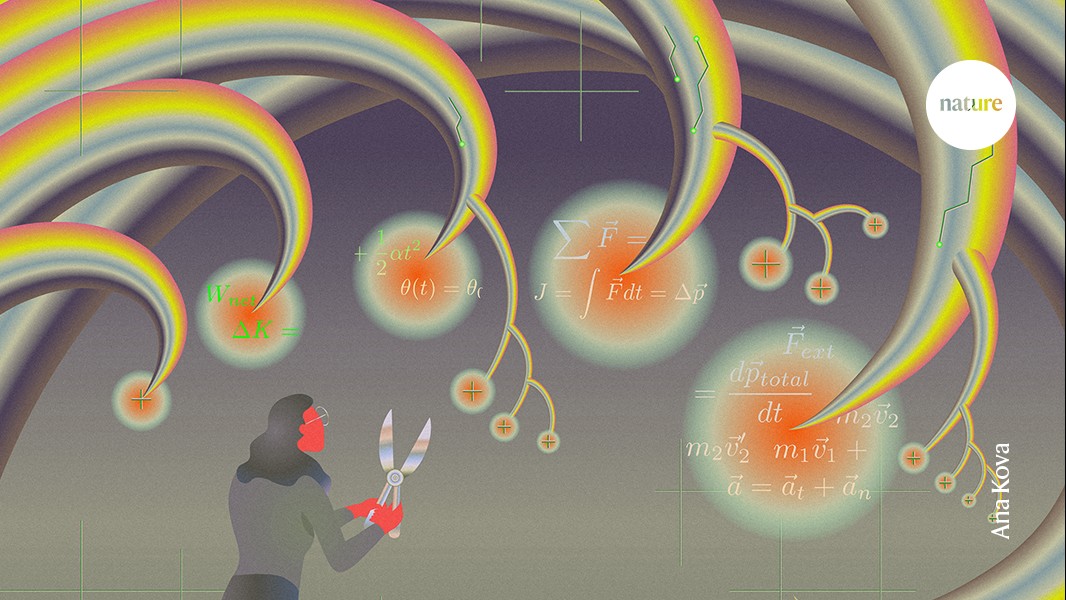
AI is contributing across multiple stages of theoretical research: formalizing ideas (turning informal arguments into forms computers can process, as demonstrated when mathematician Terence Tao discovered a subtle logical gap using proof assistant Lean4), proposing conjectures (plausible answers to well-posed problems, building on earlier specialized programs like Graffiti and the Ramanujan Machine), and solving and verifying results through automated checking.
AI systems currently lack intuition and 'taste'—a sense of where questions come from, what makes them timely, and how they fit into a field's structure—limiting their access to the broader context needed for 'setting the agenda' (deciding which questions are worth asking in the first place). One promising direction is to build AI systems that help sort and prioritize potential problems using researcher-selected criteria when scanning mathematical databases and preprint repositories.
AI-summarized, only the topics you pick — one digest a day via Email, Slack, or Discord.
Free · takes 30 seconds · unsubscribe anytime
No discussion yet for this article
Get curated AI news from 200+ sources delivered daily to your inbox. Free to use.
Get Started FreeFree · takes 30 seconds · unsubscribe anytime
