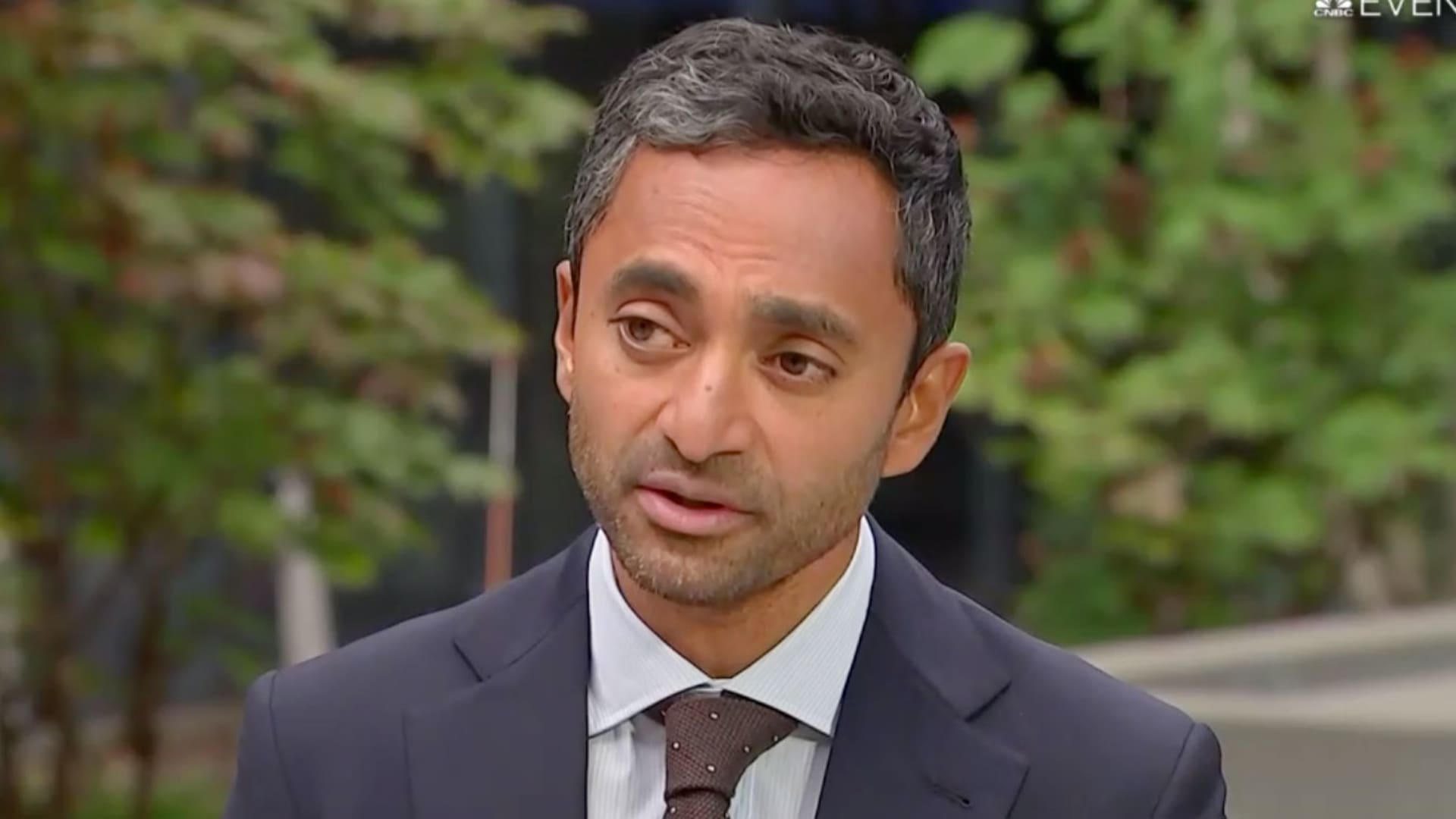
Tech investor Chamath Palihapitiya warned Tuesday that companies are incurring massive AI token spending that executives don't realize exists, potentially causing unexpected earnings misses when the bills surface. His own startup is on track to spend more than $10 million(約16億円) annually on AI with no meaningful return, and the concern is shared by other executives like Palantir's CEO, who has criticized AI providers' token-based pricing models as disconnected from enterprise value.
Summaries like this, in your inbox every morning.
Sign up free →What happened
Tech investor Chamath Palihapitiya told CNBC on Tuesday that companies' AI token spending is spiraling out of control inside organizations without executive awareness, and warned that this hidden cost could trigger unexpected earnings misses and force CFOs to confront sudden, unexplained budget overruns.
Why it matters
C-suite executives lack visibility into how much AI their staff is actually consuming—Palihapitiya said CEOs and CFOs "probably have no idea how much tokenmaxxing is going on"—meaning companies risk losing earnings guidance credibility when AI bills suddenly surface. His own startup 8090 is tracking toward more than $10 million(約16億円) a year in AI spending with no measurable return on investment, suggesting this is not a fringe concern.
What to watch
Palihapitiya's caution echoes similar warnings from Palantir CEO Alex Karp, who recently criticized OpenAI and Anthropic's token-based pricing as misaligned with enterprise value, signaling a potential reckoning in how companies price and consume AI services.
Chamath Palihapitiya, founder of investment firm Social Capital, CEO of AI company 8090, and host of the tech podcast "All-In," told CNBC on Tuesday that artificial intelligence token spending threatens to derail corporate earnings by catching executives off guard. He argued that "CEOs and the CFOs, in my opinion, probably have no idea how much tokenmaxxing is going on inside of their organizations," and predicted that the reckoning will arrive suddenly: "I suspect what'll happen is one day you're going to have a miss, and EPS will be off by a few pennies, and the CEO will say to the CFO, 'What happened?'" Palihapitiya's concern is rooted in lived experience. His startup 8090, which he founded in 2024 to build a platform for AI agent collaboration on enterprise software, is running AI costs toward more than $10 million(約16億円) annually with little to show in terms of meaningful return. In a March post on X, he described the situation as "very scary" for a small startup and noted that many other companies are likely "feeding this revenue ramp without getting any meaningful ROI from it." The skepticism extends beyond Palihapitiya. Palantir CEO Alex Karp has publicly criticized OpenAI and Anthropic's token-based pricing models, telling CNBC's "Squawk Box" that "something has gone completely wrong" and that enterprises are effectively wasting money: "The basic view among enterprises in this country is I'm going to chillax and waste my time with tokens." Palihapitiya acknowledged his own complicated history with investor relations and SPAC promotion, calling it a "huge mistake" to have promoted special purpose acquisition companies on social media and CNBC during the pandemic. Many of those vehicles subsequently shuttered and lost money for investors, though he noted "some parts" of those investments worked. He launched a new SPAC, American Exceptionalism Acquisition Corp. A (AEXA), last year, targeting companies in AI, energy, defense, and decentralized finance. His 8090 raised $135 million(約220億円) in a funding round led by Salesforce in June 2024.
Palihapitiya's warning reflects a growing disconnect between how companies are consuming AI and how much visibility their finance teams have into the spend. He frames the issue as a gap between operational reality and executive awareness: engineers and staff are using AI tokens freely, but CFOs remain in the dark about the cumulative cost until a surprise hits earnings. This concern has moved beyond one investor's observation; Palantir's Alex Karp has publicly challenged the pricing models of leading AI providers, suggesting that token-based billing may be inherently misaligned with how enterprises actually derive value from AI tools. The stakes are concrete: Palihapitiya cited the risk of a company missing earnings guidance by "a few pennies" when hidden AI costs surface, a potential credibility blow in a market where predictability matters. His own company's $10 million(約16億円) annual burn on AI with no measurable ROI serves as a cautionary reference point for other organizations facing the same spend explosion.
No discussion yet for this article
Get curated AI news from 200+ sources delivered daily to your inbox. Free to use.
Get Started FreeFree · takes 30 seconds · unsubscribe anytime
1 minute a day. The AI essentials.
200+ sources · Email / LINE / Slack

