
A veteran web developer reflects on how the industry inadvertently became a training ground for AI.
Over 20 years—from the era of web standards and Internet Explorer battles through today—developers at xfive and elsewhere created thousands of projects, millions of lines of code, and extensive technical documentation that now trains large language models (LLMs) capable of doing the work humans once did.
Rather than declaring the profession dead, the author argues that human problem-solving's elegance and simplicity—demonstrated through careful design system alignment in tools like Webflow—may still matter where AI's brute-force approach falls short.
What happened
A web developer reflects on two decades in the industry—from joining xfive in 2006 (formerly XHTMLized) through the rise of AI. The author notes that the thousands of projects, millions of lines of code, and open-source work (including Chisel) and technical articles created by developers have become training material for LLMs, which now compete directly with human developers.
Why it matters
The same tools and knowledge that defined professional web development for 20 years are now feeding AI models that increase their capacity while decreasing demand for human developers. The author acknowledges this as both ironic and inevitable—the industry inadvertently built the systems now disrupting it—but argues that LLMs solve problems through brute force rather than the elegance and simplicity human problem-solving can achieve.
What to watch
The author is shifting partially back toward hands-on development after years in marketing, working with tools like Webflow and Figma. The example of aligning design systems and code libraries (keeping naming conventions consistent to avoid measurement and errors) suggests that refined, design-conscious development work may still have value even as AI scales.
Ask the AI about this article →
The author's 20-year narrative traces a fundamental shift in how web development knowledge is produced and consumed. In the mid-2000s, the mission was explicit: improve the web for users and developers through adherence to standards, elegant code, and open-source sharing. That collaborative spirit—thousands of deployments, millions of lines of shared code, extensive technical writing—created a vast commons of knowledge. The irony the author highlights is that this knowledge commons became the training ground for the very AI systems now disrupting the profession. LLMs are a direct product of developer labor, documentation, and open-source contributions.
Yet the author resists a narrative of simple obsolescence. Instead, he suggests a distinction between how AI solves problems (through computational brute force and pattern matching) and how humans solve them (through design principles, elegance, and simplicity). The example of aligning Figma and Webflow naming conventions—where discipline and consistency eliminate the need for manual measurement and error—illustrates this difference. It is not a claim that humans will always outcompete AI, but rather that certain kinds of problem-solving (those that prize coherence, restraint, and principle-driven design) may retain value precisely because they resist automation through scale.
For example, today's edition would include:
AI-summarized, only the topics you pick — one digest a day via Email, Slack, or Discord.
Free · takes 30 seconds · unsubscribe anytimeWhat is AIToday? →
Ask AI anything about this article. Q&As are published on this page for other readers too.
Israeli startup DataAgent Ltd
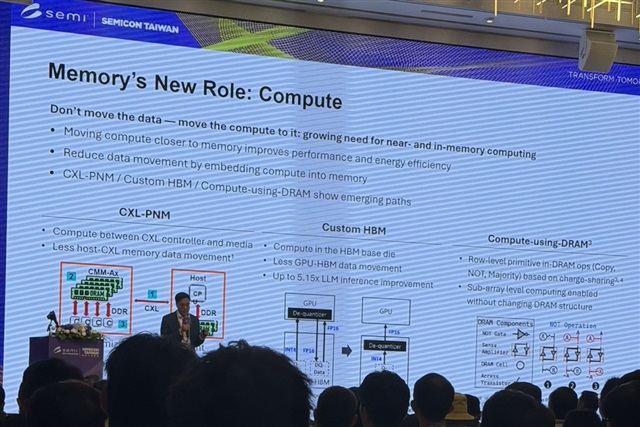
SK Hynix presented a custom HBM concept at SEMICON Taiwan 2026, where compute functions are placed in the base…
Nvidia reported earnings that were both remarkable and boring, reflecting its focus on avoiding a consolidated…

Anthropic has agreed to a $35bn cloud-computing contract with Lambda, a Nvidia-backed cloud provider

The Supreme Court of Japan has included about ¥60 million in its fiscal 2027 budget request for AI-related exp…

The Consumer Affairs Agency said Tuesday it will use generative AI to analyze about 900,000 annual consultatio…