Tesla stock fell 18% in its worst week since 2022 following July 22 earnings, despite record revenue of $28.23 billion(約4.5兆円) in Q2. Investors reacted negatively to deteriorating margins (down to 1.4% from 4.1% a year ago), negative free cash flow of $1.1 billion(約1800億円), and Tesla's announcement of $25 billion(約4兆円) in capital expenditure spending for the year and plans to borrow up to $30 billion(約4.8兆円). The sell-off has erased $300 billion(約48兆円) from Elon Musk's personal wealth, reducing his net worth to $709 billion(約110兆円) according to the Bloomberg Billionaires Index.
Summaries like this, in your inbox every morning.
Sign up free →What happened
Tesla stock dropped 18% in the week following its July 22 earnings report — its worst one-week performance since 2022 — despite the company reporting record $28.23 billion(約4.5兆円) in second-quarter revenue and more than $100 billion(約16兆円) in trailing-12-month sales for the first time.
Why it matters
The sell-off reflects investor concern over Tesla's deteriorating finances: operating margins collapsed from 4.1% a year ago to 1.4% in Q2, the company reported negative free cash flow of $1.1 billion(約1800億円), and Tesla announced plans to borrow up to $30 billion(約4.8兆円) while capital expenditures more than doubled sequentially. These warning signs have shaken confidence in a stock historically priced on Musk's long-term vision.
What to watch
Tesla is betting heavily on artificial intelligence for self-driving technology and its Optimus robot line, but the company has not disclosed when autonomous driving software will be ready for nationwide rollout or whether regulators will approve it. The company is discontinuing Model S and X production at its Fremont factory to make room for Optimus robot production and development.
Tesla's stock price collapsed 18% in the week ending July 24—its worst one-week performance since 2022—following the company's second-quarter earnings report released on July 22. Despite reaching historic revenue milestones, the market punished the stock due to a sharp deterioration in Tesla's financial health and heavy spending on uncertain future ventures.
On the revenue side, Tesla delivered strong top-line growth. The company delivered 480,126 electric vehicles in Q2, up 25% from a year earlier, generating $28.23 billion(約4.5兆円) in total quarterly revenue. EV sales alone contributed $20.51 billion(約3.3兆円), up 23% from the prior year. Over the trailing 12 months, Tesla surpassed $100 billion(約16兆円) in sales for the first time in the company's history. Yet these gains masked serious profitability challenges. Operating margins plummeted to 1.4% in Q2 from 4.1% a year ago—a decline of 2.7 percentage points. Operating expenses jumped 47% to $4.35 billion(約7000億円). More alarming, Tesla reported negative free cash flow of $1.1 billion(約1800億円) in the quarter, and its cash and investments fell by $1.2 billion(約1900億円).
The cash drain reflects massive capital expenditures. According to CFO Vaibhav Taneja, capex more than doubled sequentially and is expected to keep rising through the second half of the year. Tesla issued guidance for $25 billion(約4兆円) in capex spending for the full year and announced plans to borrow up to $30 billion(約4.8兆円). These investments are directed at artificial intelligence and robotics—specifically, autonomous driving technology and the Optimus humanoid robot. Tesla is running early versions of its v15 autonomous driving software in robotaxis, but the company has provided no timeline for nationwide rollout and acknowledged regulatory uncertainty. Optimus production is being prioritized by discontinuing Model S and X manufacturing at the Fremont, California, factory; robots produced on that line will be used for further training and development of hardware and AI software, but commercial sales remain distant.
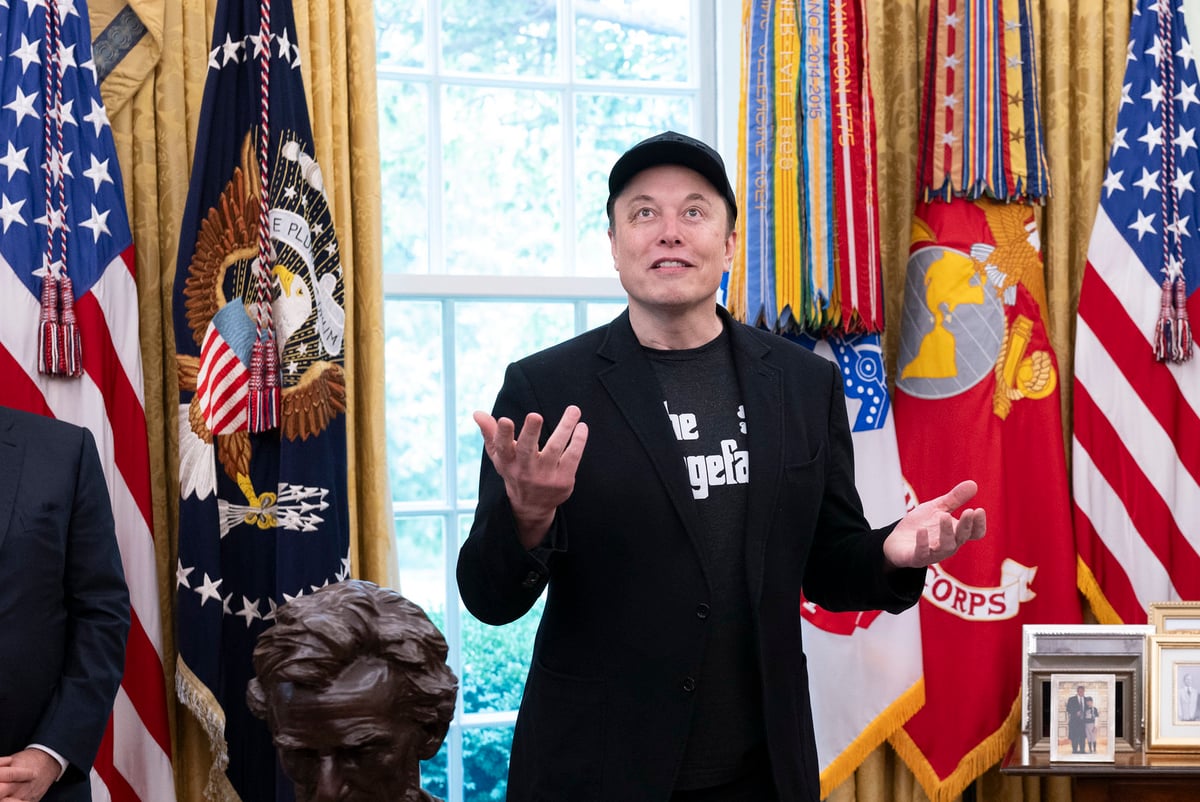
The market's reversal reflects a breakdown in investor tolerance for Tesla's traditional valuation model. The stock has long commanded a forward price-to-earnings ratio of 170—a multiple justified only by faith in Musk's long-term vision. With operating margins now razor-thin at 1.4%, negative free cash flow, mounting capex obligations, and no clear path to revenue from robots or autonomous vehicles, that faith has been shaken. The stock decline has had profound personal consequences: Musk's net worth, according to the Bloomberg Billionaires Index, has fallen to $709 billion(約110兆円) from more than $1 trillion(約160兆円) earlier this year, erasing $300 billion(約48兆円) in a matter of weeks. Musk acknowledged the loss in a social media post on X, writing simply, "(Former) Trillionaire."
Tesla's stock decline reveals a widening gap between the company's revenue growth and its actual profitability. Deliveries rose 25% to 480,126 vehicles in Q2, and the company reached a historic milestone of more than $100 billion(約16兆円) in trailing-12-month sales for the first time. Yet beneath this headline strength, the fundamentals deteriorated sharply: operating margins compressed to just 1.4% from 4.1% a year earlier, while operating expenses jumped 47% to $4.35 billion(約7000億円). This margin collapse, combined with negative free cash flow and a $1.2 billion(約1900億円) decline in cash and investments, signals that Tesla is spending far more than it is earning.
The root of this aggressive spending lies in Musk's AI and robotics ambitions. The company is plowing capital into autonomous driving software (currently in early v15 versions for robotaxis) and the Optimus humanoid robot line, neither of which is close to commercial deployment or regulatory approval. By discontinuing Model S and X production at the Fremont factory to make room for Optimus development, Tesla is deliberately sacrificing near-term revenue for a bet on technology years away from market. The market has historically rewarded Tesla stock based on Musk's vision, tolerating a forward P/E of 170 even after the recent collapse. However, investors appear to have reached a breaking point: massive capital spending ($25 billion(約4兆円) guidance for the year, plus $30 billion(約4.8兆円) in planned borrowing) combined with deteriorating cash generation and unclear timelines for revenue from new products have eroded confidence that this bet will pay off.
AI-summarized, only the topics you pick — one digest a day via Email, Slack, or Discord.
Free · takes 30 seconds · unsubscribe anytime
No discussion yet for this article
Get curated AI news from 200+ sources delivered daily to your inbox. Free to use.
Get Started FreeFree · takes 30 seconds · unsubscribe anytime
