Diagrid Inc. released Catalyst 2.0, a workflow engine update that automatically recovers AI agents from failures and cryptographically verifies each step, without requiring developers to rebuild their code.
The tool supports more than 10 agent frameworks and addresses a critical production gap: while recent AI frameworks make building agents easier, Catalyst 2.0 adds the durability and verifiability needed to run agents reliably in enterprises, especially in regulated sectors where execution must be proved complete and unaltered.
What happened
Diagrid Inc. released Catalyst 2.0, an update that adds automatic failure recovery and cryptographic verification to AI agents built on frameworks including LangGraph, Microsoft Agent Framework, and Google's Agent Development Kit. Developers add a Diagrid code package without rebuilding existing workflows.
Why it matters
Agent failures are costly—most frameworks lack built-in recovery guarantees, forcing manual intervention and wasting tokens on repeated work. Catalyst 2.0 pairs durable execution (agents resume from the exact point of failure) with verifiable execution (each step is cryptographically signed), which is especially important for regulated sectors requiring proof of complete, traceable, unaltered decisions.
What to watch
Catalyst 2.0 runs in cloud, on-premises, and air-gapped environments. Diagrid claims it improves on open-source Dapr performance by up to 10 times, enough to support millions of concurrent agent workflows. Early user ZEISS Group is building a stable foundation for both AI and traditional workloads.
Ask the AI about this article →
Diagrid's Catalyst 2.0 addresses a structural gap in the current AI agent ecosystem. Over the past two years, major frameworks—LangGraph, Microsoft Agent Framework, Google Agent Development Kit, and others—have made it significantly easier to build agents, but as co-founder and CEO Mark Fussell noted, they have not made it easier to trust them in production. Most offer only basic checkpointing for recovery, leaving detection and recovery logic to developers, which is both labor-intensive and error-prone.
The release pairs two complementary capabilities: durable execution (agents resume from the exact point of failure) and verifiable execution (each step is cryptographically signed and traced). The verification component draws from Dapr 1.18, released in June, and includes cryptographic history signing, execution lineage propagation, and workflow attestation. This is particularly significant for regulated sectors—healthcare, finance, legal—where compliance teams require a chain of custody for each decision and must prove that execution was complete, traceable, and unaltered. Diagrid's framing positions this as a shift from the first wave of AI (making models intelligent) to making agent systems trustworthy.
The practical leverage is high: because Catalyst 2.0 works as a code package layered on top of existing frameworks, teams avoid costly rewrites and adopt durability and verifiability incrementally. Early adoption by ZEISS Group, a German optics manufacturer, suggests that enterprises see value in a stable foundation that accommodates the rapid iteration of AI frameworks and models.
For example, today's edition would include:
AI-summarized, only the topics you pick — one digest a day via Email, Slack, or Discord.
Free · takes 30 seconds · unsubscribe anytimeWhat is AIToday? →
Ask AI anything about this article. Q&As are published on this page for other readers too.
Israeli startup DataAgent Ltd
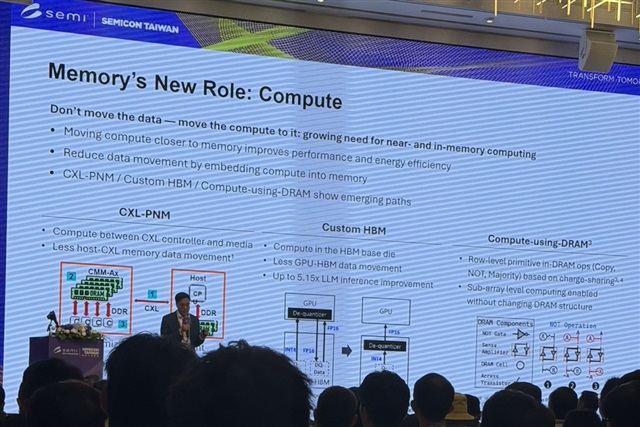
SK Hynix presented a custom HBM concept at SEMICON Taiwan 2026, where compute functions are placed in the base…
Nvidia reported earnings that were both remarkable and boring, reflecting its focus on avoiding a consolidated…

Anthropic has agreed to a $35bn cloud-computing contract with Lambda, a Nvidia-backed cloud provider

The Supreme Court of Japan has included about ¥60 million in its fiscal 2027 budget request for AI-related exp…

The Consumer Affairs Agency said Tuesday it will use generative AI to analyze about 900,000 annual consultatio…